Farming partnership prompts move from Hampshire to Somerset
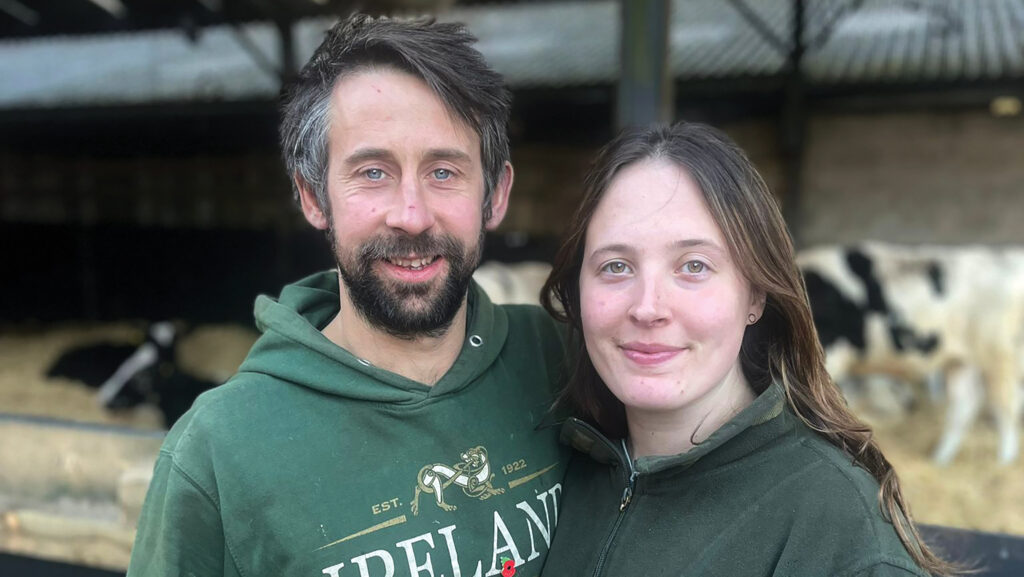 Ben and Molly Foote © Molly Foote
 Ben and Molly Foote made the move from Hampshire to Somerset in October, to start milking on a former dairy farm where they are renovating and adding to the buildings.
Ben, 36, grew up on Church Lane Farm, Alresford which was sold this year. He had joined his parents Jonathan and Celia in the partnership, J H Foote Farming, when he was just 18, along with his brother Sam.
Their two sisters Rachel and Anna are farming with their husbands in Australia and Herefordshire respectively.
See also: Business Clinic: Your questions answered by FW’s expert panel
The family invested heavily in the 330-acre Hampshire farm where they milked 390 high-yielding pedigree Holsteins on an all-year-round calving, high welfare housed system.
Ben and Molly’s move to 136-acre Lipgate Farm near Bruton was prompted by a change in the family partnership, with work on an exit strategy starting about three years ago, says Ben.
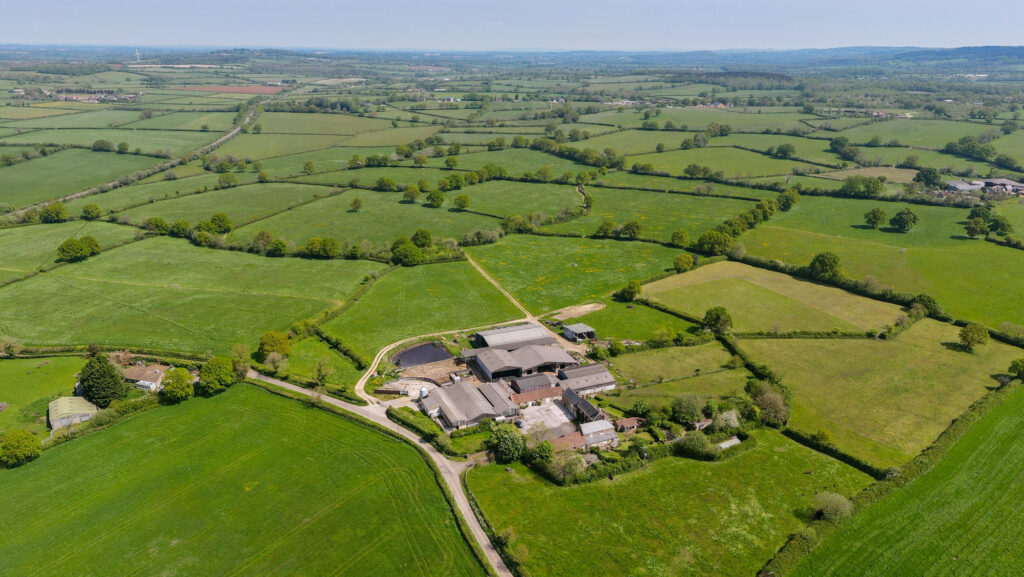
Lipgate Farm © Cooper & Tanner
“It wasn’t a master plan but Dad always said that once Sam and I both married, the partnership should change.”
Sam was not keen to continue in milk and he and his wife Emily have bought a farm in Gloucestershire where they have beef cattle alongside commercial lets and other enterprises and interests.
They are in a separate partnership with Jonathan and Celia, who have had an offer accepted on a smaller farm in Herefordshire. This is close to Anna and her husband Tom Pugh, who are in a third partnership with Jonathan and Celia.
Arrangements have been made for all four children to benefit from the sale of the Hampshire farm.
Moving farms – Ben and Molly’s tips
- Don’t rush it. Don’t expect everything to happen in a matter of weeks as there is quite often a lot more to do ‘behind the scenes’ than you first expect.
- Get a good team together which has farm transaction experience – accountant, agent and solicitor.
- Stay open minded – things often don’t go to plan, especially when weather is involved.
- Get as much information as possible from the previous owners or managers – it can save time, money and stress to know small details about the land and its infrastructure.
- Try to stay friendly with neighbours, especially if you’re wanting planning permissions.
Partnership changes
The partnership of J H Foote Farming has been continued, with Ben now owning a majority share and his parents lesser shares.
“It made sense for us to retain the J H Foote partnership as we will be the largest business and need substantial borrowings – it has the banking and business track record,” says Ben.
“It was a relatively easy move away from Hampshire for us as we didn’t have a long family history there – it was bought in 1990. I think it will be harder for Dad though.”
Molly, who joined the business as a calf rearer in 2022, will join the partnership next year. The couple have a three-year-old daughter Matilda and a five-month-old son Albert.
They viewed several farms and found Lipgate Farm the most suitable location.
Molly says: “There is a strong farming community in the area and the farm – as well as the house – felt like the right fit for us.
“We could envision the potential of the barns and the land here at Lipgate a lot easier than we could at the other farms we viewed.”
The local community has been very welcoming, says Molly. “All of our neighbours are friendly and seem pleased that farmers have bought the farm to continue it on.
“Also, it’s nice to be surrounded my similar minded people. In Hampshire there are very few dairy farms compared to here.”
An offer was made in July 2024 and the purchase completed in February/March 2025, slightly delayed by the sale of the Hampshire home farm.
The move is a gradual one, with youngstock at Lipgate since April 2025.
The milking portion of the herd is still at the Hampshire farm, where J H Foote Farming has taken a two-year farm business tenancy (FBT).
The buyer plans to plant a vineyard and did not need the land and buildings immediately.
This also means Ben will be taking out the cubicles to re-use at Lipgate Farm, along with some other equipment.
Managing at distance
It has been a challenging time since the purchase of Lipgate Farm. Ben and Molly were managing planning and building work from a distance until their recent move there.
“There is a lot of work to get the farm up to scratch for our vision. The barns were okay to start with, however they’re very old and designed for much smaller dairy cows,” says Molly.
However, the Grade II listed house is in very good order. “If the house had been run down I think it would have been much harder,” says Ben.
With labour efficiency and future growth in mind, the new parlour will be installed in one of the larger buildings. The site of the former parlour, where the last milking was carried out six years ago, had been concreted over.
Cattle handling is being upgraded, a new slurry store is going in and planning applications have been made for a new dairy control room for electrics and pumps and for an extension to cover the area where cows leave the parlour to go to the cubicle shed or to graze.
The couple plans to bring 150 of the milking cows from Hampshire, alongside 40 dry cows and youngstock. They will both be working full time on the farm.
“We plan on having one full-time member of staff and then relying on part time or casual labour,” says Molly. The herd will graze in summer and be winter housed on sand bedded cubicles.
Feeding will be a total mixed ration, while the milk contract will remain with Arla, which the business has supplied since 2016.
New setting
There’s a lot to plan, do and get used to with a farm move. Aside from learning how the land behaves, learning which people and companies are the most reliable and cost-efficient takes time.
“The lack of tools and machinery was difficult to start with as back in Hampshire we had most things you’d need for building due to the projects we had done there in the past.
“We didn’t want to buy things twice so we have been making do and it can be frustrating at times,” says Ben.
Designing the plan for the farm, assessing barn layouts and costs has taken longer than expected.
“There’s a lot to consider when you’re thinking about what you might want the set up to look like in 10 years’ time, even down to where the electrics might run,” says Ben.
The farm is on the side of a hill, bringing a challenge about how to make their building plans work, and they have had many different opinions from builders.
Suppliers are being chosen through word of mouth, while some existing suppliers will travel to the farm. They also have recommendations from the farm’s previous owners.
Cows move in spring
Moving the cows over to Lipgate Farm is planned for next spring but the two-year FBT gives the couple a six-month buffer in case of TB issues.
The land is very different to that on the Hampshire farm and lies wet.
“It won’t be an early turnout but the grass grows very quickly here,” says Ben, who is thankful to the previous owner for taking the time to walk the farm with him to show where the water pipes run.
Moving farms – agent’s tips
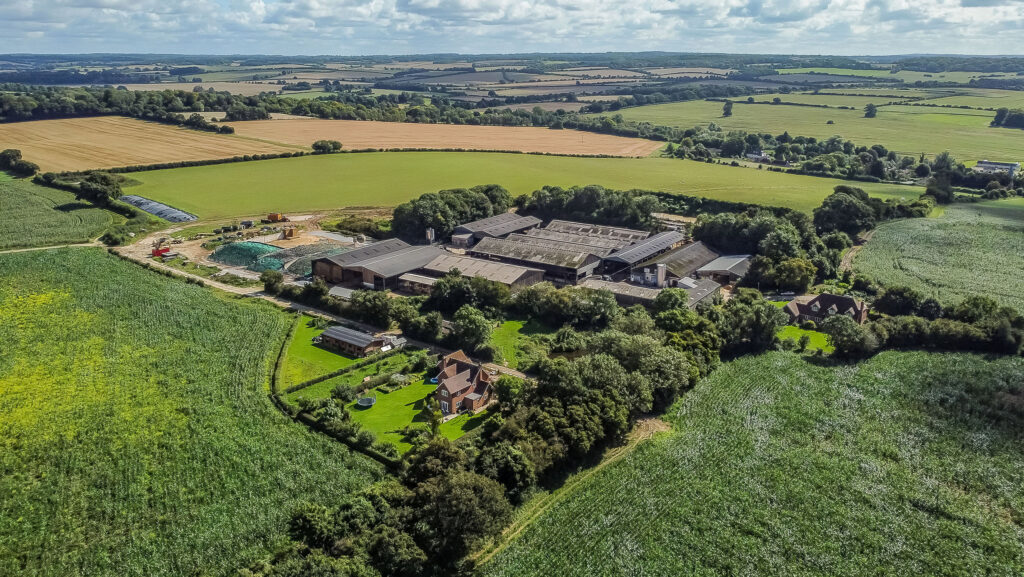
Church Lane Farm, Alresford © BCM Wilson Hill
Land agent BCM Wilson Hill sold Church Lane Farm in Hampshire on behalf of the Foote family.
Partner James Attrill also advised Ben and Molly on the purchase of Lipgate Farm, marketed by Cooper & Tanner.
The way the sale was conducted and the successive arrangements are testament to the strength of the family and their communication, says James.
“Managing the overlap between Church Lane Farm and Lipgate Farm is quite a logistical challenge, which is helped by the FBT,” he says.
Aside from establishing clear answers to the many conveyancing questions in a farm transaction, he suggests some other key areas needing attention if things are to go as smoothly as possible:
- Be clear about what you are taking – sometimes this can be a bit of a moveable feast. Even small but unexpected changes can sour the buyer-seller relationship. For example, don’t say you’re taking 10 gates but then take 12. Make a schedule and photograph relevant items.
- Equally, be clear about what is being left in terms of stocks such as silage, straw, or crops such as maize.
- Sales and purchases often take longer than vendors and buyers would like – try and get the right of pre-entry, for example to be able to sow new leys before completion. This will be at the buyer’s risk, but it’s a risk most are willing to take.
- Holdover – many farmers will be familiar with the term, which gives the seller the right to store grain, for example, for a period until it is sold. Alternatively, it may give the vendor access to harvest certain crops post completion.
- If you are considering applying for environmental schemes or grants, arm yourself with the detail needed to prepare an application, even if you can’t press the button yet.
- Staff – be clear with staff about what is happening – sales are a stressful time for all concerned and you need your “A Team” more than ever in this period. If any notices have to be served, make sure this is done correctly.