First EDP criticised for impact on nutrient mitigation market
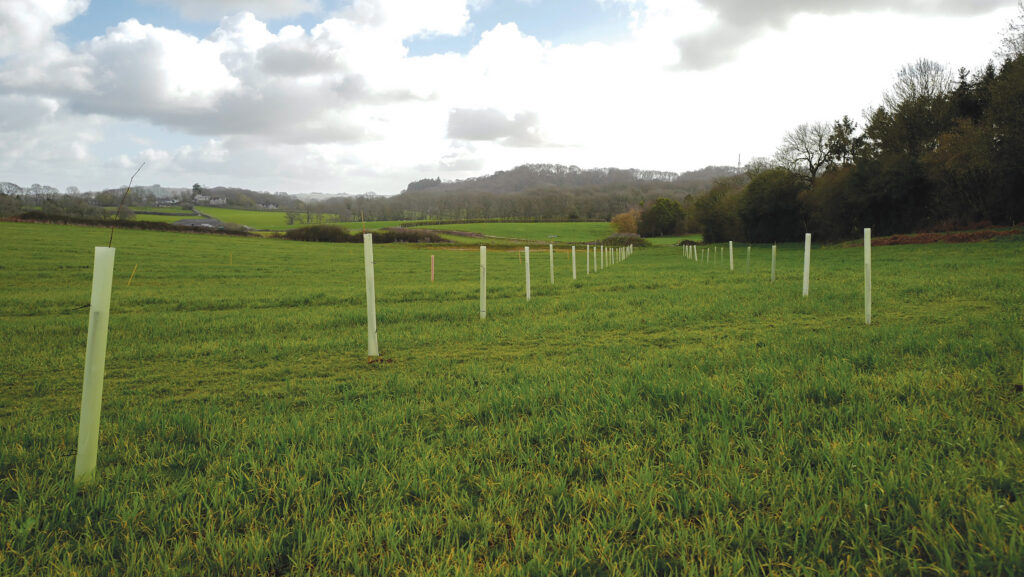 This Wiltshire arable reversion land is providing nutrient mitigation measures through Environmental Farmers Group © EFG
 Environmental Delivery Plans (EDPs) are the government’s answer to the challenge of increased nutrient pollution from nitrates and phosphates in England and will offer developers the option of paying a fee into a Nature Restoration Fund which Natural England (NE) will use to pay for conservation measures at scale.
This is designed to speed up the delivery of new housing. It is an alternative to the current method which sees developers buying nutrient mitigation measures for individual sites in the private market, largely by paying landowners and conservation bodies to alter land use to create nutrient credits.
See also: Planning bill set to change environmental markets for farmers
This system allows developers in more than 70 local planning authority (LPA) areas to achieve “nutrient neutrality” for their developments – in other words that the development will be “nutrient neutral” by not adding to nitrate or phosphate levels in a catchment.
Criticism and market concern
There has been widespread criticism of the proposed Norfolk EDP.
The risk, say critics, is that developers will be paying for actions that are potentially ineffective, which don’t prevent pollution from their developments, and may even increase the problem.
Environmental Farmers Group (EFG) has built a network of more than 650 farmers in nine regional groups and is active in creating credits in several catchments, in particular in the south of England.
It fears that the suggested levy by NE of £2,675 a home will significantly undercut nutrient projects that farmers are bringing forward in certain catchments.
“This will therefore likely severely impact the private market, which is exactly what the government is trying to support,” says managing director Digby Sowerby.
“The structure and design of the EDP does exactly the opposite of what it is set out to achieve – its ambition to deliver strategic nutrient mitigation which we support, but the top-down design and race-to-the-bottom approach will ensure less effective interventions, with race-to-the-bottom results.”
EFG estimates the typical cost of nutrient mitigation through the private market to range from £3,500 to £9,000 per home.
Consultancy Greenshank Environmental put the range at £2,500-£10,000, depending on the catchment and local conditions.
With no timeline having been given for the further planned EDPs, existing markets have been left uncertain, says Digby, adding that the market is already being undercut by local planning authorities (LPAs) purchasing land and working with NE, using government grant aid to offer mitigation at lower prices.
The CLA raised concern at the legislative stage over the potential impacts of EDPs on existing nature markets, the costs of administering the plans and the risks of compulsory purchase by NE to achieve the scale of measures needed.
Its consultation response will also include how the EDP proposals will affect smaller developments typical of CLA members, and whether the levy per house will be an attractive proposition for private landowners and managers to enter into agreements.
Market tension
The flat rate introduced by the EDP represents a new tension in the market, says Matthew Tucker, a director in the planning and compulsory purchase team at law firm Burgess Salmon.
“It will remain to be seen whether private actors continue to engage in the nutrient neutrality regime where market value could be drastically influenced by Natural England’s charging schedules.”
The proposed Norfolk EDP is a clear attempt to ease the developer’s journey to building houses, says Matthew, while also commenting that there is a core risk of underfunding for the EDP.
“While Natural England can revise charging schedules, there is significant onus on NE to generate accurate budgets to ensure that the EDP remains deliverable within the funding provided through the Nature Restoration Levy,” he says.
Matthew sees EDPs as the first of three limbs in tackling the nutrient issue, expecting that measures by farming and the water companies will also be required.
Call for urgent review of EDPs
Lawyer Alexa Culver is general counsel at environmental consultancy RSK Wilding, which advises landowners and others on habitat restoration for nutrient mitigation, biodiversity net gain and other conservation measures.
Alexa believes the whole system of EDPs needs to be halted and urgently reviewed. “It is evidently not fit for purpose, and wasn’t from the beginning,” she says.
In the meantime, she encourages those concerned about the proposed EDP to contact their MPs, respond to the consultation, and contact the Office for Environmental Protection (OEP).
“The OEP can be called upon to ensure there is transparency over how best available scientific evidence has, or hasn’t, been used by Natural England, and to ensure the conservation measures set out in the EDP comply with the law,” says Alexa.
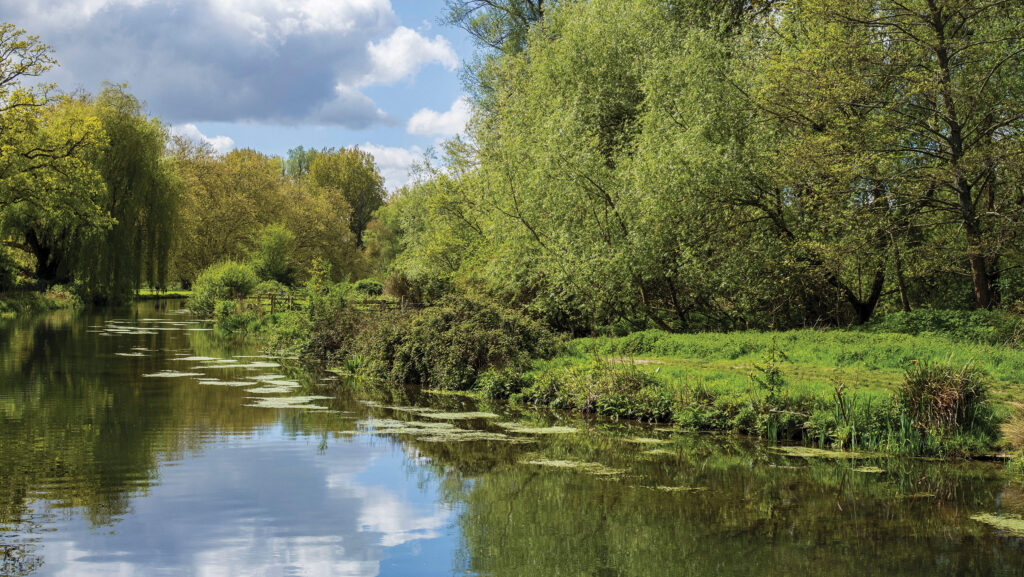
© Cavan Image/Alamy Stock Photo
Sally Hayns, chief executive officer of the Chartered Institute of Ecology and Environmental Management, has expressed alarm at over-reliance on compensation measures in the EDP, rather than mitigation.
She says that only a third of the proposed measures appear to directly reduce nutrient loads while some have been discounted.
“Nutrient-stripping sustainable Suds, designed to filter nitrogen and phosphorous and reduce the volume making its way to watercourses, would have been a reasonable additional requirement for developers, a planning condition for them to design into their schemes, as well as higher water efficiency targets for developments.”
Riparian buffer strips, integrated constructed wetlands, creating extensive areas of pools and marsh which have a filtering effect, would also be suitable measures, says Sally.
She also questions whether there will be sufficient funding to carry out everything that is required
EDPs and nutrient mitigation – the background
The Conservation of Habitats and Species Regulations 2017 (Habitats Regulations 2017) requires that the nutrient load reaching a protected habitat site must not be increased as a result of the development taking place.
Protected sites include Special Areas of Conservation (SACs), Special Protection Areas (SPAs) and wetland sites of international importance, known as Ramsar sites.
The nutrient neutrality requirement applies in 27 river catchments covering 31 protected sites and 74 local planning authorities in England.
Developers must take mitigating action to comply with the requirement, usually a mix of measures, including some at the development site, and by buying off-site nutrient credits created by landowners and conservation bodies for sale in the private market.
Environmental Delivery Plans (EDPs) were introduced as part of the Planning and Infrastructure Act 2025.
Natural England (NE) can make an EDP for a defined area, development type and environmental feature, identifying what conservation measures are needed and the fees to fund them.
Under the plans developers will be able to pay a Nature Restoration Levy to NE for each house they build. This goes into a Nature Restoration Fund to pay for the conservation measures.
This system is voluntary for developers and an alternative to the market-led system of buying off-site nutrient credits.
Sixteen nutrient pollution EDPs are in development. The Norfolk one is the first to go to consultation. EDP proposals must be approved by the Defra secretary of state, who must consider that the EDP passes the “overall improvement test”.
This requires that by the end date of the EDP, which runs for 10 years, the effect of the conservation measures will materially outweigh the negative effect of the development subject to the EDP.
Norfolk EDP and consultation
The proposed Norfolk EDP addresses nitrogen and phosphorus pollution affecting the Broads SAC, Broadland Ramsar site and River Wensum SAC.
It plans conservation measures at landscape scale in the affected catchments, including 109ha of fen creation and restoration, 395ha of land use change, largely taking this out of agricultural use, 162ha of fen management and deer management measures on 3,700ha.
The aim is to help progress up to 15,780 new homes in an area where nutrient neutrality rules are blamed for slow housebuilding progress.
The proposed EDP sets a levy of £2,675 for each dwelling of any size, before indexation and VAT, with the potential for the charges to be amended.
The draft Norfolk EDP only addresses nutrient impact in the area it covers so any other environmental effects such as impacts on protected species such as bats, badgers, or newts will still need to be considered by the planning regime.
One exception to this is 10ha of fen creation for a protected snail species.
The online consultation has only a short timescale of 28 working days.
Responses can be made online at the link above, by email to nrfconsultation@naturalengland.org.uk or by post to EDP Consultation Team, Natural England, Foss House, Kings Pool, 1-2 Peasholme Green, York, YO1 7PX.
The consultation closes at 9.29am on Tuesday 27 October 2026.