

How red meat supply chain benefits from working together
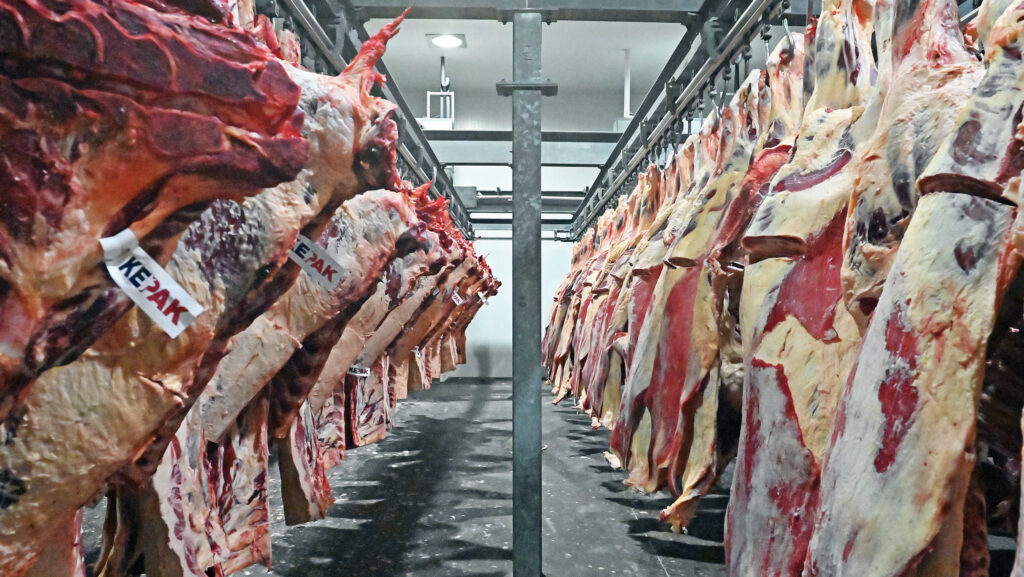 Locally sourced beef has a strong market appeal © Richard Swingler
Sharing more value across the supply chain will help secure a resilient future for the red meat sector, according to industry experts.
Processors and retailers say domestic beef and sheep producers remain central to the sector’s success. Working more closely together will create a more robust supply chain that will benefit everyone, they argue – including consumers.
See also: Why pneumonia is hitting more young grazing suckled calves
Collaboration was a key topic among more than 50 farmers and industry stakeholders who attended a Beyond The Farmgate visit to Kepak’s meat processing facility at Merthyr Tydfil, South Wales.
Price and appearance dominate consumer decisions when purchasing red meat, visitors were told. Provenance remains important, but concern about environmental credentials has fallen as household budgets tighten.
Expanding on this, there was often a difference between what consumers claimed mattered and what influenced them at the point of purchase, listeners were told.
“When you really observe what the consumer does rather than ask them, they think about two things: price and how it looks,” said José Peralta, chief executive of Welsh red meat levy body Hybu Cig Cymru.
Price had become increasingly important as beef and lamb competed against cheaper chicken. But support for locally produced meat had strengthened, he said.
“We’ve managed very well as a supply chain to correctly convince the consumer that domestic meat is better, fresher and something you want to have as well as support your farming industry and so on,” Mr Peralta said. Environmental concerns had become less influential as shoppers focused on affordability.
“When people have very tight purses and they struggle to afford the product, they think more about feeding themselves.”
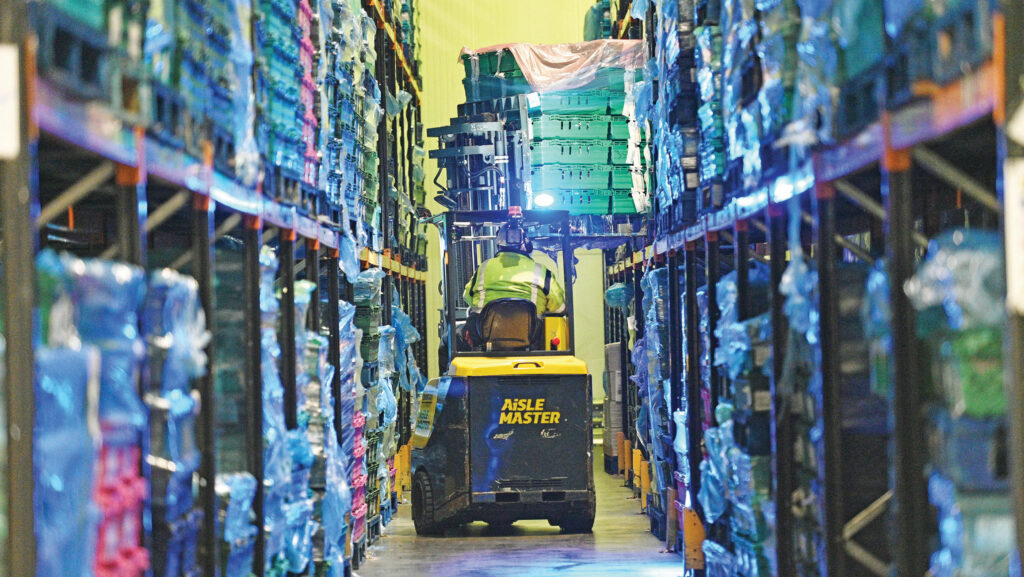
Kepak supplies local meat to a wide range of retail © Richard Swingler
Shared returns
Beef farmer and Kepak supplier Richard Roderick said he was striving to produce livestock as efficiency as possible.
Falling cattle and sheep numbers could threaten processor viability – and that would leave farmers with fewer outlets, he warned.“We’ve got three really good processors in Wales.
“You don’t want to lose a processor, because that will mean we have less choice,” he said. The industry needs profitable family farms to attract younger people into the sector.
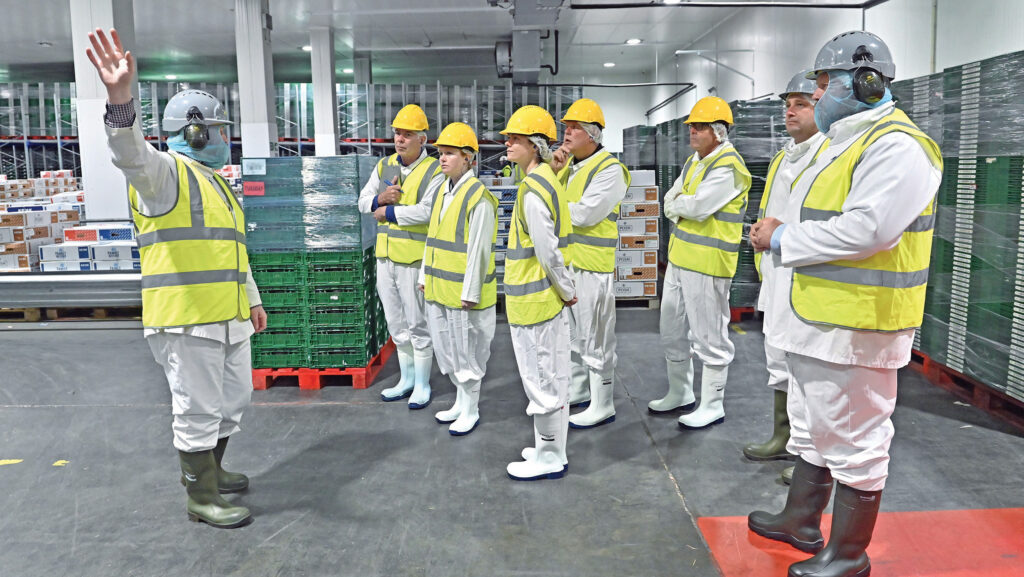
Kepak workers explains how the state-of-the art processing plant operates © Richard Swingler
Tom Finn, chief executive of Kepak’s meat division, said consumers interpret value differently. A higher-priced steak could represent value to one shopper, while another might choose a burger.
“Affordability doesn’t necessarily mean cheap,” he said. “It doesn’t mean a product has to cost less than everything else.
It’s about delivering what a consumer perceives as good value for money.” Processors and retailers are spending heavily on new product development and working together to achieve this – although many concepts never reached sustained commercial success.
“We probably have an 80% failure rate in terms of getting the right products to market,” said Mr Finn. “But when we get ones that do work, they work and we’re able to deliver on the volume.”
Demand for protein is expected to remain strong. Health trends and the increasing use of GLP-1 weight-loss drugs could create further opportunities for smaller portions and high-protein products.
“Our outlook on protein is really, really good,” said Mr Finn. “But the question is what protein the consumer is willing to pay for, or what protein the consumer perceives as value for money.”
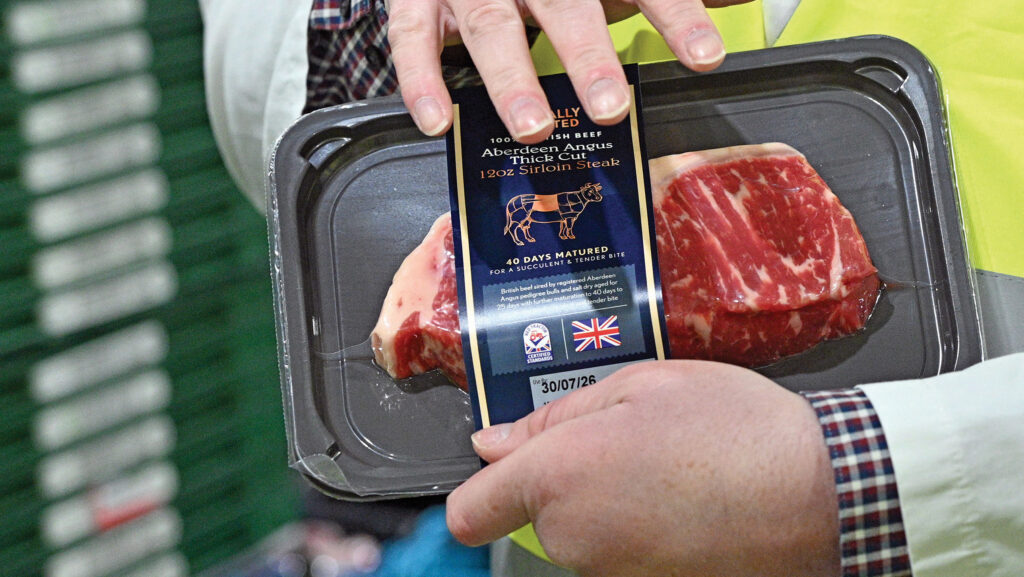
Beef cut appearance is a key driver for customers © Richard Swingler
Market challenge
The strongest warning concerned increasing imports of cheaper beef from Australia, New Zealand and South America.
Mr Finn said overseas supplies are already changing the market and will continue to affect British agriculture.
It is the biggest challenge facing the UK sector. British farmers might need between £6/kg and £6.50/kg to generate a sustainable return, while Australian and New Zealand beef could enter the UK at about £4/kg.
“It’s really important that the retailers support British farming,” said Mr Finn. “If you think about it, without the retailer to support British farming and to support beef farming, who else is going to support it?”
Tesco agriculture manager Tom Atkins said each part of the supply chain remain dependent on the others – from the farmer at one end through to the processor and retailer and, ultimately, the end consumer.
As a retailer, Tesco is working with farmers, processors and the Agriculture and Horticulture Development Board to improve on-farm sustainability and help ensure that its products are more appealing to customers.
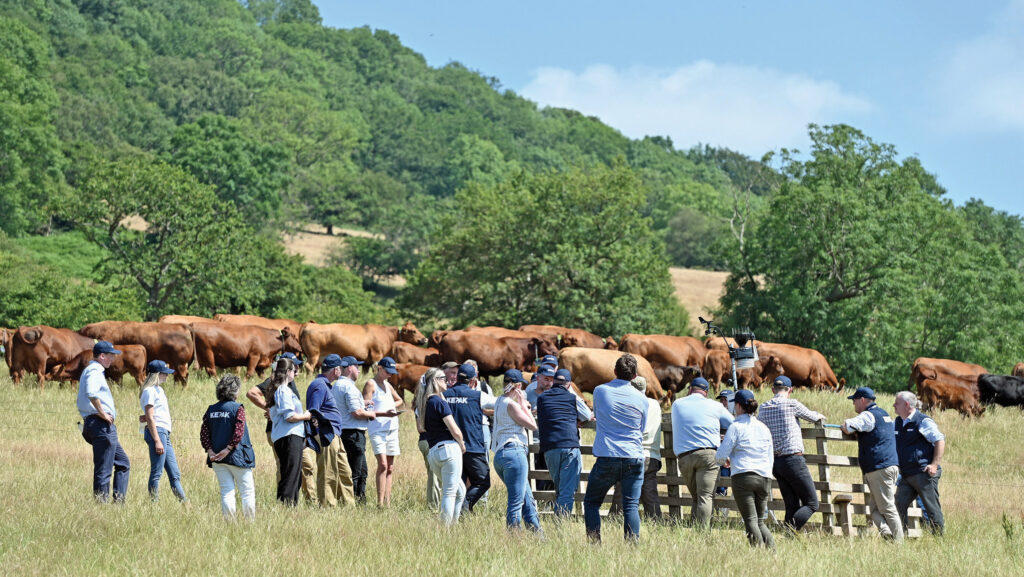
Visitors to Kepak farmer Richard Roderick heard how family farms underpin the beef supply chain in Wales © Richard Swingler
Explore more / Transition
Follow the experiences of our 16 Transition Farmers and access in-depth supplements, expert webinars, live events and practical content covering the challenges and opportunities facing farm businesses.
Transition is an independent editorial initiative supported by our UK-wide network of partners.
Explore the Transition hub for the latest insights, resources and events.
