

How to put nature on the balance sheet
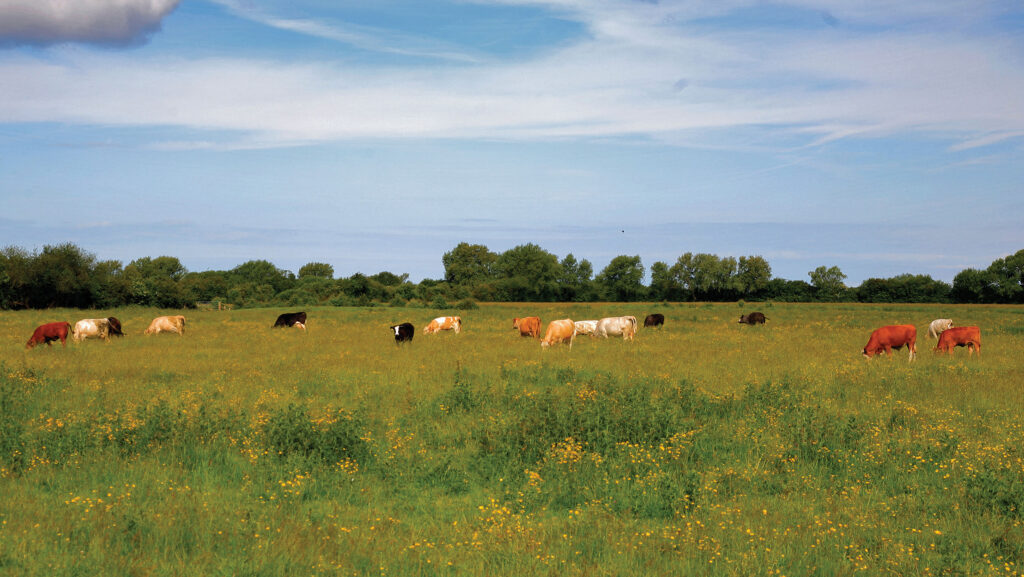 © Dave Porter/Alamy Stock Photo
Nature is an asset, not an add-on, and its value must be recognised in making farm businesses cost less to run, while also helping them access new income streams.
Far from being something found around the edges of fields, nature is part of the farm’s productive capital and an increasingly crucial part of its resilience – a point that came into much sharper focus after a year of record-breaking temperatures and climate extremes.
See also: MPs probe SFI shambles as farmers left in the lurch
What became apparent in the summer of 2026 is that where healthy and functioning ecosystems are in place, building more productive, resilient and profitable farm businesses is easier – and these are the ones which are generating income from improving their natural assets.
With supply chains actively looking for environmental measurements and outcomes from farming participants, those who have taken steps to manage their land in ways that create environmental benefits are in the best position to gain.
As Martin Lines, CEO of the Nature-Friendly Farming Network explains, putting nature on the farm’s balance sheet means that factors such as soil health and biodiversity are seen as economic assets rather than externalities.
“By doing this, it recognises the economic, social and environmental benefits that healthy ecosystems provide and shows how closely farming and nature are connected.”
The farming industry has been very good at promoting the value of food produced from our landscapes, he adds, but not so adept at recognising that it can offer other goods and services too.
Funding streams
“It’s been very one dimensional. You miss out on investment and other potential funding streams if you stick to just food production. Nature should be part of any contract negotiation now – because it has a value.”
He points out that the nation needs everything that farms can deliver, from food to healthy ecosystems and resilient landscapes.
“There’s a market for these other ecosystem services and we need to make sure that we are delivering them and being rewarded for that.”
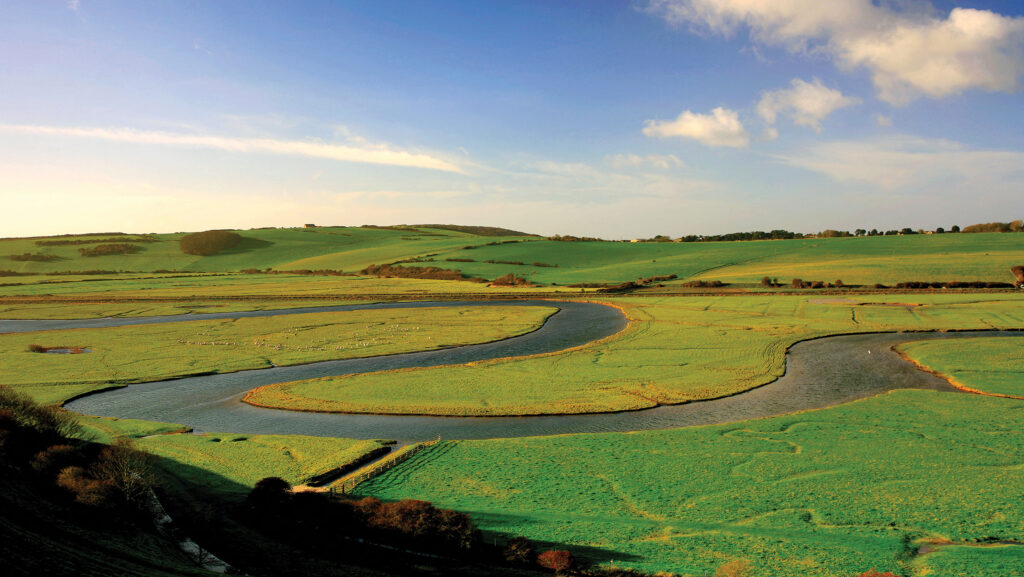
© Dave Porter/Alamy Stock Photo
On a typical arable farm, nature contributes value through higher yields, reduced input costs, drought and flood resilience, less pest damage and premium (or environmental) payments, he adds.
“Obviously not every environmental improvement generates a direct payment, but it may bring business benefits in the form of pollination or drought tolerance which are essential for success.”
Martin adds that there’s no time like the present to make the changes required.
“There’s been a coming together of two streams – the importance of nature and the urgency for it to be delivered in more resilient landscapes.
“The pace has picked up as big business has recognised that nature loss matters.”
Incentives
How to deliver will depend on the individual farm and what incentives are being offered, he notes.
“On my farm in Cambridgeshire, we altered our approach to cultivations, included cover and companion crops, left straw in the field and bought in muck to lift soil organic matter levels.”
All of these actions had costs attached to them, so he sought supply chain support for the way that the farm was being run.
Today, the business has four different supply chain contracts, investment from his local water company, as well as input from the local council and his local community.
“It’s about being proactive,” he says. “Find the things that you can do, measure the improvements you are making and look for funding to support that.”
Cluster groups are another avenue, suggests Martin. “What farmers need is consistent funding over the long-term in order to be able to deliver what the market needs.”
What are ecosystem services?
Ecosystem services are the goods and services produced by the natural environment for human wellbeing and quality of life. Examples include:
- Pollination
- Water regulation
- Natural pest control
- Shade and shelter
- Carbon storage
- Erosion control
- Nutrient cycling
- Clean air
- Wellbeing and recreation
Nature as an income stream
Where farming practices have been aligned with nature restoration and protection, there are various ways that they can make money. Some markets are still in their infancy, while others are moving on at pace:
- Government agri-environment schemes – payments for various actions in the Sustainable Farming Incentive and more targeted agreements in Countryside Stewardship
- Biodiversity net gain – create and enhance habitats and sell units to developers
- Nutrient credits – prevent nutrients entering protected water bodies
- Carbon credits – increase carbon storage in soils, woodland and biomass
- Flood risk/water management – floodplain restoration, river re-naturalisation
- Nature-based tourism – visitor experiences based on food, nature, heritage and the environment
- Other private funders – local companies, water companies, developers and so on seeking specific services or credentials input
- Reductions – reduced spend on fertiliser, fuel and sprays due to greater resilience
Private sector financial support
Private sector finance for nature recovery on farms comes in many forms.
That’s good news for farmers who missed out on the latest round of SFI 26 funding, after all the money was allocated in under six hours and valid claimants were locked out until the next round.
Where farms can deliver on environmental objectives, they may be able to access bank loans and capital packages at discounted rates, receive premium payments from food companies and retailers or sell ecosystem services such as carbon improvements to private buyers.
There are also joint initiatives, in which companies across food and non-food supply chains, pool their investment to support farmers who change to more sustainable systems.
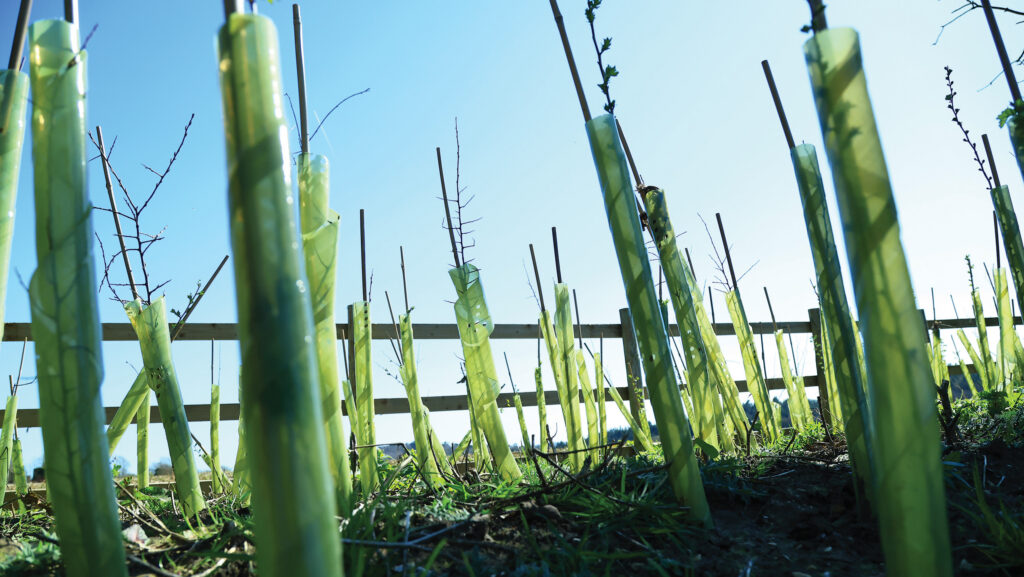
© AmArtPhotography/iStockphoto
A good example is the Food and Nature Resilience Fund from Lloyds Bank and Wildfarmed, which was launched earlier this year.
It differs from others in that it incentivises farming with nature without taking land out of production, supporting the principle that nature recovery and food production aren’t competing.
Upfront costs
As Ben Makowiecki of Lloyds explains, there can be upfront costs, yield impacts and operational difficulties when farms are changing, so the fund has been developed to help to provide a buffer and scale regenerative agriculture across the UK’s arable land.
“This fund will reward farmers for delivering nature and resilience while growing food, not instead of it.”
Bringing together businesses with a stake in resilient farming provides a more reliable financial model for farmers and should accelerate the change, he adds.
The Soil Association Exchange Market is another corporate-backed funding scheme that rewards farmers for reducing emissions, with participants receiving £60/t of CO2e reduced.
Some 50% of that is paid upfront, to help de-risk the transition, with the remaining 50% paid after verified positive change.
In certain parts of the country, Landscape Enterprise Networks (LENS) is another business model that brings organisations together to co-fund regenerative agriculture and nature-based solutions.
The programme aims to protect entire catchments and sourcing regions, by pooling the funds from 16 major commercial and public investors.
These companies benefit be reducing scope 3 emissions, increasing carbon removals and achieving nature goals within their supply chains.
Transition Farmer Ed Shuldham – Nature as an integral part of the business
© AdobeStock
Nature projects sit alongside arable farming and energy production at Wiltshire-based J.M Stratton & Co, in an integrated approach which taps into different funding sources to achieve the best outcomes.
Transition farmer Ed Shuldham points out that some of the projects have very little obvious financial value to the business while others represent significant new income streams, but that none of them have happened by chance.
“To get income from the likes of Biodiversity Net Gain [BNG] you have to pursue it,” he says. “You also have to recognise that many of these private markets are taking time to get going and often incur considerable entry costs, as well as coming with risks.”
Habitat bank
East Farm Habitat Bank, the business’s new BNG project, has just gone live.
Having registered 394 biodiversity units across a range of habitats in a 30-year timeframe, the units are now being actively marketed and a couple of small deals have been secured.
The project spans four fields, each of which can be activated separately, across a total of 80ha.
Offering woodland pasture, grassland, scrub and watercourse habitats at a range of distinctiveness levels, a winterbourne chalk stream has been re-wiggled to provide some of these.
“There is demand for BNG,” says Ed. “The fact that from November this year it will be mandatory for nationally significant infrastructure projects (NSIPs) will add to that demand, as they have to demonstrate at least a 10% increase in biodiversity.”
As founder members of the Environmental Farmers Group (EFG), the business has a ready-made marketing partner for its BNG units.
Having been involved with EFG for five years, Ed is made aware of other natural capital opportunities as they arise and whether the farm is eligible.
“A good example is that EFG is active in the nutrient offset market in this part of the country. We don’t have the right soil type to be able to deliver, so that’s not relevant here.”
Equalisation income, which is a benefit of being part of a larger group, means that the revenue from every trade is shared with the membership.
“There are a number of deals just happening, so we will soon see that money flowing through.”
Another way in which the business is being rewarded for nature is through its participation in government-backed agri-environment schemes, with an ambitious Higher Tier Countryside Stewardship agreement running as well as an existing SFI scheme.
“The Higher Tier scheme has been fantastic and has really allowed us to deliver for nature over a considerable area of specialist habitat that isn’t cropped,” continues Ed.
“Our in-house ecologist Robin manages that for the best possible outcomes.”
An SFI agreement covers environmental delivery within the cropped area, he explains.
“That money helps to support actions such as companion and cover crops, which have time and cost implications but help to make a difference.”
Ed stresses that the £100,000 cap that applies to new SFI agreements will have far-reaching implications for the business and may restrict its ability to provide for nature in the future.
“Larger farms are going to be really disadvantaged.
In our case, we have been able to employ a full-time ecologist and do much more for nature, as well as use his expertise to introduce measures across our cluster group.
Supply chain
“Capping the businesses that have gone above and beyond and made good use of the funding seems very short-sighted.”
Supply chain sustainability contracts are also being embraced on the farm, with oilseed rape being grown for Frontier Agriculture attracting a premium where certain farming practices are in place.
“We’ve done a few of these schemes, they work well and I quite like them, but I’m not sure about their longevity,” says Ed.
“It will be interesting to see how long the market will support them.”
In the same way, growing for Wildfarmed has also been attempted but the scheme proved too ambitious for a farm that doesn’t normally grow milling wheat.
“The learnings from it were really useful and as they are expanding into other crops, we will watch with interest. The focus on plant health to achieve end results is something that we will be looking at in more detail.”
New woodland has been investigated for its carbon sales potential but taking one of the least productive fields out of production to plant trees didn’t stack up, reports Ed.
The existing 200 hectares of woodland on the farm was mostly planted for amenity reasons, so much of it doesn’t have any forestry value.
The farm is also part of a 20 strong group that has put in a Landscape Recovery bid, with a decision expected imminently.
The submission centres on making the River Wylye more natural and, if successful, will take up 20ha of meadowland.
“We will still be able to graze these meadows at very low intensity but that would be primarily for conservation purposes, although it would support some food production.”
Ed is keen to stress that the farm does plenty of other things for nature, most of which don’t have any income attached but are the right thing to do.
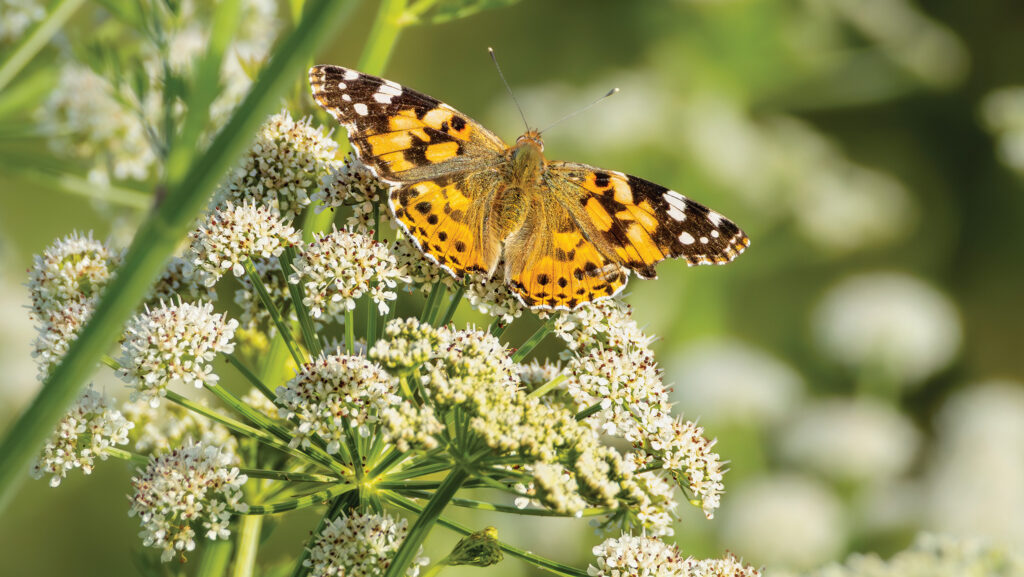
A good example is the planting of disease-resistant elm trees, which support a certain butterfly species.His final point is that 140ha of the farm are used to conduct trials, through a collaboration with the Hutchinsons Helix Farm initiative.
A particular focus is being given to improving nitrogen use efficiency, which will bring both financial and environmental benefits.
“That’s a key point. Nature can be part of a farm’s underlying profitability and resilience, even when it doesn’t appear in the farm accounts.”
Explore more / Transition
Follow the experiences of our 16 Transition Farmers and access in-depth supplements, expert webinars, live events and practical content covering the challenges and opportunities facing farm businesses.
Transition is an independent editorial initiative supported by our UK-wide network of partners.
Explore the Transition hub for the latest insights, resources and events.
