Ensus bioethanol plant to reopen with £100m funding deal
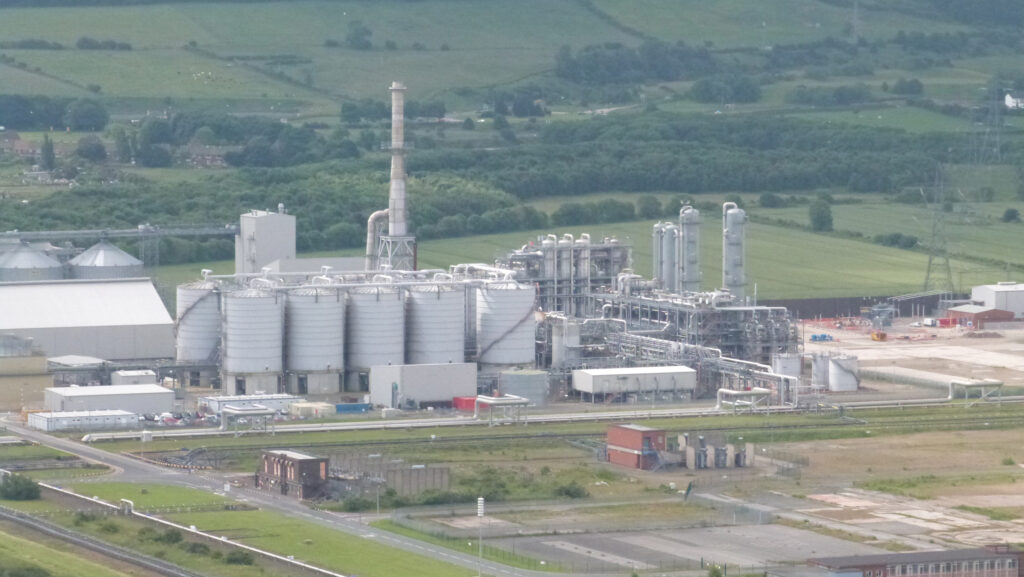 The Ensus plant © Ensus UK
 Farmers could regain a significant market for feed wheat, as well as a key source of animal feed in the North East, with the Ensus UK bioethanol plant set to reopen.
The government has offered Ensus £100m in financial support to resume production at its site in Teesside, after it ceased operations last September.
A deal has been signed between the two parties to ensure a continued supply of carbon dioxide – a by-product of ethanol production which is used by the food and drink industry and for stunning animals.
This is in direct response to disruption of carbon dioxide supplies due to the conflict in the Middle East.
See also: UK bioethanol firms ‘under threat’ from US trade deal
Ensus says the plant is ready to restart when necessary and the money will cover the fixed costs of having to operate in “standby” mode.
The plant typically buys more than 1m tonnes of feed wheat a year to produce 400m litres of bioethanol, along with roughly 350,000t of animal feed and 250,000t of carbon dioxide.
The alternative raw material is maize, which would more likely be imported.
Ensus UK chairman Grant Pearson said: “This agreement of support from the UK government is excellent news for our employees and those in our extensive supply chain.
“We hope to have the plant back in full operation soon.”
He added: “This deal will also be very supportive to the UK agricultural and fuel markets, including for the future expansion required in more sustainable aviation and maritime fuels and in the development of greener chemicals.”
US trade deal
The UK biofuels sector was dealt a major setback last year when tariffs on US bioethanol imports were removed as part of the US-UK trade deal.
This resulted in the closure of both of the largest producers, Ensus and Vivergo, which said they could not compete with cheap US supplies.
The new government funding may now help the firm compete with subsidised US imports.
Business and trade secretary Peter Kyle said: “As a government of action we will always do what’s needed to ensure resilience and protect British businesses from the worst impacts of global uncertainty.
“That’s why we intervened last Autumn to keep this critical plant on standby for situations like this.
“By restarting this plant we’ve acted swiftly to boost the resilience of our supply chains and protect critical UK sectors like food production, water and healthcare, as well as the jobs and communities that depend on these industries.”
The government is also reportedly considering “longer term regulatory changes” to improve the long-term viability of the UK bioethanol industry.
Industry reaction
NFU Combinable Crops Board chair Jamie Burrows said: “We understand this agreement will bring stability to ensure UK food businesses have access to a continued sustainable supply of carbon dioxide needed for packing and processing.
“It is disappointing that the £100m investment from government is not conditional on Ensus using British wheat to support British farming businesses.
“Historically, Ensus has favoured using imported maize over domestic wheat as a feedstock, and there has been no reference at all to the bioethanol production which is the primary output of the plant.
“Investment in food production is critical to the nation’s future and why we need a resilient food system to anticipate geopolitical shocks generated by the conflict in the Middle East.
“This move calls into question as to why the UK’s domestic bioethanol production was traded away in the US trade deal, resulting in the closure of our domestic bioethanol plants run by Ensus and Vivergo.”
He added: “We continue to call on government to commit to retaining a viable bioethanol industry in the UK, which also produces highly sought after animal feed in addition to carbon dioxide production.
“This should open up further market opportunities to incentivise UK wheat being used by UK biofuel plants and allow more biofuels from crops to be used in road transport and aviation.”