Potato growers urged to stand firm as European yields fall
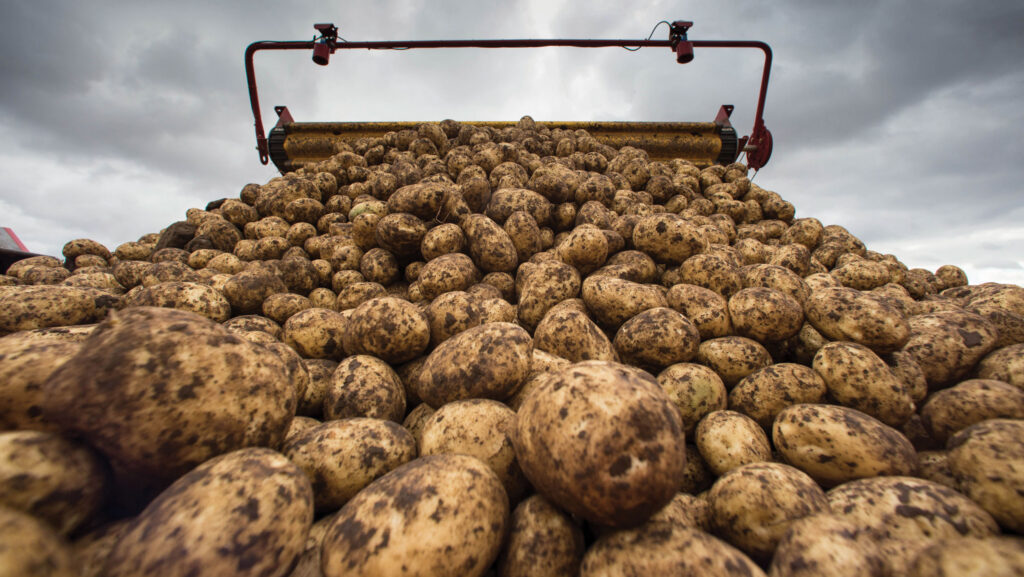 © Tim Scrivener
Potato growers are being urged to resist pressure to accept lower prices as reduced European yields support the market, despite subdued demand across several UK sectors.
The Ulster Farmers’ Union (UFU) has called on growers to take a strong commercial approach to selling, warning that prices must reflect the cost and risk of production.
UFU deputy president Clement Lynch said growers should understand the value of their crop and avoid accepting prices that undermine the long-term viability of their businesses.
See also: How grower plans to store 5,000t of potato in tough season
“Growers need to be strong sellers, not simply price takers,” he said, urging farmers to keep informed about market conditions and explore their selling options.
The latest Potato Call market report, published on 21 October, said lifting across northern Europe was about 90% complete, with yield reductions becoming clearer.
Belgian Fontane yields were estimated at 36.5t/ha, 18.8% below the five-year average and the lowest since 2018, despite rainfall boosting yields by about 10t/ha.
In the UK, trade remained slow, with buyers seeking to reduce ex-farm prices for all but the best-quality produce. However, there was little pressure from growers to sell, and prices were generally holding.
Washed white potatoes were quoted at £400-£500/t delivered, with 65mm-plus Orchestra reaching £630/t. Washed reds ranged from £450/t to £540/t for 55mm-plus Mozart, with exceptional prices of £630/t reported for retail and wholesale markets.
Maincrop packers reported good demand for bright, bold white potatoes, with prices typically at £300-£330/t ex-farm. Best-quality produce reached £350-£370/t, with exceptional samples at £400/t.
Subdued demand
Processing demand remained subdued, although growers were content to hold stock as most of the crop was now in store. Best frying varieties were quoted at up to £400/t ex-farm, with exceptional samples reaching £420/t.
Mr Lynch said potato production required substantial investment in seed, fertiliser, energy, machinery, labour and storage.
“Farmers cannot build sustainable businesses if they are consistently expected to sell below the true value of their crop,” he said.