Sugar beet growers offered sustainability payments
 © GNP
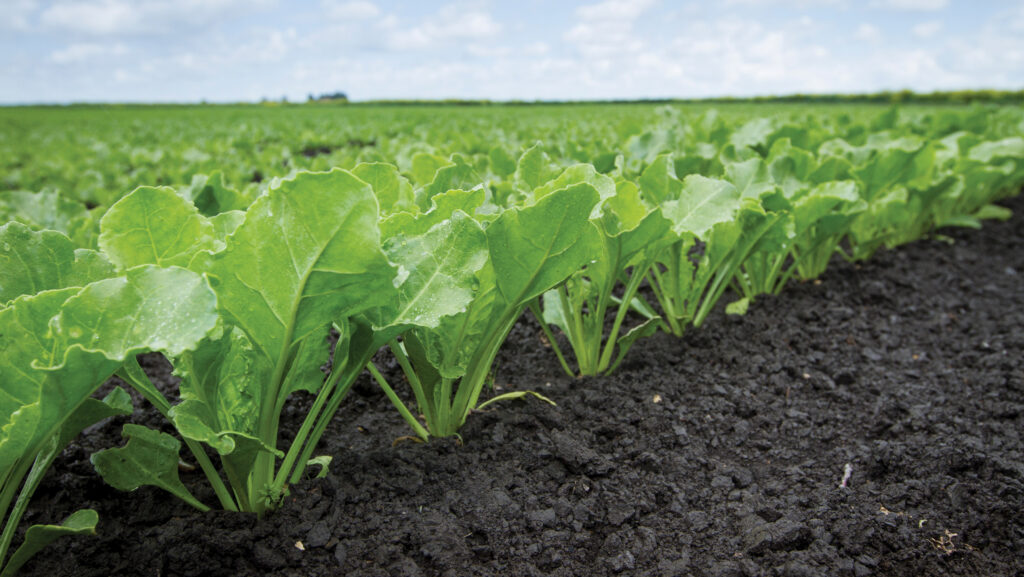
© GNP British Sugar has launched a new voluntary scheme, which will financially incentivise sugar beet growers to reduce carbon emissions on farm.
The initiative will offer growers financial rewards for carrying out sustainable farming practices linked to improving soil, water, biodiversity, and carbon.
British Sugar has partnered with the Soil Association Exchange to provide advise and verify environmental improvements on farm, with funding being provided through its exchange market.
See also: Sugar markets recover from lows as campaign ends
Dan Green, agriculture director at British Sugar, said: “Through this initiative, growers will receive 50% of the incentive upfront to support the changes on farm.
“This reflects our commitment to helping growers meet rising environmental expectations while continuing to supply customers with responsibly produced home-grown sugar.
“The Soil Association Exchange offers our growers an independent, practical, and clear way to track sustainability improvements, benchmark progress, and access tailored support – all without adding unnecessary complexity.”
Joseph Gridley, chief executive at Soil Association Exchange, added: “We know that trying new practices inherently carries risk, and we hope this new financial and advisory support will give the reassurance that farmers need and accelerate the transition of sugar beet to a more resilient and lower-emission future.”
Global sugar markets
Conflict in the Middle East led to sugar markets rallying around the world.
The Sugar No 11 New York contract, widely used as the benchmark for raw sugar trading, stood at 15 US cents/lb (£260/t) on 7 April, still relatively high despite easing slightly from its recent peak.
UK sugar beet growers with a percentage of their contracted tonnage on index-linked contracts may be able to lock in higher prices and benefit from the recent price rally, with the index-linked beet price lifting above £28/t.
NFU Sugar commercial and market insight manager Gareth Forber said prices have lifted from as low as £21/t in February to roughly £28/t to £29/t.
Prices in the EU have also increased, with spot prices in Northwest EU trading at roughly €450/t (£392/t).
However, on-farm costs are also rising, with both fuel and fertiliser surging in the past month, potentially affecting future planting decisions.
Mr Forber added that sugar beet is more intensive in the use of fuel and fertiliser than cereals and rapeseed, with these inputs accounting for more than 30% of the direct growing costs.