Retailers accused of hoarding dairy margins
 © Martin Lee
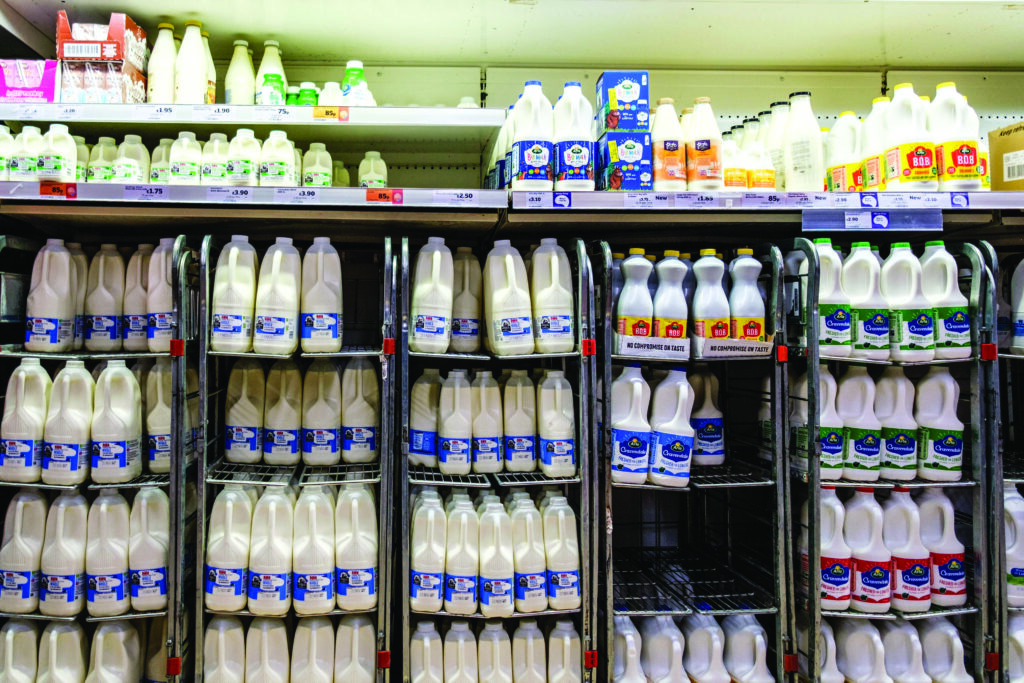
 As dairy producers exit the industry due to low margins, retailers are putting their milk supplies at risk by not passing on lower prices to their consumers, analysts have warned.
Dairy producer numbers in GB have dipped below 7,000 for the first time, coming off the back of sharply lower milk prices and rising costs last winter.
See also: Milk prices improve, but outlook remains uncertain
And while cash in the dairy supply chain has increased by £685m over the past year, the amount reaching the farmgate has fallen by £352m, says consultant Nick Holt-Martyn of The Dairy Group.
“Consumers are spending the money, but it’s not reaching the primary producer,” he said. “I don’t believe it’s the processors; it’s the retailers that are seeing their dairy margins go up.
“The retail milk price has gone up by 12%. What’s supposed to happen is that you reduce the price at the producer end, and that discounts the price all the way through. Consumers see a better deal; they buy more milk and eat more cheese. But we don’t see that.”
Butter and cheddar prices have reached new lows, down 48% and 35% year-on-year, respectively, while skimmed milk powder and whey have fallen by 5.3% and 3.5% over the past month.
But in a bid to secure future milk supplies, processors have made several positive price announcements this month, with Saputo increasing its price by 1.75p/litre, First Milk by 0.6p/litre, and Belton Cheese by 1.5p/litre.
M&S and Waitrose have also increased by 1.35p/litre and 1p/litre, respectively.
“The true cost of production is around 50p now, so prices below 40p are not acceptable,” said Mr Holt-Martyn.
Producer numbers
When considering producer numbers, it is important to look at the wider context, notes Becki Reay at Kite Consulting.
“The most recent numbers show 160 herds exiting in the past six months (October 2025-April 2026), but the data hides relevant detail,” she said.
“This was after only 30 exits in the previous six months. The annualised number of 190 exits is in line with the exit rate we have seen over several years (circa 2.5%). I would expect that herds delayed planned exits last summer because the economics were unusually favourable.”
Meanwhile, milk supply dropped 2.9% below the five-year average in the June heatwave, with the AHDB estimating a loss of 18.5m litres across both May and June, tipping the UK from over-supply to under-supply.
“We have already seen milk volumes drop, both at individual farm level and on the GB daily deliveries data,” said Ms Reay.
“I have heard some farms losing up to eight litres per head at the end of June. It is unlikely these cows will fully recover the milk lost in their current lactation.”
Auctioneer’s view: Dairy cow throughput on the increase
There was a shortage of dairy cows entering auction markets in the first half of this year – but over the past month, numbers have increased.
“The barren cow trade has been good, and people have been supplementing their milk cheque by selling their barren cows,” explained Jonny Dymond, senior auctioneer at Shrewsbury auction market.
“Anyone who has had a surplus has needed it to maintain their own herd numbers.”
For flying herds, there has, therefore, been a lack of cattle to buy.
“That’s what’s been driving strong prices. The low milk price has been fuelling more dispersal sales, and the average for heifers was over £3,000, which we’ve never seen before,” he added.
“We have had cows from commercial dispersals peak at £4,200, and demand is massive.”
The milk price versus the fresh cow price is out of balance, said Mr Dymond.
“There just aren’t enough surplus cattle, and with the Bluetongue and Brexit restrictions cutting off imports, it tightens supply.”