Strong trade for dairy replacements, but culls disappoint
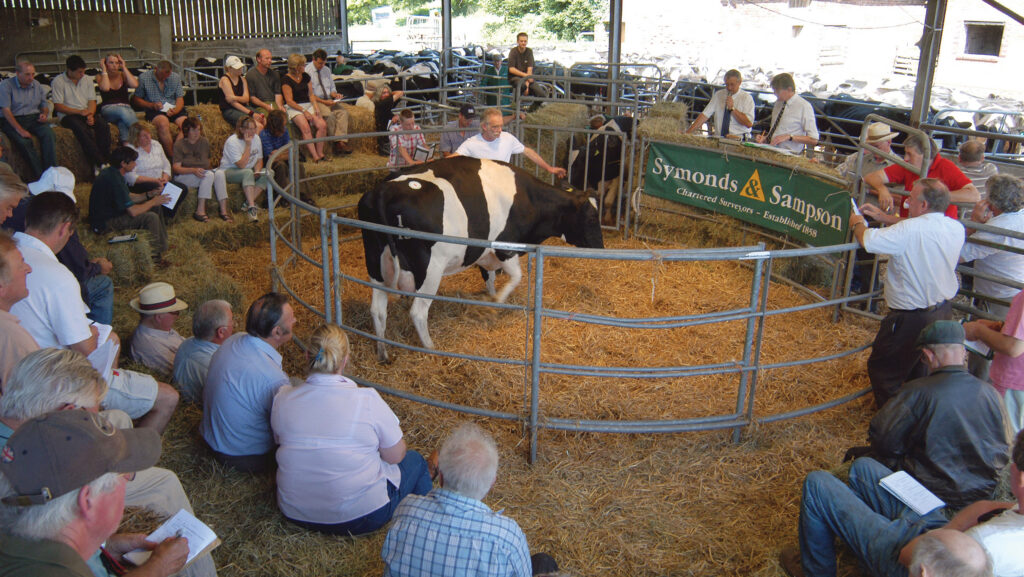 © Dave Penman/Alamy Stock Photo
 There is a mixed picture in the cattle trade, with dairy replacement heifers holding firm at more than £3,000/head, supported by stronger milk prices and tight heifer supply.
The cull cow trade, however, remains subdued amid weak consumer demand – though processors expect this to pick up as Christmas approaches.
See also: Find all our market prices in one place
Leek market in Staffordshire saw swift trade on dairy cattle last week, with a top price of £3,400/head.
“The dairy cattle replacement trade is good,” said Meg Elliott, dairy cattle auctioneer at Leek Auctions. “Prices have held quite well, largely as the number of cows available is lower.”
While replacement supply isn’t there, demand remains strong, she said.
“Trade ebbs and flows around the 50-70 cows mark on sale days, but with the milk price looking more positive we are hopeful we could see cows fetching in the region of £3,500-£4,000/head going forward.”
Mark Davis, director at Kivells Auctioneers in Exeter, also reported strong demand for replacements.
“We’re not seeing a huge number of dispersal sales now, so freshly calved heifers are tight in number. We have seen cows fetch prices over £3,000/head which is encouraging.
“Looking ahead I expect numbers to remain tight, so we may well see cows a shade dearer in the coming months.”
Cull cows disappoint
Although tight availability is supporting the value of heifers entering the herd, the market for cows leaving the herd is less positive.
“The cull cow market remains relatively static, with the GB base price falling 40-50p/kg over the past five weeks,” said Stuart Vile, beef marketing manager at Meadow Quality.
Data from the Livestock Auctioneers Association also shows a 2.8% drop in price for dairy-bred cows week-on-week in the week ending 8 September.
Almost 1,100 cull cows went through the markets, including 631 dairy-bred cows, averaging 188.4p/kg.
Mr Vile said the drop has, in part, been caused by lower consumer spending. He also pointed out that EU markets have been saturated with cow supplies due to the hot weather this summer.
“We believe the cull cow trade will remain relatively flat, but anticipate that we will see a change in the next four to five weeks when, we hope, prices will start to rise as Christmas spending kicks in.”