Waitrose champions ‘regenerative farming’ on milk bottles
 © AdobeStock
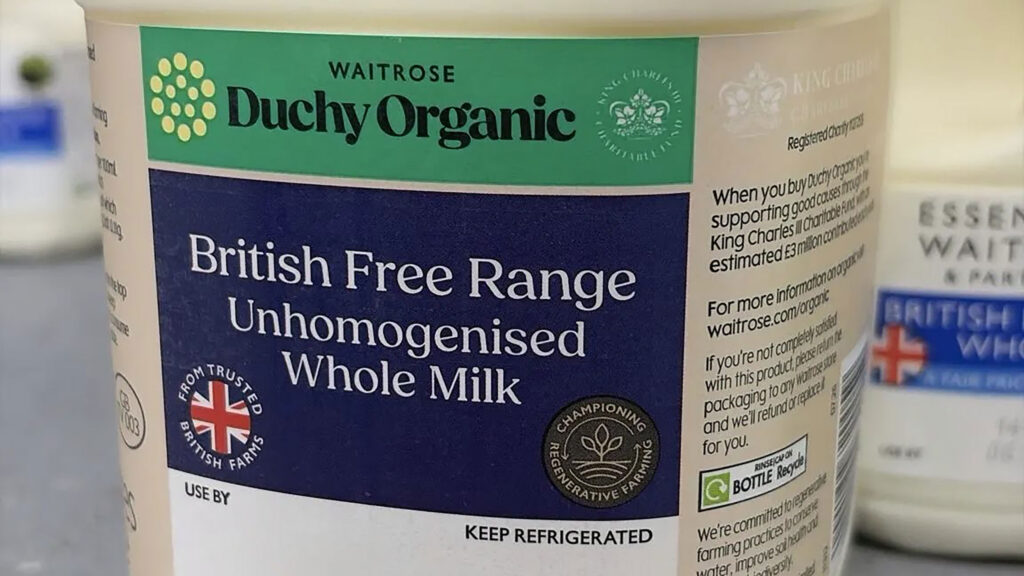
 Waitrose is introducing a new on-pack logo highlighting regenerative farming practices used by its 40 British dairy suppliers.
The “Championing Regenerative Farming” logo will appear on the retailer’s own-brand fresh cows’ milk from September, as Waitrose seeks to make farm-level environmental practices more visible to shoppers.
See also: Analysis: Free-range milk – separating fact from fiction
Waitrose requires cows supplying its fresh milk and cream to have access to outdoor grazing for at least 183 days a year, which the retailer markets as “free-range”.
Charlotte Di Cello, Waitrose chief commercial officer, said: “We’re immensely proud to work with farmers who are taking proactive steps to farm with nature.”
She said the logo would give customers reassurance that farmers supplying everyday products were “staying one step ahead of the herd in protecting nature”.
Regen practices
Among the suppliers adopting regenerative practices is Stuart Rogers of Longmoor Farm in Dorset, where measures include cover cropping, agroforestry, as well as monitoring and improving baseline biodiversity.
The farm stopped using soya in cow diets a decade ago, replacing it with home-grown maize established without ploughing to reduce soil disturbance.
Mr Rogers has also planted new hedgerows containing willow, poplar, maple and hazel to provide shelter and additional grazing for his Holstein herd.
© Waitrose
He said: “We’ve been doing a lot of this as a group for 20 years or so, but now it comes with more urgency.
“We are a nimble group, able and willing to take on challenges, especially as people learn it’s making their businesses more resilient.”
Waitrose said consumer research involving 1,095 people in July found growing interest in food produced using nature-friendly farming methods, cited by 53% of under-45s and 58% of those aged 45 and over.
Martin Lines, Nature Friendly Farming Network chief executive, said supermarkets had “a huge role to play” in educating consumers about farming methods.
He called the move “a step in the right direction”, but said regenerative production needed to become “the rule, not the exception”, warning that consumers were increasingly alert to “corporate greenwashing”.