Farmers cut fertiliser use in response to rocketing prices
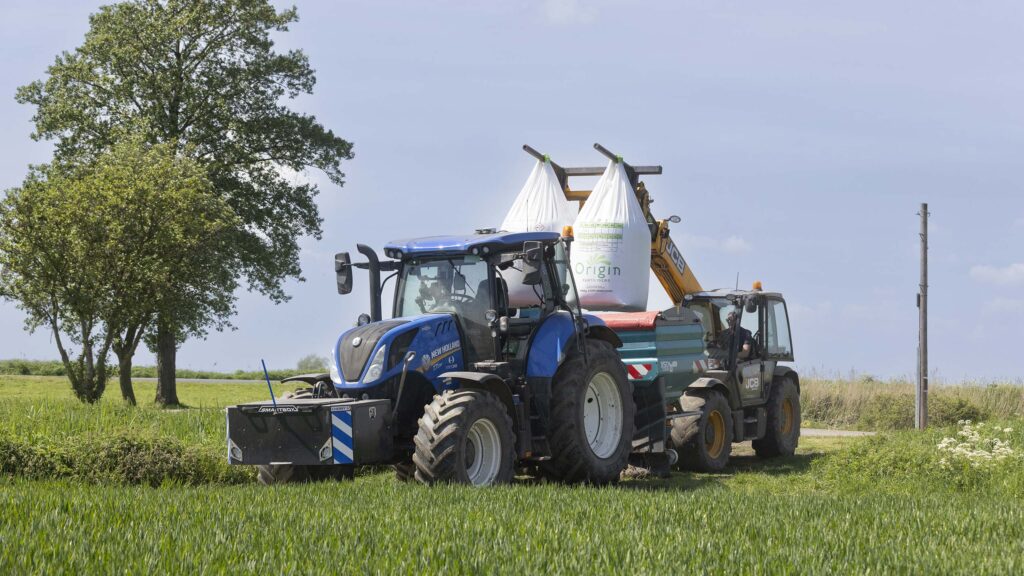 © GNP
© GNP Major disruption to fertiliser supplies from the Middle East has led to prices surging throughout the spring and becoming unaffordable for many farm businesses.
Global nitrogen demand is forecast to decline notably during 2026, according to Rabobank’s Semiannual Fertiliser Outlook, with farmers reducing application rates, delaying purchases and shifting crop choices in an attempt to reduce costs.
Rabobank’s outlook for 2026 points to ongoing pressure on farm profitability alongside downside risks to global crop production and food price stability, with higher fertiliser prices to continue into next year.
See also: Farm suppliers group lobbies for action on fertiliser
The report’s author, farm inputs analyst Bruno Fonseca, said: “Fertiliser affordability has deteriorated rapidly.
“Prices for nitrogen and phosphates have risen far faster than agricultural commodity prices, compressing farm margins and accelerating affordability stress.
“Nitrogen markets are the most exposed. Disrupted trade flows, higher energy prices and production curtailments have driven a sharp increase in urea prices and tighter global balances.”
Rabobank notes that a prolonged conflict in the Middle East or extended closure of the Strait of Hormuz would significantly disrupt supply chains, with more sustained impacts on fertiliser supply, prices and demand.
The report indicates that farmers may switch to crops that require less nitrogen or phosphates, or reduce planted area, which could impact fertiliser demand for a longer period.
Doriana Milenkova, senior farm inputs analyst at Rabobank, said European fertiliser prices surged in March with urea lifting by about 40% from pre-conflict levels, nitrates up by 15-20%, and ammonium sulphate up by 12%.
Ms Milenkova added: “For farmers, fertiliser affordability is now the primary concern.
“Nitrogen fertiliser prices were already more than 20% higher at the start of 2026 compared with 2025, and the conflict-driven surges have further widened the gap between fertiliser and crop prices.”
Weekly fertiliser prices
UK-produced ammonium nitrate (34.5%) was quoted at £521/t delivered in early April, up by £119/t on pre-conflict levels.
Meanwhile, imported ammonium nitrate was trading at £530/t and granular urea (46%N) averaged £631/t.