Farmland sales rise despite political uncertainty
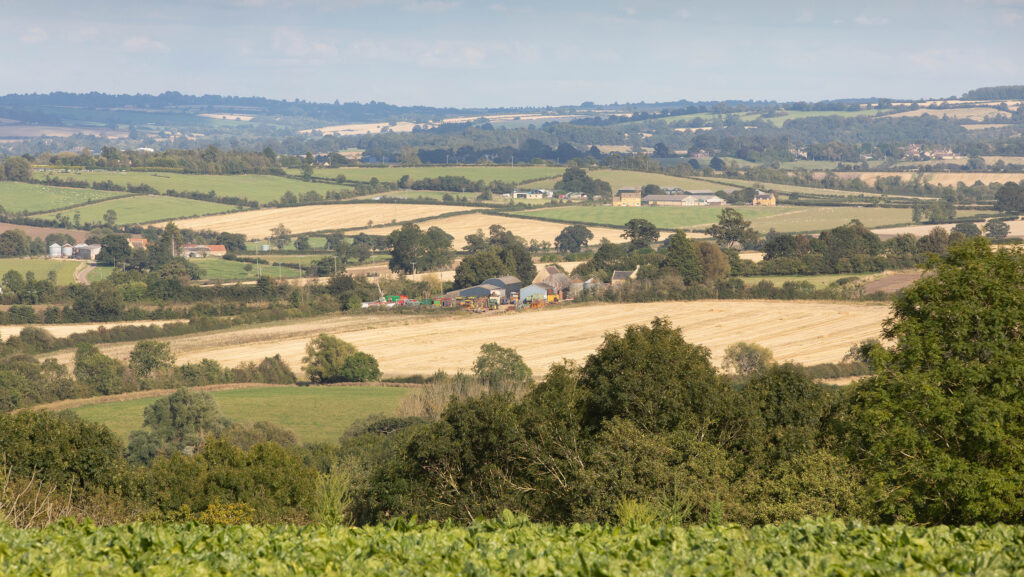 © Tim Scrivener
 Political uncertainty is continuing to shape England’s farmland market, despite more farms coming up for sale than at any time in almost 20 years.
While the government’s Farming Roadmap has provided greater clarity for agriculture, Strutt & Parker head of estates Sam Holt expects trading conditions to remain uneven.
“The more influential factor when it comes to sentiment is likely to be the resignation of Keir Starmer, which has introduced uncertainty to the market and some speculation about future taxation policy,” said Mr Holt.
See also: Farmland prices robust despite sharp drop in sales
Analysis by Strutt & Parker found 177 farms were publicly launched between January and June 2026, up from 167 a year earlier and 16% above the five-year average.
Despite the increase in listings, the total area marketed remained broadly unchanged at just under 58,500 acres.
“Overall, the market remains resilient, but there are inconsistencies, with significant variations in supply, demand and the prices being achieved depending on location and quality,” said Mr Holt.
Market outlook
The south-west and east of England saw more farms come to market, while availability fell slightly across parts of northern England.
High-quality holdings continued to attract strong demand, particularly from dairy and poultry businesses seeking well-equipped farms.
International buyers also remained active in the market for prime residential estates.
Demand for larger estates, however, was more subdued, with some properties that failed to sell last year being divided into smaller lots to widen buyer interest.
Mr Holt added: “In some of the more sparsely populated arable areas, for example, the market is thinner than it used to be, reflecting the current squeeze on cereal growers’ incomes and 18 months of uncertainty around farming and taxation policy.”
Softer land values
Early sales data also points to softer land values.
Average arable land sold for £10,500/acre in the first half of 2026, 6% lower than in 2025, although still about £1,500/acre above pre-Covid levels.
Average pasture values also eased by 3% to £8,600/acre.