Farmland values: Why location matters more than ever
There is plenty of money looking for decent-sized commercial farms, but buyers are choosy and easily put off by any problems such as difficult access, buildings needing investment and public access.
Agents report a largely resilient market, but with some softening of prices on the arable front in particular. More than ever, the market is nuanced and very location and site specific.
See also: Why valuation preparation is key under new IHT relief regime
Underlying influences
The bank base rate is now seen as unlikely to fall further this year, inflation remains stubbornly above the Bank of England’s 2% target, US-Iran action continues and arable farms have generally had a run of three poor years.
In addition, this week’s change of prime minister will inject further caution until the implications for rural and tax policy is clear.
Will Matthews, head of farms and estate sales at Knight Frank, says that while deals are being done, negative news has made buyers cautious and sellers reluctant, with deals taking longer to get over the line.
“The biggest issue isn’t affordability, it’s really sentiment,” he says.
“There is still a huge amount of money out there, and we have achieved some high prices recently, with plenty of interest in our latest launches.”
However, there is still a fair lack of stock of any real quality, he says, with the low level of sales making it impossible to say what an acre of land is worth.
“In the past, we’ve talked about regional sub-markets, but now every sale seems to have its own microclimate.”
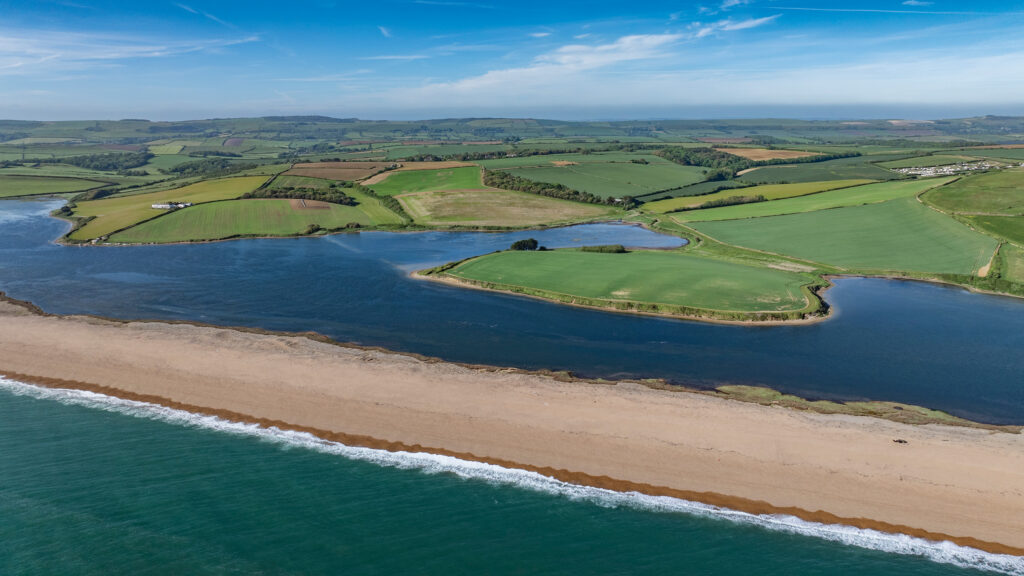
Knight Frank hopes to close a deal soon on Higher Farm, Langton Herring, Dorset, on the market at £10.6m © Knight Frank
Guide price valuation challenge
This echoes the opinion of most agents, with valuations tricky to pin down, and an insistence on overambitious guide pricing by some vendors leaving some farms on the market for longer than anyone would like.
Some farms that were launched last year are now being remarketed at lower guide prices.
More farms are coming to the market because of a lack of succession, with children pursuing careers off the farm, says Andrew Chandler, head of rural agency at Carter Jonas.
“There’s also a bit of consolidation, with some offlying land sales, directing the proceeds into higher-yielding developments or commercial units.”
Vendors need to be pragmatic, he cautions. “It’s not pretty, it’s a thin market with a reduced buyer pool and aspirational pricing, at the request of vendors, is an issue.”
While the change of prime minister is unlikely to trigger significant short-term changes to agricultural policy, the potential for shifts in spending priorities, taxation and rural policy direction may encourage a wait-and-see approach among some vendors and purchasers, he suggests.
Prime land interest
GSC Grays has seen strong demand for the right land, with bare blocks of anywhere between 50 acres and 600 acres sought by farmers looking to expand.
The firm is currently closing deals on a block of almost 600 acres of prime arable land offered in six lots in North Yorkshire.
Launched in late April, it attracted bids ranging from £12,500/acre to £16,500/acre, says director of farms and country houses John Coleman.
Sitting between Ripon and Thirsk, the land had a guide price of £7.2m (£12,000/acre) for 598 acres of predominantly Grade 2 arable land, with modern grain storage and drying for up to 4,000t of mixed crops.
Eighteen separate and combined offers were received during a four-week marketing campaign for the lots ranging from 50 acres to 100 acres, with the grain store included in the largest lot.
John values run-of-the-mill Grade 3 land at £8,000-£10,000/acre, with poorer Grade 3 and running into Grade 4 at £6,500-£8,000/acre
While biodiversity net gain is a relatively slow market, the wider natural capital market is still well funded, he says.
The firm sold the Kennel Club’s 7,500-acre Emblehope and Burngrange Estate in Northumberland with a guide price of £8m.
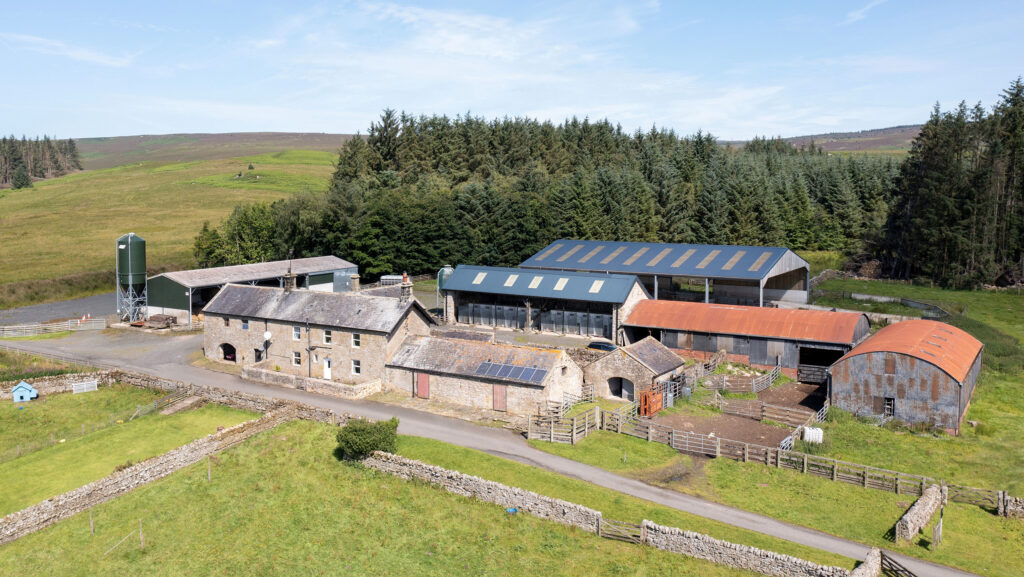
Emblehope and Burngrange Estate, Hexham, Northumberland, sold by GSC Grays, guide price £8m-plus © GSC Grays
It is to be rewilded by Restore, which undertakes nature restoration at scale.
GSC Grays will launch a 350-acre arable farm just south of Sunderland later this year.
Also in the North East, agent Robin Jessop is seeing plenty of blocks of land coming to the market, but few whole farms. It has a 100-acre block and a 250-acre farm coming soon.
The bare land being offered is sometimes the result of consolidation and restructuring, often because the next generation is not going to be farming, says the firm’s Andrew Dickens.
More is being done off market, which Andrew estimates accounts for roughly one-quarter of the firm’s sales these days.
CKD is an independent agent working mainly in the private market, acting for buyers and sellers of blocks of farmland, commercial farms, estates, country houses, grouse moors and fishing rights across Great Britain.
While there is still plenty of money (often made outside farming) in this market for the right property, it feels steady, says director Charlie Evans.
North West
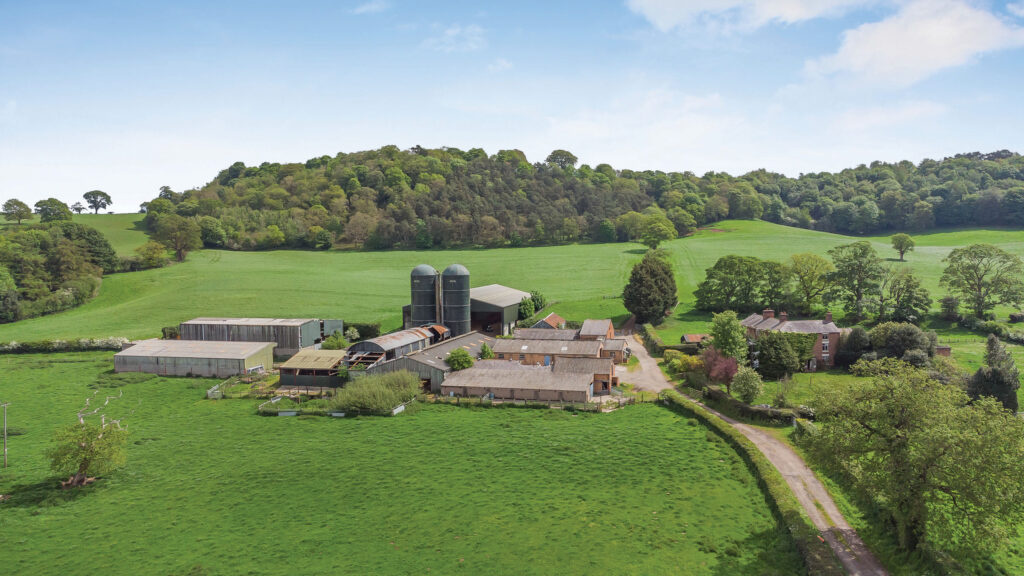
Offers have been made on Oak Farm, Broxton, Cheshire, on with Barbers Rural with a guide price £4.075m © Barbers Rural
The Shropshire/Cheshire market remains remarkably strong, says Mike Taylor of Barbers Rural, which has several properties coming to the market in the near future.
“I thought we might have seen a bit sticking, but there is no sign of it,” he says.
“Although many arable and dairy producers are struggling, beef and sheep are doing well and looking to expand.
“The vast majority of buyers are farmers – the industrialists that were buying land for carbon sequestration two years ago are not so evident, the biodiversity net gain market is there, but is not strong.”
Savills says 56% of the land publicly marketed in Great Britain in the first half of the year was arable land.
Head of farm agency Alex Lawson says some Grade 3 and even Grade 4 arable land has sold well for tree planting, with Forestry England quite active in the market and buying decent-sized blocks.
The firm reckons farmland values in Great Britain fell 1.4% in the first half of 2026.
Rollover investment is still a strong factor, but there is less land being bought for development, says Alex.
Record number of launches in 2026
Analysis by Strutt & Parker identified 177 farms and blocks of land of more than 100 acres that were publicly launched in the first six months of this year, in England.
This is more than in the equivalent period for almost 20 years, says the firm, although the acreage, at 58,500 acres, was almost the same as in the first half of 2025 and 8% above the five-year average.
“There is only a limited amount of data available on sold prices in 2026, but what we have points to less arable land selling for more than £12,000/acre,” says head of estates and farm agency Sam Holt.
“We have seen a 3% rise in the amount selling for £10,000-£12,000/acre and an 8% increase in the amount selling for £8,000-£10,000/acre. This means the average arable value for the first half of 2026 is currently sitting at £10,500/acre.
“This is 5% down on 2025 levels, although this gap may well shrink once we have more data. This is still £1,500/acre more than pre-Covid levels, so it remains high in historical terms. The average price paid for pastureland during the first half of 2026 is 3% lower than in 2025 at £8,600/acre.”
The proportion of farms either under offer or exchanged after six months has risen slightly, but remains below the five-year average, says Strutt & Parker.
Demand is strongest for dairy and arable farms, with mixed farms slightly less likely to have sold.
Well-equipped poultry farms are also attracting strong interest, says the firm, while international buyers are more active in the prime residential estates.
Just over half of farms that do sell make their guide price or more, although this proportion continues to fall (to 52% in 2025) and is now well below the peaks seen in 2021 and 2022.
About one-third of the farms marketed in 2025 are still available (21%) or have been withdrawn (12%), with larger farms most likely to have sold.
Scotland
The Scottish farmland market has held up well, but is highly selective, says Luke French, Savills’ rural agency director for Scotland.
Farmers remain the backbone of demand, although there is greater reliance on bank lending, making purchasers more cautious and price-sensitive.
“We have seen more activity in the Highlands and Grampian, while parts of southern Scotland and other traditionally active farming areas have been much quieter. That said, more farms and blocks of land are changing hands privately, which is a very real part of the market.”
The market is increasingly two-tier, says Luke, with well-equipped, sensibly priced farms attracting interest in both open-market and private sales.
“But buyers are much more forensic on anything secondary or requiring significant capital expenditure.
“Values are also becoming very localised, particularly where established farming businesses are competing hard for neighbouring or strategically important acres at levels that are difficult for buyers from outside the area to justify.”
Wales
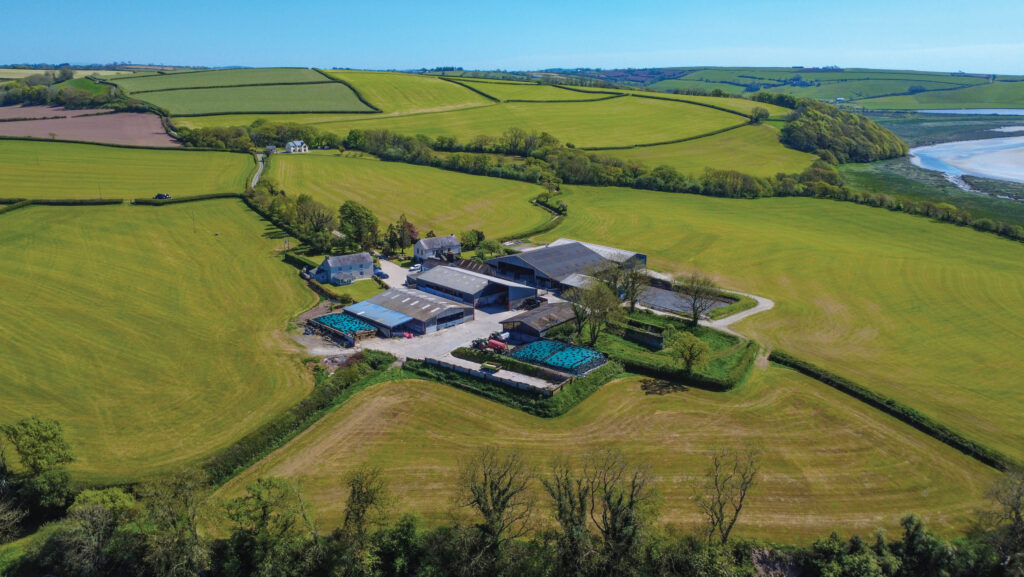
Llandeilo Abercowin, Carmarthenshire, launched in April by Roger Parry & Partners, has three houses and is on at £5.25m © Roger Parry & Partners
Wales has a good selection of farms and land on the market, says Daniel Rees of Savills. Buyers, especially dairy farmers, have continued to commit to land and farm purchases despite the effects of the Russia-Ukraine and US-Iran conflicts, and low milk prices.
Farming buyers are focused on existing infrastructure and lifestyle buyers are seeking a mix of land types, including woodland, lakes and rivers, he says.
“There continues to be a good mix of buyers, including young farmers setting out on their own, established farmers expanding existing holdings or completely relocating from other parts of the UK, and lifestyle buyers.”