How farmland auctions are delivering results
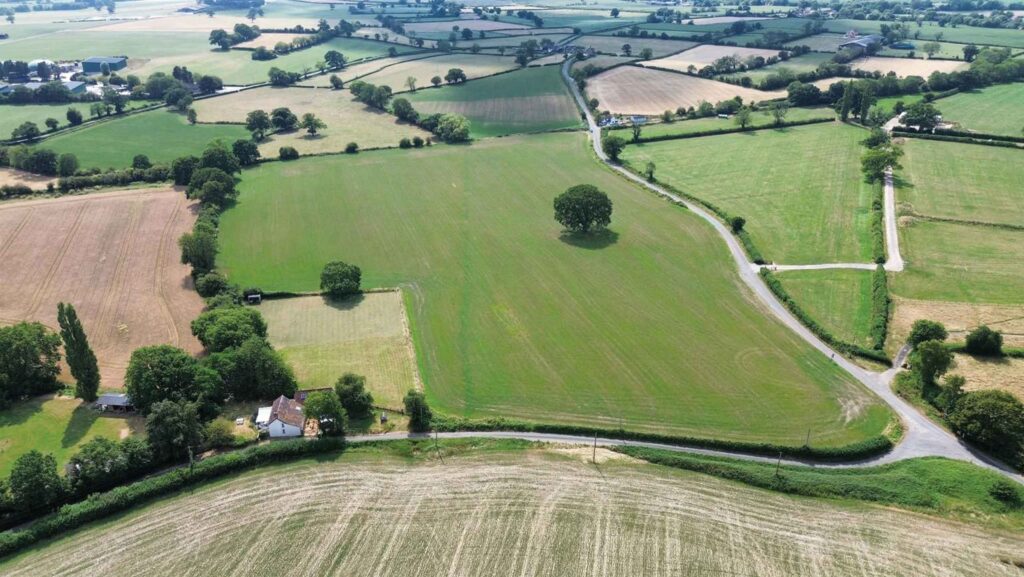 Land at Lamyatt © Symonds & Sampson
 Across the country, agents continue to extol the old-school benefits of gathering bidders together in a room to slug it out.
Auctioneer Janet Flintoft, associate director with H&H Land & Estates, recounts a recent auction of 38 acres of quality mowing or cropping land near Wigton, Cumbria.
“There was a lot of interest; the room was packed. Everybody was excited to see what it was going to make. It was great, definitely the highlight of the year,” she says.
See also: Farmland values why location matters more than ever
With the hammer falling at almost £18,600/acre at a time when national farmland indices suggest values are softening, and farming headlines are uniformly gloomy, it’s not hard to see why Janet, an associate director at the firm, was so pleased with the result.
Better still, the buyer was a local farmer, she points out. “There is really strong local demand there. It’s in the heart of a dairy area. A lot of people would also travel for cropping purposes. We could sell blocks like that every week.”
“We like that kind of pressure cooker environment,” says Matthew Lloyd, a director at West and South Wales specialist Rees Richards & Blyth.
“You’ve got vying bidders in the same room trying to gain an advantage over the other by leaving their bid to the last minute or perhaps bidding very early to see if they can catch a bargain.”
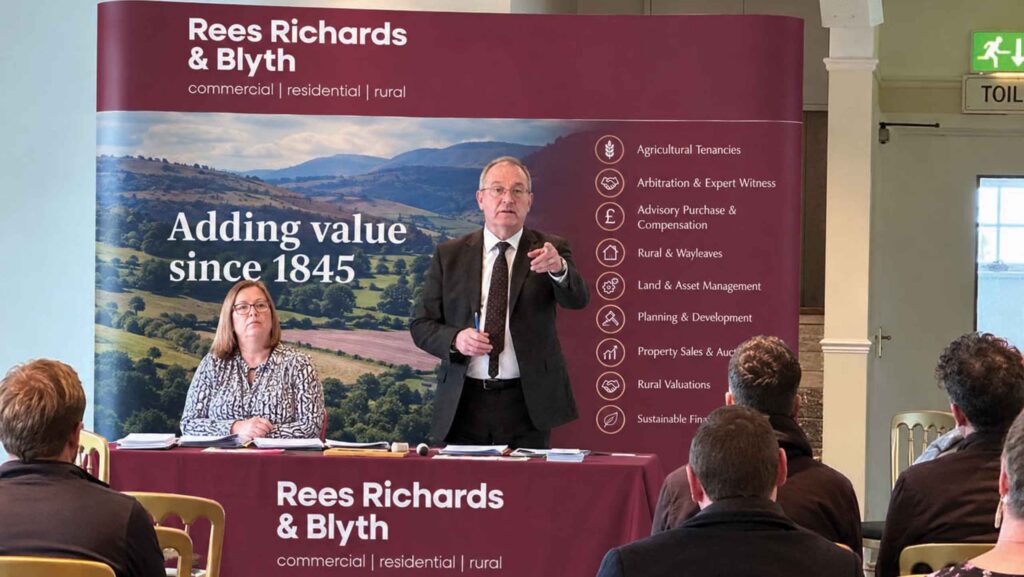
Auction in action – Auctioneer Martyn Jenkins takes another bid © Rees Richards & Blyth
When neighbouring farmers are bidding for the same block of land, it can also add a “marriage value” over and above the price you might expect to achieve, says Matthew, who says bare land is making £10,000-£12,000/acre.
“Live bidding in the room is always very exciting,” says Ben Hancock, head of farms and land at south-west agent Kivells.
“There are a lot of farmers still in the market, still buying. I think there’s a bit of negativity around the residential element of the market, but farmland is very different; we’re continuing to see very strong prices being achieved, and it’s a very active market.”
Kivells holds a monthly auction sale, and September’s was the strongest of the year so far, with several lots far exceeding their guide prices, reports Ben.
A 22.5-acre block of pastureland at Bradworthy in Devon, guided at £225,000, fetched £315,000 (£13,981/acre), while 36 acres of grass nearby went for £422,000 (£11,702/acre) against a guide of £275,000.
George Whittaker, a partner at Symonds & Sampson, which operates across southern and south-west England, confirms auctions are as popular as ever.
“We are set for a record-breaking year, and our last auction was the biggest we’ve had in a number of years; we raised just shy of £5m for our West Country clients.”
A 37-acre block of Grade 3 land near Shepton Mallet, guided at £300,000, was a star performer in the sale, going under the hammer for £595,000 (£15,909/acre).
However, it’s not just buyers in the room who got in on the action. “We had buyers from the Gulf, America and Europe,” says George.
“We will always continue to have property auctions in the room, but they are bolstered by online and telephone bidding.
“If we restricted ourselves to just taking bids in the room, I think values and results would suffer as a result.”
Online only land auction
Jack Mitchell of Carter Jonas’ Taunton office successfully wrapped up a relatively rare online-only rural property auction last week on behalf of Somerset Council.
Although 75-acre Lawrence Farm, near Wincanton, Somerset, which was guided at £1.34m, would usually have been sold by private treaty, a significant amount of vandalism to the farmhouse meant Jack opted for the auction route.
“I don’t think most high street lenders would have provided a standard residential mortgage on the house.”
He adds: “The online method is something that’s worked quite well for the council in the past for other sites, so they were happy with that. One of the advantages of doing it online rather than in the room is that you will sometimes find that certain people aren’t prepared to bid against one another in a public auction forum.”
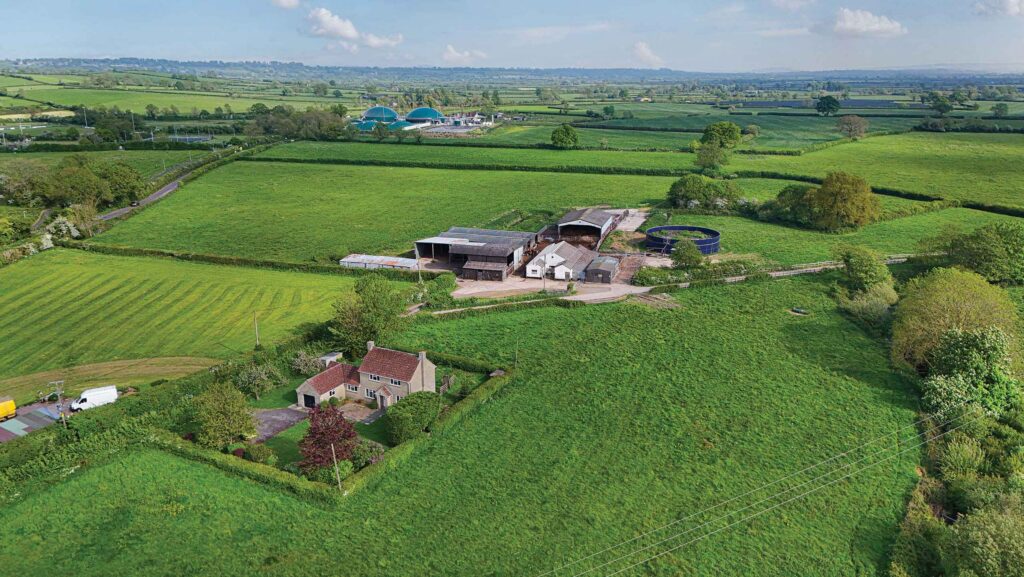
Lawrence Farm © Carter Jonas
The approach paid off, attracting 75 bids during the week-long process, although the reserve price wasn’t breached until the end of the sale.
“I tend to find that the bidding only really gets fruity in the last hour or so,” says Jack.
“Another advantage of the online process is that if anyone bids in the last five minutes, the clock keeps resetting for another five minutes,” he points out.
“People have to stare at the screen and do some soul searching, which can result in an extra bid or two.”
In the end, Lawrence Farm sold for £1.619m.
Done and dusted
Apart from the excitement of live bidding in the room potentially squeezing out higher sales values, the finality and transparency of auction sales make them attractive to both vendors and purchasers.
A payment of 10% of the purchase price is due once the hammer falls, with the balance usually payable within 28 days. Interest can be charged on late payments, or the contract can be rescinded with the purchaser losing their deposit if they do not meet the 28-day completion is deadline.
“Where people need to achieve a sale in a timely way, auctions are the route to choose because there’s no pulling out, there’s no renegotiating, there’s no gazumping or gazundering. The hammer comes down, and it is sold,” says George.
“It’s a more transparent process, in my opinion,” says Ben. “Online, you don’t see anyone else bidding, and you’re just assuming that those bids are there.”
“We put our auction packs together, so purchasers have got all the legal documents and everything they need. There doesn’t tend to be any complication involved. Things get shifted an awful lot quicker,” says Matthew.
“Farmers in Cumbria much prefer the auction route,” says Janet emphatically. “It’s clear as day what anything has sold for.”
What’s right for the saleroom?
Auctions don’t work for every agricultural property. In the past, it wasn’t uncommon to see large farms go under the hammer, but spiralling land prices and the necessity to do all your due diligence prior to bidding have made such sales much less common.
“It tends to be the smaller parcels of land and quirky sort of properties, things that need doing up,” says Matthew. “We sold a 100-acre block around four years ago, but now they tend to be 20-30 acres.”
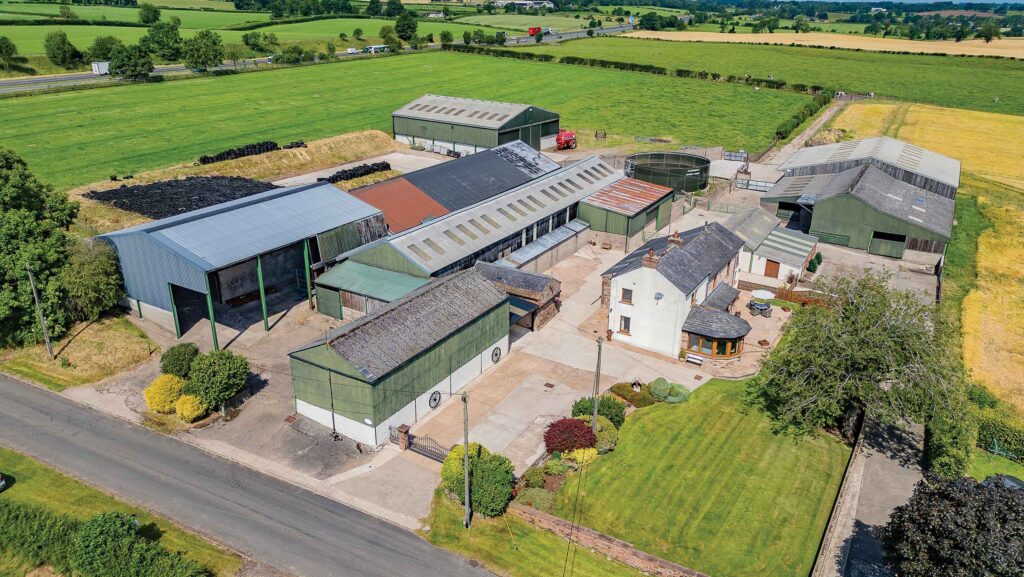
Petteril Hill Farm © H&H Land & Estates
“It’s very rare that we would sell something over £1m or £1.5m at auction,” says George.
“It’s quite difficult to raise finance for auction purchases a lot of the time, because you are effectively going to a lender to say, please, can I borrow money for something, and I don’t know how much I’m going to buy it for yet.”
“Auctions are primarily suited to cash purchases,” agrees Ben. There are, however, no hard-and-fast rules in terms of acreage or value, he points out.
“It’s dependent on where the land is, what it is, who we know is in the area to buy it and how much competition we think it will generate.”
H&H Land & Estates is set to buck the trend for smaller auction sales when it puts Petteril Hill Farm, a fully equipped 98-acre stock unit at Southwaite, near Carlisle, under the hammer next spring. The guide price is £1.98m.
“It’s for a client who has always preferred to buy and sell property through auction,” explains Janet. “Although it will be quite well lotted, so it won’t necessarily go as a whole,” she adds.
A longer marketing period is key for higher-value auction sales, say those over £500,000, she says.
“It used to be that you’d advertise for four weeks, then have a four-week completion. It’s totally different now.
“You are probably looking at advertising about four months in advance to give everyone plenty of time to sort out things like bank valuations, which can take forever.”