Sale and leaseback of farmland: Is it making a comeback?
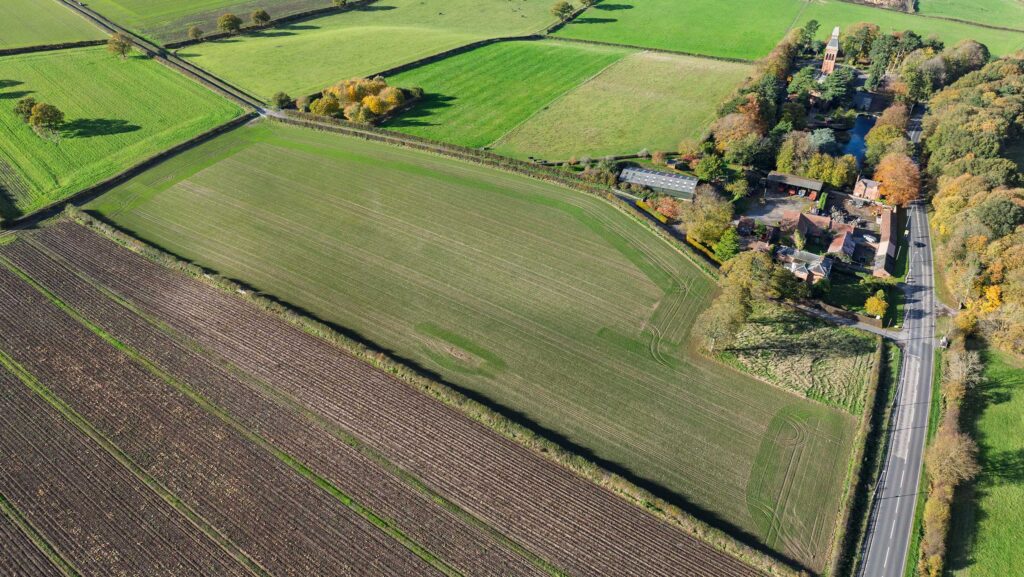 Redhill Farm in Nottinghamshire was sold by Bidwells for full market value, with a 30-year market rent leaseback granted to the vendor © Bidwells
Talk to any East Anglian farm agent of a certain vintage, and it won’t be too long before they are reminiscing about the golden era of sale and leaseback (S&L).
In the 1970s and early 1980s, financial institutions such as insurance companies and pension providers in search of long-term, stable investments as a hedge against rampant inflation added hundreds of thousands of acres of farmland to their portfolios.
See also: How to unlock the best value from development land
By 1977, it was estimated that almost 25% of the agricultural land in the Eastern Counties was owned by institutions. Often, for the sake of simplicity, the farms acquired were rented back to their previous owner.
However, falling inflation and declining farming returns, not to mention the introduction of retrospective tenancy succession rules, tempered the institutions’ appetite for farmland, and by the mid-1980s a sell-off was in full swing.
S&L investors’ long-term focus
Fast-forward four decades, and where are we now?
As head of the Bidwells Rural Investment team, which works with 17 Oxbridge colleges, Roland Bull is well placed to answer.
Although there is certainly an active market for S&L deals, with no shortage of funds available for the right property, investors are more selective than they were in the 1970s, cautions Roland.
“Typically, they are looking to acquire long-term strategic development land or high-quality, agricultural investments located anywhere in England.”
This patient approach to capital can offer significant benefits for farmers looking to release some capital, he points out.
“There’s a certain class of institutional investor with incredibly long-term horizons, and because they require an occupier on the land anyway, they can be prepared to pay full vacant value for land despite immediately granting a long lease back to the seller.”
As well as not having to sell for the discount to open market value, which is usually applied to let land sales, the vendor can often secure an extremely long lease, says Roland, pointing to several sales he has brokered recently.
One involved 292ha of strategic land near Nottingham that was rented back to the seller under a 30-year farm business tenancy.
Another included 445ha of land, houses and buildings on the outskirts of Bury St Edmunds that were also leased back for 30 years.
Other benefits for the farmer can include a healthy share of the proceeds from any future development and a landlord that, while not wanting to be involved with day-to-day farming activities, is often prepared to co-invest in diversification opportunities to grow the holding’s income.
Because such deals are usually done privately, nobody else actually needs to know the farm has been sold, adds Roland.
They can also be helpful for releasing capital for succession planning without dividing the farm, he says.
10 things to consider before agreeing a sale and leaseback
- Have a plan for the money Decide how the sale proceeds will be used, whether to repay borrowing, invest in another enterprise or fund retirement. Releasing capital should be part of a wider business strategy but remember there is no inheritance tax (IHT) relief on cash.
- Do the sums Compare the annual rent and likely future increases with the cost of borrowing and the returns expected from using the capital elsewhere.
- Consider off-lying blocks Selling land away from the main holding could release capital and minimise disruption to the core farm.
- Choose your investor carefully Look for a financially secure landlord with investment objectives and timescales compatible with your farming business.
- Secure sufficient tenure Negotiate an appropriate lease length, rent-review provisions and break clauses. Consider what happens when the agreement expires.
- Explore buyback rights A right of first refusal could give you an opportunity to repurchase the land if the investor eventually decides to sell.
- Protect development value If the land has development potential, consider an overage agreement giving you a share of future gains.
- Clarify responsibilities Agree who pays for repairs, maintenance, insurance, access tracks, utilities and future improvements.
- Consider alternative structures A contract farming agreement may be more appropriate than a conventional tenancy in some circumstances.
- Take independent professional advice Specialist legal, valuation and tax advice is essential, particularly concerning capital gains tax, IHT and the treatment of future overage payments.
An S&L renaissance?
Charlie Bryant of national agent Brown & Co reckons we could be on the cusp of a new S&L boom that goes much wider than the traditional long-term investors that Roland is dealing with.
“It hasn’t quite got the attention so far that I’ve been expecting, but I remain confident it’s going to happen, and that we will see an increasing differentiation between land ownership and occupation,” says Charlie.
Perversely, he says, on the buy side, the family farm tax furore has actually increased awareness of the inheritance tax (IHT) benefits of agricultural property relief for private investors who hadn’t been aware of it.
Yields, though, will be an important factor for such investors, and on less productive land generating lower rents, vendors may need to accept a discount on the open market value.
Despite that, higher interest rates may make an S&L deal a more attractive option than borrowing money from the bank, reckons Charlie.
“Negotiating a pre-emption to buy back the land at the end of term can also psychologically sweeten the concept of selling,” he adds.
However, unlike in the 1970s, Charlie expects transactions to be mainly centred around off-lying blocks of land rather than whole farms.
Simon Gooderham, managing partner at Cambridge-based agent Cheffins, who has dealt with a number of high-net-worth individuals looking for land, and has recently agreed a 93ha off-market S&L deal in East Anglia, concurs.
“This is all about agricultural land and buildings; these buyers don’t tend to be interested in the residential side.”
Simon also notes that S&L arrangements don’t need to involve an FBT. Sometimes a contract farming arrangement can also work, depending on the type of purchaser.
Charlie warns that farmers should use S&L for the right reasons.
“They can be a great option if you want to release capital to invest in your farm or for a new diversification opportunity, but they are not the solution for a business that is struggling to survive. You will just replace bank debt with rent.”
How sale and leaseback can be a short-term solution
Sale and leaseback (S&L) arrangements don’t always have to involve decades-long tenancies and institutional investors.
They can also offer a practical solution when farmers want to sell but need time to move, finish cropping or wind down their businesses.
Tim Sedgewick of H&H Land & Estates has worked on a steady stream of S&L deals, including two recent cases in County Durham, where the buyers’ priority is securing ownership of the land rather than generating a rental income.
One example involves an 81ha farm whose owner is looking to retire and downsize.
With the holding close to an electricity substation, it has attracted interest from renewable energy developers.
Under an agreement with a solar developer, the farmer will sell the property for more than agricultural value if planning permission is secured but retain occupation under an FBT at a nominal rent of £1/year.
The developer cannot begin construction until a grid connection becomes available, potentially three years later, so is happy for the farmer to remain in occupation in the meantime.
For the farmer, the attraction is being able to release the capital tied up in the property without having to move immediately.
“The driver isn’t the rent coming in for the ones that we’ve done. The driver is just getting hold of the land and having the certainty,” explains Tim.
Similar arrangements can help farmers who want to buy another property before vacating their existing holding. “It saves them having to find another property to rent in the interim,” he says.
Louise Harrison, head of national estates and farm agency at Strutt & Parker, has encountered short-term leasebacks where the buyer intends to change the land use but is not yet ready to take possession, or the farmer is not ready to leave.
One recent transaction involved farmland earmarked for tree planting.
The buyer needed time to obtain permissions and undertake surveys, while the seller wanted to complete an existing Sustainable Farming Incentive (SFI) agreement.
A leaseback lasting a couple of years suited both parties.
Attention to detail
However, shorter agreements require just as much attention to detail as longer ones.
Tim highlights the importance of establishing who is responsible for insurance, repairs and maintenance, as well as agreeing the rent and considering the tax implications of the disposal.
Flexibility is also essential. If the seller finds another property sooner than expected, an early termination clause could allow them to move without having to wait for the tenancy to expire.
Louise also warns against unrealistic vendor expectations.
“There is a strong correlation between the price paid and the rent payable.
“You probably aren’t going to receive the full value of the property, while also getting it to rent back very cheaply.
“In my experience, there needs to be some compromise, as you can’t expect to have your cake and eat it.”