

Outlook 2026: Cautious optimism for beef sector
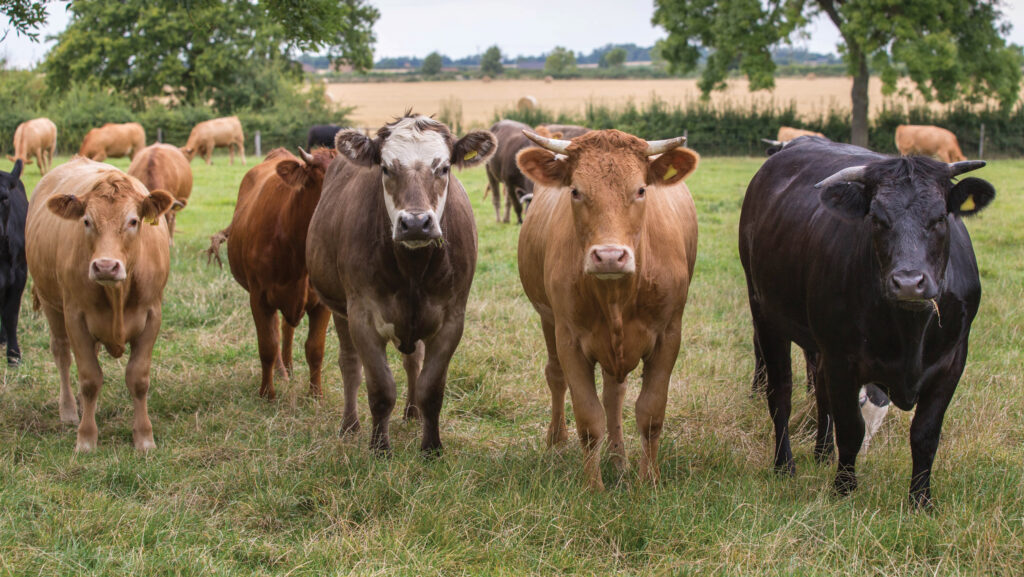 © Tim Scrivener
 After several years of volatility, the UK beef sector entered the new year with prices holding firmer than many observers expected, says Andersons consultant Charlotte Dun.
GB deadweight cattle prices peaked at more than 700p/kg in May 2025. Although they have since eased, values appear to have stabilised in the 630–650p/kg range.
This represents a level 30-40% above 2024 averages, providing a significant boost to returns and underpinning cautious optimism – particularly against the backdrop of easing feed costs and steady domestic demand.
See also: Tips on essential beef production costings
Yet, while the headlines look respectable, the industry must take a longer view.
The next decade will test how well the beef sector can adapt, not just to markets, but to labour, land use and climate pressures – all of which will redefine profitability.
The past two years have shown that the future of the beef sector will be governed less by cyclical highs and lows and more by structural shifts.
In summary
- Beef prices are holding firm, 30-40% above 2024 averages
- Overall picture is cautious optimism, buoyed by cheaper feed and steady demand
- Longer-term view needed to account for changing markets and labour, land use and climate pressures
- Margin forecasts for 2026 suggest UK suckler herd decline may slow and perhaps reverse
- Beef supply will remain tight in the near future at least – stable domestic demand plus emerging global opportunities
- Growing interest in less
capital-intensive dairy beef supply chain schemes – an option for arable farmers?
Structural pressures
Over the past five years, the UK suckler herd has contracted by about 12%, underlining the structural pressures faced by the sector.
The drivers are well known:
- Ageing producers
- Tight margins paired with increasing overheads
- Tightening environmental rules
- Competition for land from forestry and environmental schemes.
Net margin budgeting data for 2026 points to a more positive outlook, raising hopes that the rate of decline may slow, or even that some rebuilding of the herd could occur if confidence is sustained.
However, in the meantime, beef supply will remain tight.
Consumer behaviour
At the same time, consumer behaviour is evolving. Retail beef demand has stabilised post-Covid, but volumes are down by about 5-7% from pre-pandemic levels.
Shoppers are seeking better provenance and welfare standards, which is good news for British beef. However, they are buying in smaller portions, and less often.
While Europe remains the UK beef sector’s largest export market, opportunities further afield are gradually emerging. Markets in Asia, the Middle East and North America show growing demand for high-quality, sustainably produced beef.
Success in these markets will require investment in logistics, certification and marketing as UK product competes against both established exporters and lower-cost suppliers.
Over the long term, the sector’s resilience depends on distinguishing British beef on sustainability, welfare and traceability grounds, not simply on price.
For many family units, the real challenge remains on farm. Labour availability is becoming critical. Skilled staff are harder to find and come at a greater cost.
Future demands
The next generation is hesitant to commit to systems that demand long hours and offer modest returns.
On-farm technology is improving – for example, better crushes, weigh scales and herd management – but suckler, store and beef finishing units still rely heavily on manual labour throughout the year.
Those managing suckler herds are having to think about the efficiency of their enterprises to ensure they are meeting legislative requirements, carbon reduction goals and improved margins.
Areas to consider include tighter calving periods, tougher culling parameters, condition scoring, estimated breeding values, and feed rations, among others.
Supply chain schemes
At the farm level, there is growing interest in dairy beef supply chain schemes developed by the major processors.
These can be less capital-intensive than traditional suckler or finishing systems, provide a valuable source of organic manure and perhaps offer arable farmers a grass-based enterprise option.
Achieving good returns requires a consistent supply of healthy calves, along with good stockmanship and technical performance.
For processors, the attraction of such schemes is a secure supply of what is often a more consistent product with a lower carbon footprint.
In brief, the outlook for UK beef is stable but demanding. Values may remain relatively buoyant, but the real winners will be those who view the current high prices as a platform for structural change.
The challenge for the next five to 10 years is not merely to survive market fluctuations, but to build businesses and partnerships fit for a lower-carbon, higher-value food economy.
That requires vision, not nostalgia.