UK beef and sheep numbers contract while prices hold up
 © Tim Scrivener
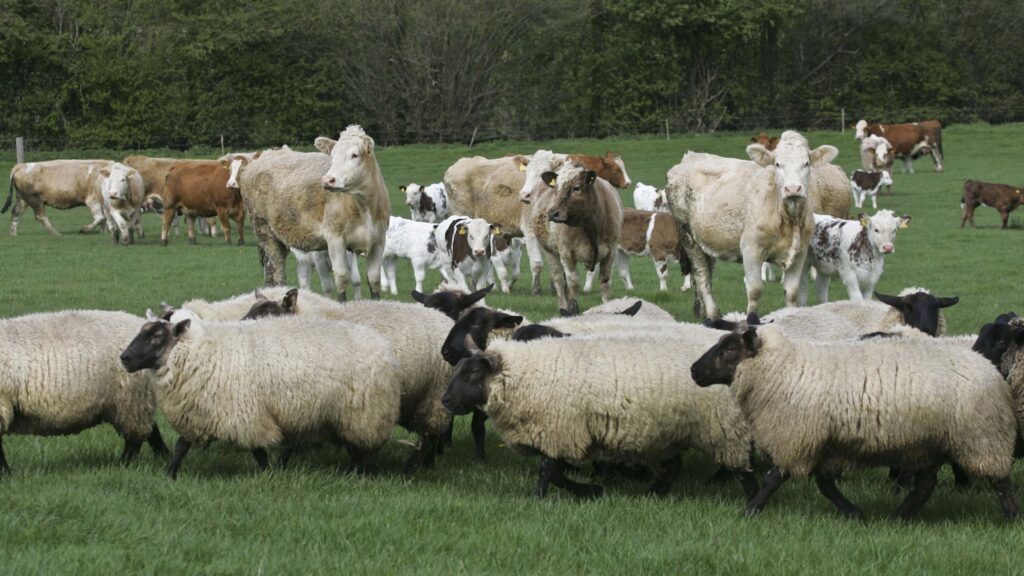
 Strong finished beef and lamb prices during the past year have been underpinned by tight supplies, with recent figures published by Defra showing further declines in the number of cattle and sheep in the UK.
The total number of cattle dropped by 1.3% on the year to 9.3m head as of 1 June 2025.
A major driver of this was a decline in the breeding beef herd, with numbers falling by 4.1% to 1.3m head during the 12-month period.
See also: Improved livestock sales drive profits at H&H Group
Meanwhile, the dairy breeding herd increased marginally to 1.8m head and now accounts for almost 60% of the total UK breeding herd.
Chris Dodds, executive secretary of the Livestock Auctioneers Association, said: “As stock numbers fall and uncertainty grows, the live auction system is proving its worth.
“The industry faces challenges, but there are also real opportunities. Competitive live auction markets continue to support strong prices.”
Prime cattle averaged 379p/kg liveweight at auction markets in England and Wales in mid-December, while deadweight steers traded at just above 650p/kg at abattoirs.
Stephen Dodsworth, auctioneer’s assistant at Darlington Auction Mart, said cattle supplies remained tight and suggested that high fodder prices and transport costs continue to create challenges.
Future supplies
An increase in the number of cattle under one year old could indicate longer-term growth in the beef pipeline, according to the AHDB.
Becky Smith, senior red meat analyst at the board, said: “It is likely that this growth is driven by increasing numbers of dairy beef animals entering the system.
“This may indicate some upside for cattle supplies looking further ahead into 2027-28.”
Quality Meat Scotland (QMS) forecasts that lower prime cattle slaughter in the past year, coupled with the larger 2025 calf crop, could lead to a small rebound in throughput.
Iain Macdonald, market intelligence manager at QMS, said: “Record prices improved confidence for beef and lamb producers but also exposed pressure points elsewhere in the supply chain, particularly around processing capacity, margins, and trade flows.
“As the industry moves into 2026, global supply constraints, shifting production cycles, and evolving consumer demand will continue to shape market conditions.”
Sheep
Defra’s June census figures also showed a fall in the total number of sheep and lambs – down 1.7% to 30.5m head.
The female breeding flock fell to its lowest level in 15 years at 14.8m head, despite an increase in the number of ewes intended for first-time breeding.
Meanwhile, lambs under one year old as of 1 June 2025 were at their lowest levels since records began in 1984, at 14.78m head.
Ms Smith said: “Challenges with ewe condition and poor weather conditions at tupping may have reduced conception and lambing rates.
“Additionally, increased prevalence of bluetongue is suspected to have impacted on lamb numbers, affecting fertility in both ewes and lambs.
“The smaller lamb crop has tightened supply and lent support to prices in recent months.”
The numbers
- 1.3% Annual fall in number of cattle and calves
- 1.7% Annual fall in number of sheep and lambs
- 653p/kg Overall deadweight steer price in mid-December