Milk prices rise as production comes under pressure
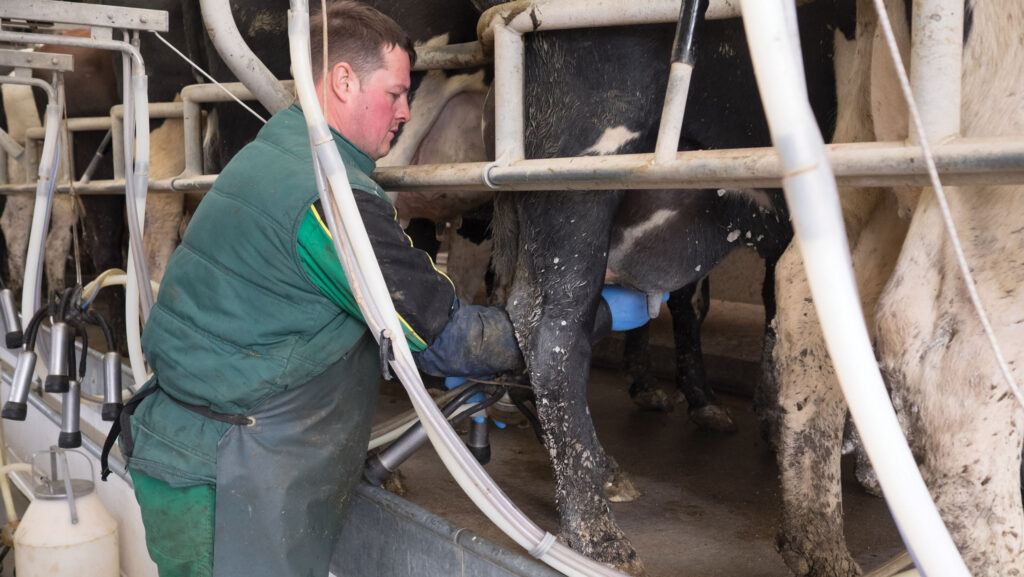 © Tim Scrivener
 The UK milk market is shifting from oversupply towards tighter supplies, with processors potentially set to compete for milk, dairy analysts say.
But higher prices may not be enough to stimulate production, meaning the squeeze could persist through winter.
See also: Freshways fires 6p/litre price rise as supplies tighten
Freshways’ 6p/litre October increase could prompt other processors to follow suit, aiming to support farmers through the autumn and winter months.
According to the AHDB, GB milk deliveries were down 3.2% year-on-year in July. By the week ending 15 August, daily deliveries ran 4.6% below the same week last year, a deficit of 1.54m litres.
Dairy analyst Chris Walkland, of the Walkland Partnership, noted that milk volumes are unlikely to recover significantly in late 2026 and 2027 due to poor forage and severe cashflow constraints.
As cheese supplies tighten, Mr Walkland predicts most, if not all, cheesemakers could be paying 40p/litre by Christmas, forcing liquid processors to match these rates.
But a supply squeeze alone may not be enough to push the market to 40p/litre, he said.
“I don’t think commodity players can sustain 40p/litre from market returns. They’ll have to try, but I can’t see European butter, skimmed milk powder and cream prices rising that much.”
Higher prices alone will not solve production challenges. Drought conditions have forced many UK and Irish farmers to tap into winter forage stocks already.
Andrew Argo-Bennett, commercial manager at Duynie Feed UK, said that demand for bought-in feed has surged, leaving farmers with two stark choices – sell livestock or buy forage.
Maize crops are also looking poor, with reports of harvesting already under way.
“A lot of the crop is dying off in the bottom, so the crop is losing its photosynthetic area,” said Robert Davies, a dairy farmer based in Herefordshire and vice-chairman of the NFU’s Dairy Board.
“Maize is quite often, as it was last year, the saviour of forage, but that’s not the case this year.” And there is still pressure on cash flow. “The milk price is going up, but it never goes up as quickly as it goes down,” said Mr Davies.
Bluetongue impact
In addition, the impact of bluetongue disease threatens to reduce milk yields immediately while causing fertility issues that will affect volumes nine months down the line.
Mr Davies also criticised certain processors for manipulating pricing mechanisms ahead of the shortage.
He highlighted instances where processors removed Arla from basket pricing contracts or altered A and B litre calculations instead of reflecting current 45p spot prices, calling these practices outrageous.