Organic rotation works, despite tricky year
Weed control in the organic rotation is a top priority as autumn cultivations get into full swing at Clinton Devon Farms. Paul Spackman reports.
With an “average” harvest safely in the barn, George Perrott is confident the established arable rotation of first wheat followed by oats, triticale and three years of fertility-building grass and clover is working well.
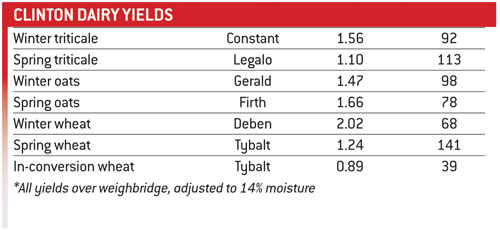
The exceptionally dry spring did hit yields of April-sown wheat, but generally he says yields have been about average (see table, bottom) and there are no plans to change cropping or varieties for the coming season.
“We probably ought to be looking at newer varieties, but there isn’t a massive amount of data available for organic crops and I don’t think variety choice is a big yield influencer in our situation anyway – getting nitrogen right has a lot more impact,” he says.
 Generally yields were about average this harvest, apart from the spring and in-conversion wheat, which went in late (April) into a cloddy seed-bed and missed the rain, so struggled to get going, says Mr Perrott.
Catchy harvest weather, secondary tillering and more weed material in relatively short spring crops also meant most grain had to be dried to 14% moisture. “Most came in under 20%, but even where ears were at 14-15%, by the time it had been through the combine with the green material, it needed drying.
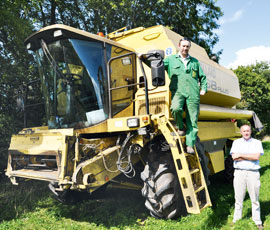
“When we converted to organic we were led to believe that crops would be thinner and yields would be lower, so you’d significantly improve combining rates. That simply isn’t the case,” he says. “Our New Holland TX68 combine, now in its 12th season, cut 50-60 acres a day, which was only slightly more than under the conventional system. But yields are lower, so we can’t justify having someone on corn cart all the time, which means we’re unloading on headlands and losing time there instead. Combining is by no means as efficient as when we were farming conventionally.”
Keeping on top of weeds
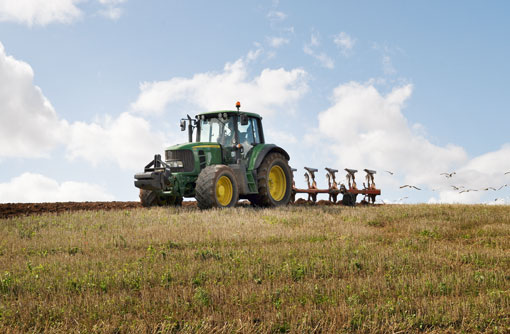
Stubbles are kept as short and clean as possible before all cropped land is ploughed to allow a flush of weeds and soil weathering prior to drilling from mid-October with the 4m Kuhn power harrow/drill combination. This stale seed-bed period is crucial for controlling weeds in the organic rotation, Mr Perrott says. “We really need to make sure the crop can get away well and has a chance to smother the weeds before going into winter.”
Keeping stubbles short means there is less chance of large weeds, such as docks, being turned over by the plough and easily re-emerging, he notes.
One 18-acre field close to the dairy suffers particularly bad couch and Mr Perrott plans to repeat his strategy of ploughing in the autumn, cultivating it three or four times over the winter as soon as “greens up”, then ploughing again in the spring ahead of drilling. “We probably got a better kill of couch than if we’d sprayed it with Roundup [glyphosate],” he says. “It’s a flat field so soil erosion isn’t an issue, but I’d be nervous about leaving steeper or more open ground so exposed over winter.”
Fat hen, black nightshade, runch and red poppies are the other main weed problems elsewhere on the farm, although he says most are not a major yield threat provided crops establish quickly. Black bindweed is an issue on one river valley block, causing particular problems at harvest. “The worst fields tend to go for wholecrop, as the bindweed isn’t such an issue when you’re cutting the crop a few weeks earlier.”
Saving seed
All seed is home-saved, with a 50:50 split between autumn and spring varieties. With purchased seed costing about £540/t, Mr Perrott reckons it is almost £200/t cheaper to home-save the 50-60t of seed required, even after accounting for the opportunity cost of not selling grain, cleaning, bagging, germination testing and royalties.
Seed rates will be kept at 200kg/ha for most crops, although Mr Perrott will increase rates for winter triticale from 220 to 225kg/ha. “It comes last in the rotation and doesn’t seem to tiller as well, which is why we’ll try upping the seed rate slightly.”
The only seed he has bought is the grass and clover mix for undersowing cereal crops. Dry weather and poor germination meant just four fields were undersown in the spring, at a rate of 13-14kg/acre, costing around £50/acre. “Stopping turned out to be a good move, because those we did undersow were pathetic,” he says. Mr Perrott went back over these with half-rate seed (7kg/acre) after wholecrop silage had been taken in order to establish a decent sward for winter grazing.
Turnips have also been sown to provide extra winter forage. Slurry was applied to these fields through a dribble bar system at around the six leaf stage. Mr Perrott is pleased with how this worked and believes it has been much more successful than applying slurry prior to drilling. “Dribble pipes make sure the slurry is going exactly to where it’s needed and also mean that it doesn’t matter if the crop is a bit taller.”
Livestock update
• Organic milk price just increased 2p/litre to 37p/litre
• Some barren cows recently sold for £1,000 a head
• Most Friesian bull calves sold for £50 each
• Large crop of heifer calves from autumn herd
• Some 159 of 400 lambs have been sold with organic premium – average price about £85 a head
• Small herd of North Devon cattle (Heanton Ruby’s) being brought on to farm for showing next year
• Plans to increase pedigree Texel flock from 25 to 50 head – also used for showing and act as good “shop window” for shepherd to sell rams.
Farm facts: Clinton Devon Farms Partnership
• Clinton Devon Farms partnership, the in-hand farming division of Clinton Devon Estates, based at Colaton Raleigh, near Sidmouth, Devon. About 2500 acres, now fully organic
• Enterprises include two 250-cow dairy herds averaging 6,500 litres plus a 1,100-ewe sheep flock
• Arable land has been reduced to 285ha (706 acres)
• Soils are predominantly sandy loams, prone to water erosion
• Average field size is just 12 acres. The biggest is 20 acres. One field has 14 in-field trees
• The farms are run by manager George Perrott, plus a team of eight staff. Mr Perrott was Farmers Weekly/Claas Farm Manager of the Year 2007
• The whole estate includes 40 tenanted farms, 4,000ha of forestry, a sawmill, 400 houses and a woodchip biomass store providing fuel for wood-burning heat and power plants in the south-west