

Landscape Recovery projects rattled by Defra’s exit clause
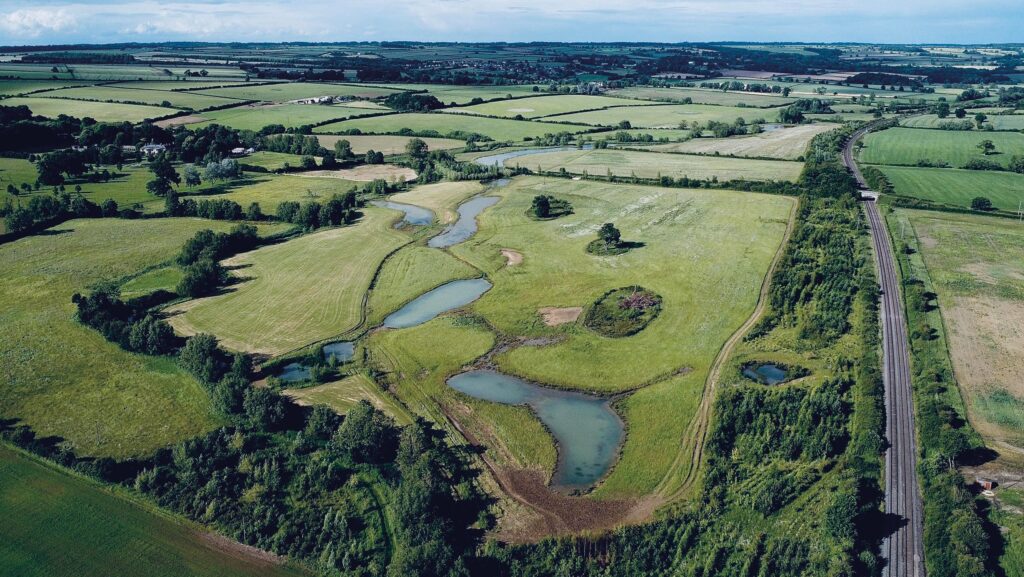 Evenlode Landscape Recovery project © Dave Gasca
 Farmers and land managers involved in England’s flagship Landscape Recovery (LR) scheme are demanding urgent reassurance after discovering that Defra can terminate long-term agreements with only 12 months’ notice.
The “termination for convenience” clause sits uneasily with a programme designed to run for 20-30 years and requiring major, long-term investment from landowners, tenants and private funders.
The concern comes as Defra announced a £500m funding allocation for LR over at least two decades as part of its revised Environmental Improvement Plan (EIP).
See also: Learnings from pioneering Landscape Recovery project
Farm leaders have welcomed Defra’s “supercharged” support.
But their confidence has been shaken by the exit clause, which appears in all LR agreements, including more than 50 projects in development and the first two now in implementation.
LR groups have spent years forming partnerships across vast areas, negotiating land-use change and developing blended-finance models intended to unlock significant private capital.
But project leaders fear the 12-month notice period risks undermining the certainty needed for landscape-scale transformation.
Stakeholder concerns
Farmers Weekly understands a substantial number of project representatives will shortly write to Defra to voice their concerns.
Tim Coates, a farmer and director of the Evenlode Landscape Recovery project in the north-east Cotswolds – a 3,000ha river-restoration partnership involving more than 50 farmers, including tenants – said the scheme has so far enjoyed continuity and constructive engagement.
“Landscape Recovery has survived a change of government and a recent change of ministerial team at Defra,” he said.
“Over a three-year period, we’ve had a really productive working relationship with Defra through the development phase.
“Hopefully, we will resolve concerns around the legal agreement, and co-design an approach that works for farmers and all other stakeholders to achieve the policy’s stated ambitions.”
Mr Coates also stressed the scale of public benefits at stake.
“For our Evenlode project alone, for every £1 of investment the government makes today, there is already £2 of private investment ready to deploy.
“This will enable nature-market transactions worth more than £200m and deliver public goods such as flood risk reduction worth nearly £1bn over the project lifetime,” he said.
Gavin Lane, president of the Country Land and Business Association, described Defra’s 12-month exit clause for LR as a “serious flaw” in a potentially groundbreaking plan.
“Farmers and land managers are committing to decades of work, but they’re being asked to do so without the certainty they need,” he said.
“Without long-term guarantees, the whole effort risks falling apart before it gets going.
“Investors won’t commit if the future is uncertain, and without their backing, these crucial restoration projects won’t happen.”
George Dunn, chief executive of the Tenant Farmers Association, said: “Put simply, Defra cannot have its cake and eat it.”
He added: “For such long-term schemes that require investment and matched funding from the private sector, Defra cannot expect to have the control it is seeking.”
Termination safeguards
However, others played down the significance of LR early termination clauses.
Prof Dominick Spracklen, from the University of Leeds, who heads the Upper Duddon LR project in Cumbria, which is in implementation, said early termination mechanisms are “rarely used”.
He added that agreement holders can claim termination costs from Natural England, offering “a strong level of protection”.
Defra defended its approach, saying it is “standard practice” in government contracts.
A spokesman said: “We are committed to the long-term restoration of nature-rich habitats and supporting farmers and landowners through the Landscape Recovery scheme.”

Explore more / Transition
During the series we follow our group of 16 Transition Farmers through the challenges and opportunities as they seek to improve their farm businesses.
Transition is an independent editorial initiative supported by our UK-wide network of partners, who have made it possible to bring you this series.
Visit the Transition content hub to find out more.
