Pressure mounts for ‘method of production’ food labelling
 © AdobeStock/lado2016
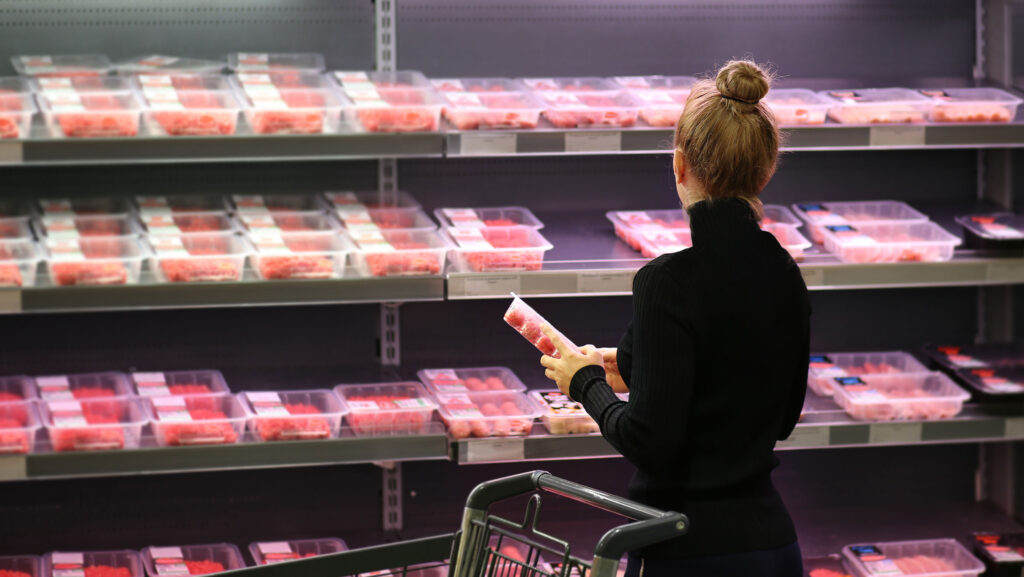
 Meat industry groups are resisting attempts by animal welfare campaigners to enforce mandatory labelling showing how farmed animals are reared, saying such an approach is too simplistic.
Global animal welfare charity Four Paws UK has called for compulsory method of production (MoP) labelling after launching a report that argues the current system is confusing and inconsistent.
The organisation says consumers are faced with a patchwork of assurance logos and marketing claims that make it difficult to understand how animals were bred, reared and slaughtered.
See also: Rising imports prompt NFU Scotland labelling call
It argues mandatory labels identifying production systems, supported by validated welfare indicators, would provide greater transparency and help shoppers make informed choices.
The report (opens in PDF) was launched in Westminster during an event hosted by Environment, Food and Rural Affairs committee chairman Alistair Carmichael MP, alongside a demonstration showing how standardised welfare labels could appear on supermarket shelves.
Emily Wilson, head of programmes at Four Paws UK, said: “Most people assume the information on a food label tells them something meaningful about the life an animal led. Too often, that simply isn’t the case.
“When shoppers are standing in front of a supermarket shelf, they should be able to tell, at a mere glance, the difference between one product and another.”
Mr Carmichael agreed that people have a right to know how the food they buy was produced.
“The government has an opportunity to deliver a practical reform, with benefits for consumers, producers and animals alike,” he said.
The issue was subject to a government consultation more than a year ago, though no new policy has yet emerged.
Oversimplification
However, the National Pig Association (NPA) says it opposes mandatory MoP labelling.
It argues it oversimplifies animal welfare by focusing on production systems rather than welfare outcomes.
NPA chief executive Lizzie Wilson said: “This kind of labelling suggests that the main factor that determines an animal’s welfare is the ‘system’ in which it is reared.
“It is clear Four Paws is hoping to persuade consumers that outdoor production is a proxy for ‘good’ welfare, while ‘indoor’ production is ‘bad’ for welfare.”
Ms Wilson added that animal welfare scientists are increasingly utilising welfare outcomes as indicators of the welfare status of animals, rather than simply looking at the animal’s environment.
The NPA argues that voluntary pig production labelling terms, as defined by the industry’s existing Code of Practice, and farm assurance labels such as Red Tractor and RSPCA Assured, already provide consumers with sufficient choice and enables them to identify and choose products according to what is important to them.
John Powell, British Meat Processors Association chief executive, added that given the complexities surrounding different production systems, simplistic food labelling cannot possibly convey enough information to allow properly informed choices.
“Many production methods are different, but equally good for animals,” he said.
Mr Powell also warned that policymakers must understand that policies of this kind can only succeed “if they are developed with serious input from industry on the real, on-the-ground implications”.