Rising input costs and falling prices hit pig sector
 © GNP
© GNP Pig producers are under growing financial pressure as farmgate pig prices continue to slide further below the cost of production.
Finished pig prices have fallen by more than 20p/kg in the past year, with the standard pig price (SPP) averaging just 181p/kg deadweight during April.
This puts it roughly 15p/kg below the cost of production based off the 2025 average, and production costs continue to rise.
See also: Potential CO2 shortages presents risk to pork sector
However, the real impact of falling pig prices on farm businesses will vary depending on the conditions of individual supply chain contracts.
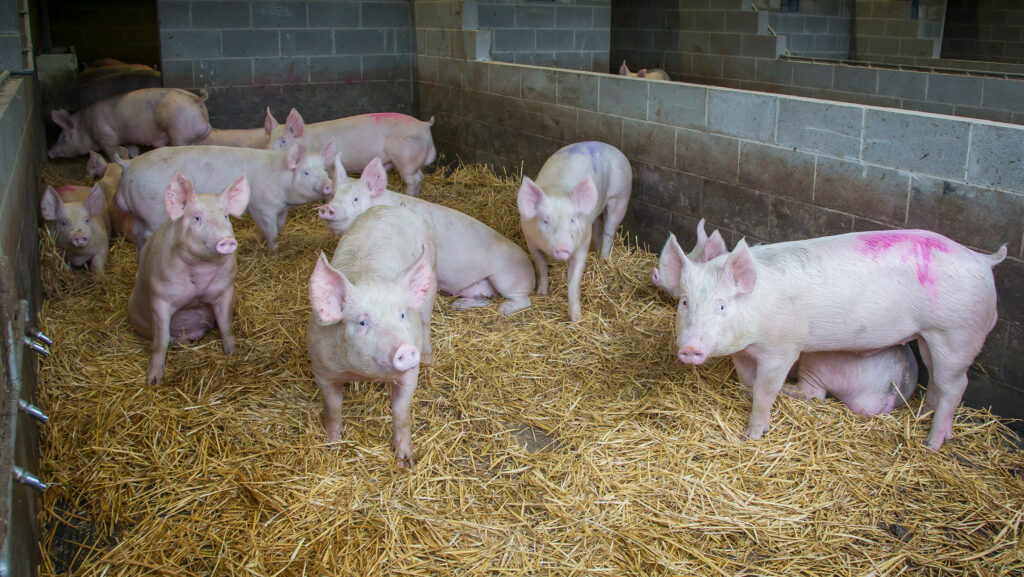
Processing delays at abattoirs have led to pigs being kept on farm longer and average carcass weights lifting by roughly 4kg year on year to average 95kg throughout February, March and April.
Defra figures show that UK clean pig slaughterings were up by almost 8% in March compared to year earlier levels at 925,500 head, meanwhile pigmeat production was up by 11% on the year.
Estimated GB clean pig slaughtering also remained high during April and averaged 164,800 head in the week to 18 April.
Speaking at the recent NFU council meeting, National Pig Association chairman Jo Churchill said: “Prices are falling and costs of inputs are rising. Pigs are a continuous business and any disruption means pigs are building up on-farm – and they are doing that at the moment.
“They still need feeding and they still need housing. We have got challenges getting the numbers through at abattoirs and weights of pigs are rising.”
Global concerns
The Global pork quarterly Q2 2026 report, by multinational banking group Rabobank, found that global pork markets are facing growing indirect cost pressures as a result of the conflict in the Middle East – with higher feed prices and energy costs hitting the sector.
The report said producers are increasingly cautious, particularly in regions facing disease challenges or high capital costs.
Consumer purchases are also being impacted by the conflict with some concern that global demand for pork could soften as a result.
RaboResearch senior animal protein analyst Christine McCracken, said: “We expect consumers to take a more cautious approach to spending in the coming months.
“Food service sales and spending on premium products will likely see the greatest initial impact, and total spending on proteins is expected to decline as consumers work to manage their overall spending.”