The challenges of farm to customer meat sales
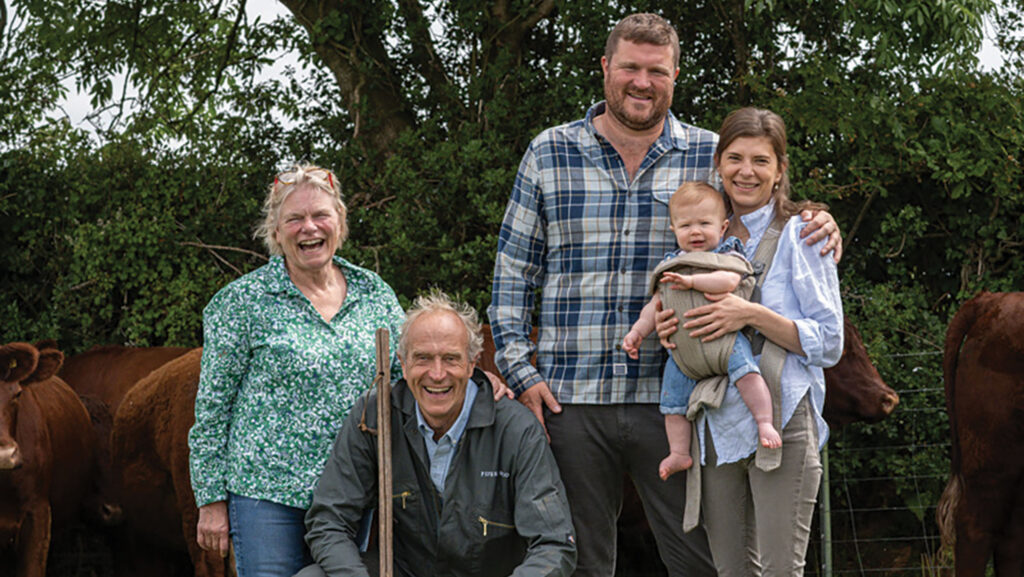 Henri, Peter and Will Greig, with Abby Allen and Olivia © Pipers and Co
 Provenance, transparency and trust are the foundation of many successful direct sales by farmers.
Will Greig and his partner Abby Allen are building a new business, Pipers & Co, selling premium meat online.
They have a background in this, having been key players for many years in the successful Pipers Farm brand founded by Will’s parents, Peter and Henri, in 1989.
See also: How dog field diversifications can bring in the cash on farm
This built a group of more than 50 farm suppliers, as well as beef from the family’s own Red Ruby Devon cattle. They were early adopters of online sales, with Will’s brother Ed building the first Pipers Farm website in 2000, aged 16.
The business grew but differences of opinion between the family and investors about its direction led to Will and his parents leaving in April 2025 and Abby following later that year.
Pipers & Co, launched just over a year ago, also sells meat from other farms in the region and this summer partnered with well-known business Philip Warren Butchers, handling on all the online orders for that business.
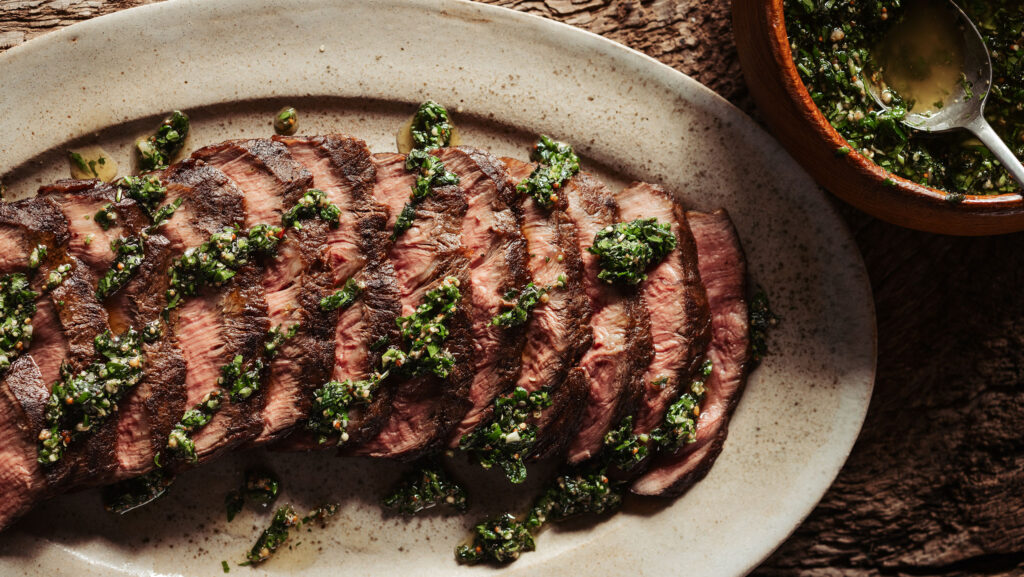
Pipers & Co beef © Bea Lubas
Phillip Warren works with 180 to 200 farmer suppliers and as well as its retail business has a strong reputation as a catering butcher. It is also a grazier in its own right.
Abby says that traditionally the Pipers Farm business was not necessarily competing with supermarkets but recent retailer meat price increases mean the customer base at the new business is changing.
The combination of quality, price, ease of ordering and a firmer focus on health and nutrition are all factors in this and the growth of the business.
“And we do have a core of customers who have not been very well and they want to take nutrition seriously,” says Abby.
These and other customers have taken comfort from knowing how the meat has been produced.
“Also there has been a lot of focus on the challenges British farmers face and I think that has given us a whole new base of customers.”
The traditional customer in the old business was a middle-aged female who had been a customer for maybe 30 years. Now a younger cohort is also buying, aged 30 to 40 and often with babies or young children.
Pipers & Co sets prices to its farmer suppliers for a three-month period, while Phillip Warren butchers bases prices to farmers on market prices plus top-ups for native breed and other specifications.
Challenge to scale up
For anyone thinking of starting online direct sales Abby cautions that this can work at a small scale.
“But the minute that you get into that sort of halfway house of it being something more of an enterprise, you do need to get up to a decent scale as fast as you possibly can because otherwise packaging and distribution costs just eat into the margin. It’s the biggest challenge of the e-commerce side of things, having all those things in place and managing those costs.”
Being authentic is important, she says. “Be yourself and be honest – don’t look at someone else and think “
‘I want to do that’. Allow your customers to see who you are and what you do.”
Be ready for consumer questions
While the bulk of customer questions tend to focus on how the meat is produced and handled, you need to be ready for anything, says Abby, with food related news in the mainstream media often directing the type of question.
Slaughter methods are a common question, and halal slaughter in particular.
Questions about chickens and their diet also crop up frequently, whether relating to antibiotics, corn fed or GM ingredients in feed.
Claire and Sam Barker produce organic Longhorn beef at Great Berwick Farm near Shrewsbury.
Their beef sales are split roughly equally between their farm-based butchery (open three days a week), the monthly Shrewsbury farmers’ market, online orders and hospitality and other retail customers.
Being able to speak directly with the producer at the market, or with the butcher in the shop, being able to see the cattle and the farm is a huge benefit, says Claire.
Similarly, while big orders are great, customers can come weekly and buy a small amount, says Claire. “We can make it easy for them to do that, and they like that whole experience of actually talking to the producer.”
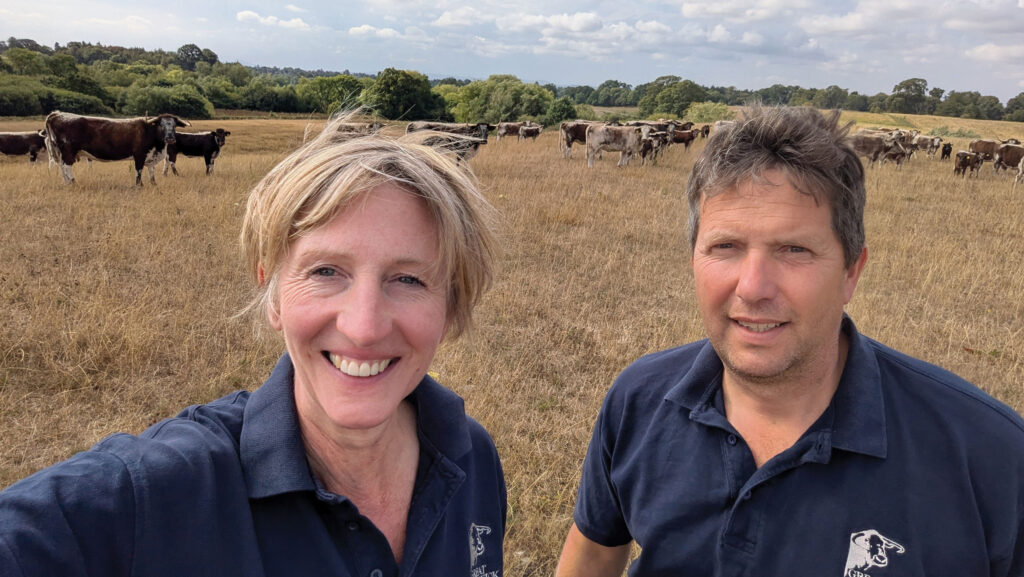
Claire and Sam Barker © Claire Barker
In terms of trends, more people are making better use of all the cheaper cuts, says Claire. However, occasion purchases such as for a Sunday roast or a party, are popular, as are steaks.
“And they’ll come to us because they know they know it’s good because they’ve been an existing customer and they know the provenance.”
The trend for eating more premium meats, such as steaks, at home rather than spending far more at a restaurant is noticeable, says Sam.
“I think they’re spending the same amount, but they’re probably not getting as much meat to go home with. So they’re buying the cheaper cuts, I suppose, but then we’re lucky enough to have a percentage of clients that are probably more affluent and they’re buying the better cuts, so we’re still seeing good sales.
“But the supermarkets are upping their game, with the likes of Wagyu.”
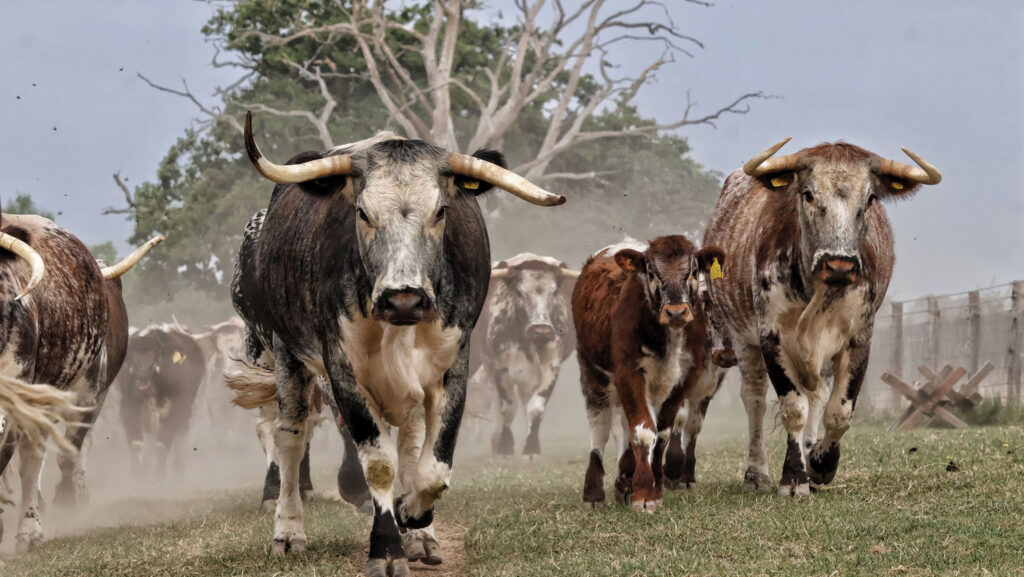
Some of the Great Berwick Longhorns © Bert Delve
This challenges direct sellers to go one better, such as the time the meat is aged, as well as the farm story and production system.
Most of the Great Berwick meat sold online goes out chilled, with a large proportion of business from repeat customers. “And then you suddenly get somebody completely new and you don’t know where they’ve come from,” says Claire.
“The most common question customers ask just now is about the farm and how we’re coping with the weather. And how are the cows? How are the cows? How are they coping?”
Some customers see the cattle in the field but then have to switch off to the transition between the live animal and it being on the hook in the cold room, says Claire.
However, many bring their children to the farm and shop so that they can see the butchery and the whole carcass.
Pasture positive
The pasture fed label is important and increasingly so to younger customers who are really into their diet and fitness and eating the right fats, says Claire.
The business employs two butchers – Tia Williams and Sarah Hall, who comment that the organic label is important to many customers, also that those who buy for health reasons still pay extra for quality, others will treat themselves occasionally, while some will not bat an eyelid at paying £200 for their purchase.
Unusual cuts such as bavette and denver steaks are seeing more demand, and offal sales are rising.
For anyone thinking of starting direct sales online, the standard of presentation is really crucial, she stresses.
“First impressions count. We get a lot of feedback from people who receive our box and they’re amazed at how well packaged it is. And we do take a lot of pride in that. And we use a lot of good insulation, and a lot of ice. But it is at a cost. It’s labour intensive doing online sales.”
Logistics
Choice of courier is important – they are getting a good service now but have been hugely frustrated by being let down by couriers in the past, says Claire.
“Anybody starting out needs to be aware that that crucial last link in the chain doesn’t always function as it should.”
A further warning is that the customer base can change suddenly. While Great Berwick’s sales are split between several types of business, a buyout at a chain of 30 pubs they were supplying changed the ownership and then the sourcing policy, which meant the loss of an important set of customers
Farm facts
- Great Berwick Organics, Shropshire
- 80 Longhorn suckler cows
- 265 head of cattle on farm
- Grass fed, also growing lucerne, and herbal leys including chicory and cocksfoot
Eating habits have shifted, not transformed, says the AHDB
Consumers are eating out less and it’s not just about convenience, with at home meals contributing to the concept of a treat or the “big night in”.
For 89% of consumers who plan to eat out less, it is the rising cost of eating out that is changing their habits.
Health is also becoming more important, and even with lower consumer confidence, shoppers are prioritising healthier choices and looking for added benefits and less processed foods, says the AHDB.
Interest in nutrition and protein sources is rising, at the same time as the use of weight loss drugs (GLP-1 medication) creates key opportunities for meat and dairy to promote themselves as natural, solid sources of single-ingredient proteins with necessary vitamins.