

Advertiser content
Why farm diversification plans need early discussion of risk
Scottish farming is facing a period of profound change.
From volatile markets and labour shortages to climate pressures and emerging risks that many farmers may not yet have considered, agricultural businesses are being asked to adapt at pace.
In our conversation with Lucy Little and Rachael Snody-Scott, self-employed Agents of NFU Mutual in the Inverness and Elgin Agency, they explain how advising on and arranging insurance cover has become a much earlier part of farmers’ decision-making.
One message stood out clearly: today’s farming decisions are rarely just about production.
They are about resilience, risk and long-term sustainability – and insurance is increasingly part of those conversations much earlier than it used to be.
While both work across rural and commercial sectors, Lucy’s day-to-day focus on farming and agriculture offers a frontline view of how pressures are reshaping farm businesses across Scotland – and how insurance needs to keep pace with that change.
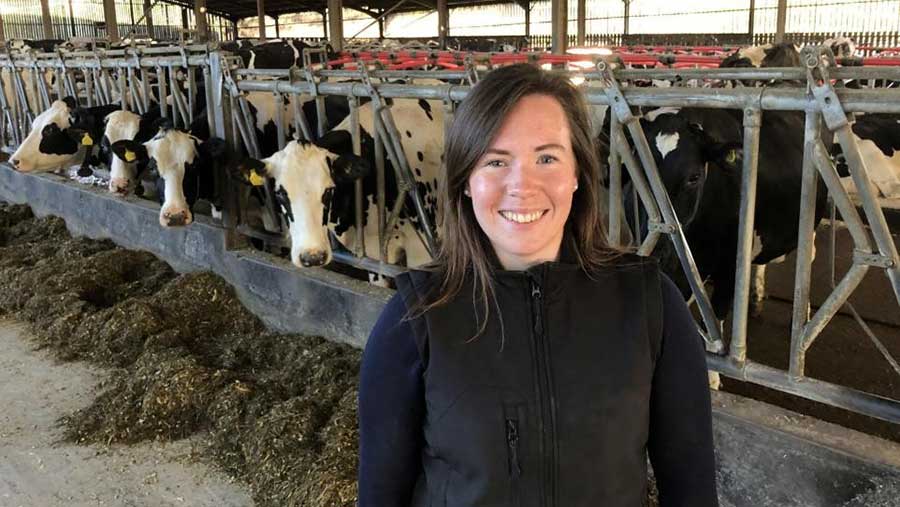
Lucy Little, Agent of NFU Mutual © NFU Mutual
Market pressure driving change
External pressures continue to shape decision-making in farming.
Downturns in sectors such as whisky production have affected arable rotations and pricing in some regions, while input costs and uncertainty around returns are forcing farmers to rethink cropping choices and income mix.
“Often it’s not one big decision,” Lucy explained. “It’s several smaller ones happening together – different crops, different markets, maybe diversification alongside that.”
Each change may seem manageable on its own, but together they can significantly alter a farm’s risk profile – something Lucy increasingly discusses with farmers when reviewing or arranging their insurance cover.
Labour shortages and the move towards automation
Labour availability remains one of the biggest drivers behind diversification and operational change.
In livestock systems especially, recruiting staff willing to work long hours in challenging conditions is increasingly difficult.
As a result, many farms are investing in automation — from grading lines and feeding systems to monitoring technology.
“Automation can make a huge difference to efficiency,” Lucy said. “But new kit brings new risks, and those need to be understood.”
From an insurance perspective, that means making sure new equipment and systems are properly reflected in cover, rather than relying on policies that were designed for how the business operated years ago.
Climate change: beyond floods and storms
Climate change is another factor pushing farmers to adapt, but not always in obvious ways. While flooding and storm damage are well understood, Lucy highlighted heat stress in dairy cattle as an emerging concern.
“Even in the north, higher temperatures can have a real impact on milk yields,” she said. “NFU Mutual has insurance solutions that respond when heat reaches certain thresholds – it’s not something many farmers expect to be talking about.”
For Lucy, this reflects a wider shift. “Climate risk isn’t just about buildings or crops anymore. It’s about productivity, animal welfare and long-term viability – and that’s changing the types of insurance conversations we’re having.”
Cybercrime: A hidden diversification risk
One of the least expected risks facing modern farms is cybercrime.
As farms rely more on digital systems, from online sales and booking platforms to livestock records and accounts, exposure increases.
“If you’ve got email, online banking or customer data, you’re exposed,” said Rachael Snody-Scott.
“A cyber incident can stop a business operating overnight.” With more farms adding non-traditional income streams, cyber risk is becoming harder to ignore — and is discussed more frequently when reviewing insurance arrangements.
Looking ahead
Diversification will continue to shape the future of Scottish farming — not through dramatic shifts, but through steady, practical decisions made under pressure.
As Lucy puts it: “What’s clear is that insurance is no longer just a renewal-time task. It’s becoming part of the wider diversification conversation, helping farmers understand risk, plan change and move forward with confidence.
The best outcomes come when we’re talking to customers early — before decisions are locked in.”
Why early conversations matter
Both Lucy and Rachael say the biggest change they’re seeing is when farmers raise questions about insurance.
“More people are calling to talk through the insurance implications before they make a change,” Lucy said.
“They want to understand what the knock-on effects might be — not once everything’s already done.” That might be a new enterprise, a change in system, or investment in equipment.
Early conversations help ensure cover reflects how the farm actually operates today, not how it operated five years ago.
“When diversification happens quickly, insurance can easily fall out of step,” Rachael added. “Being involved earlier helps prevent that.”
© NFU Mutual
Relationships built over time
For both agents, diversification conversations are rarely one-off. “Farmers often just want to talk ideas through,” Lucy said.
“They’re thinking about succession, new income streams, or how to future-proof the business.”
Through their work providing NFU Mutual insurance to farms and rural businesses across the region, Lucy and Rachael see how those conversations evolve over time — often alongside gradual changes to how a business operates and the risks it faces.
Ever thought about becoming a self-employed agent of NFU Mutual?
People join the NFU Mutual Agency Network from a wide range of backgrounds – including farming and rural industries.
If you understand farming life, enjoy building long-term relationships and want to support rural businesses through change, becoming a self-employed Agent could be a natural next step.
Provided by
From strong farming roots, NFU Mutual has grown to become a leading UK provider of General Insurance and Financial Planning Services, trusted by both rural communities and commercial businesses.