Ancient objects uncovered beneath Britain’s farming fields
 Gallienus Roman coin © Peter Wollweber
 A historian has uncovered prehistoric, Roman and civil war artefacts beneath British farmland, revealing how everyday fields across Britain preserve evidence of settlement, economy and conflict.
The discoveries were made by Peter Wollweber, who spent part of his postgraduate research investigating the myths and histories embedded in cultivated land.
Working with the permission of local farmers and landowners, Peter spent his weekends across 2025 walking ploughed and harvested fields, sometimes using a metal detector but often relying solely on careful observation.
See also: What’s in a name? History of British field names revealed
His work focused on objects disturbed by routine farming, examining how small and easily overlooked items can illuminate centuries of human activity.
“The news is often full of proverbial and literal pots of gold dug from paddocks and lifted out of streams.
“But the small, mundane things that litter our fields – the buttons and smashed bottles – are pieces of history in just the same way.”
Each object, he says, represents a personal connection to the past.
“Each one points to somebody who came to a piece of land, decades or centuries ago, and left their mark,” he adds.
“By and large, they aren’t eye-catching or financially valuable.
“But I’m showcasing these items because they tell stories that could play out in almost any field in Britain.”
Prehistoric pottery
Fragment of Bronze Age pottery © Peter Wollweber
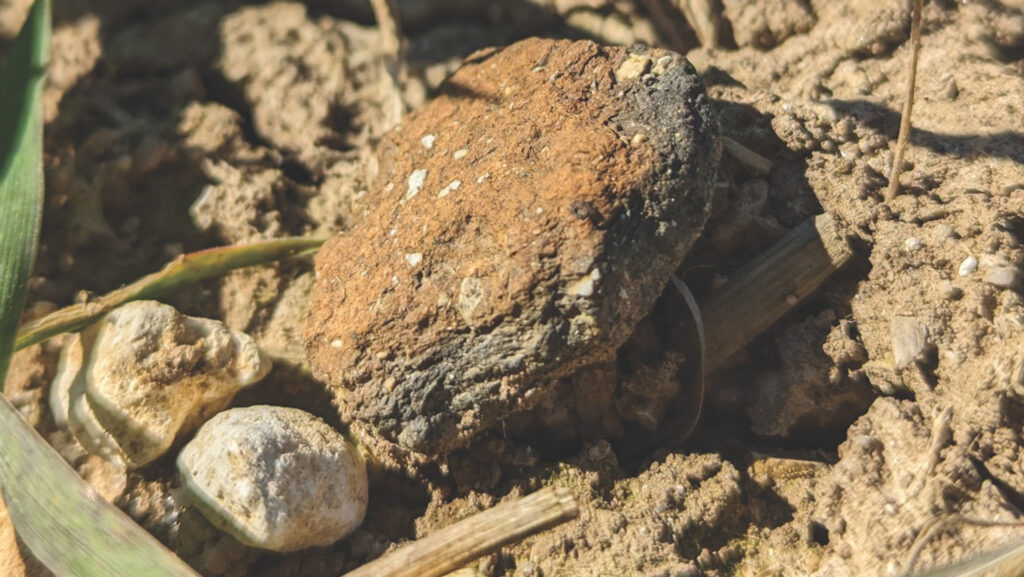
One of the earliest finds is a fragment of prehistoric pottery recovered from a stubble field in spring.
“You’d be forgiven for thinking this is a stone,” Peter says.
“It’s a piece of broken, rounded clay that once formed part of a pot – but when I plucked it from a stubble field last spring, its history was written all over it.”
He explains how the object shows clear signs of early manufacture.
“The centre is scorched from the day it was fired, and it was made without a potter’s wheel,” he says.
“Its surface is speckled with tiny pieces of flint, thrown into the clay to help it fire more evenly.
“And there’s no sign of the glazes or painting that typically mark something from the last five centuries.”
Based on comparisons with archaeological material, Peter says the fragment is likely prehistoric.
“A comparison with archaeological samples suggests it’s prehistoric and may have been made in the Bronze Age.”
He says pottery fragments were particularly significant indicators of past settlement.
“Metal can be dropped in transit – for instance, a drinks can thrown into a roadside hedge,” he says.
“It’s much harder to do that with a clay pot, and where pieces are found, it usually means a lost settlement site or ancient farmland where household waste was thrown onto fields as fertiliser.”
He adds: “That’s why a piece of pottery is a time capsule.”
Roman bronze coin
Gallienus Roman coin © Peter Wollweber
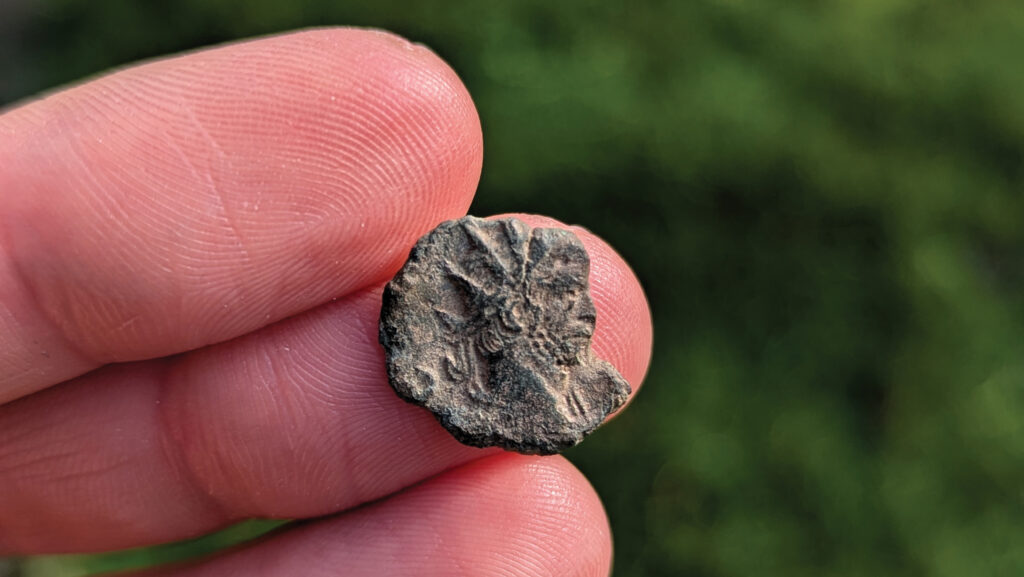
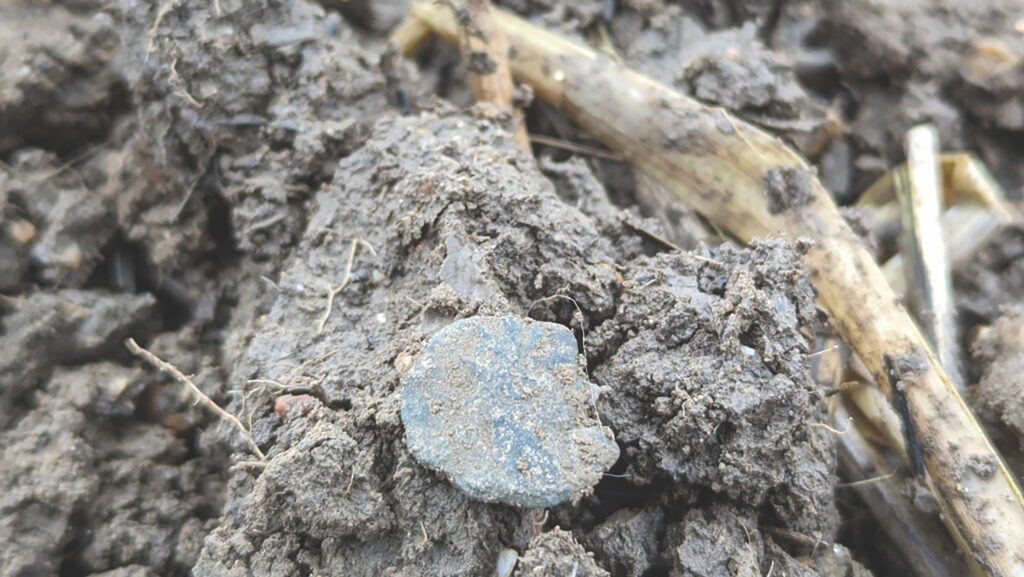
Another discovery dates from the Roman period. Found on productive farmland in southern England, the object is a bronze coin bearing the image of Emperor Gallienus.
“Coins are among the most common items Roman Britons left behind and turn up on almost every rural site they occupied,” he says.
The coin depicts Gallienus, who ruled during what Peter describes as “a period known as the Crisis of the Third Century, when emperors were murdered, provinces seceded, and the economy verged on collapse”.
Although discovered far from the centres of power, Peter says the coin reflects wider imperial pressures.
“Despite much early Roman currency being silver, this piece of currency is small and bronze,” he says.
“It reflects soaring inflation amid political chaos and explains why these coins were lost in such vast numbers: millions were produced, each of extremely low value.”
Civil war lead powder cap
Lead powder cap from the English Civil War © Peter Wollweber
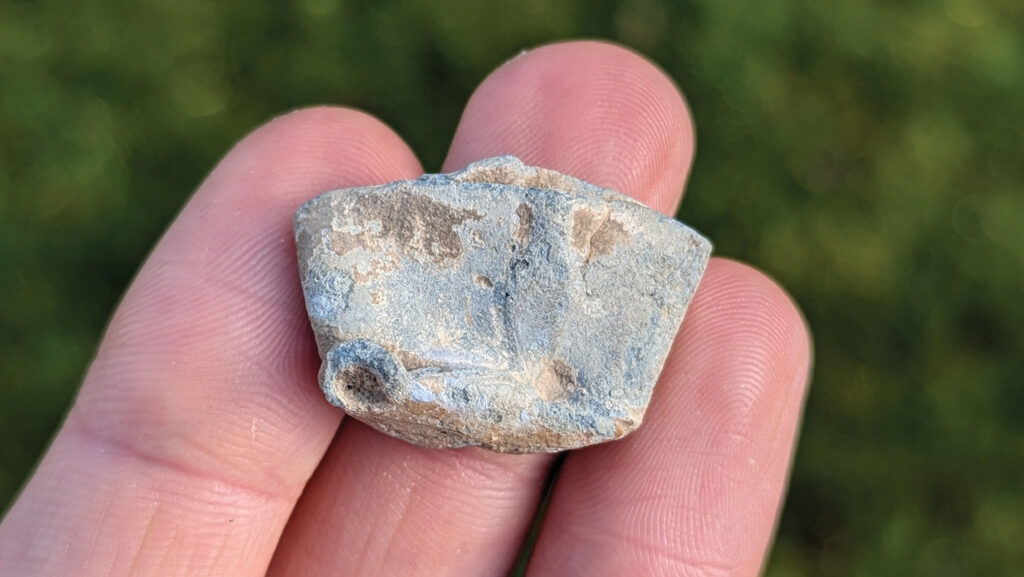
The most recent object found is a small lead powder cap dating to the mid-17th century.
“The final object of 2025 is a humble lead cap, eased from baked summer soil a week or so after the harvest,” Peter says.
The cap formed part of a powder flask worn by soldiers during the English Civil War.
“At that time, a small quantity of gunpowder would have been sprinkled into a priming pan to generate the spark that set off muskets and pistols,” he says.
He explains that mass-produced caps such as this one are frequently associated with conflict.
“Experts have determined that the apparent mass production of these poor-quality caps, alongside their recovery from battlefields, fits neatly with the English Civil War during the 1640s.”
Peter notes that many engagements went unrecorded.
“The conflict was fought in numberless unrecorded skirmishes in fields and country lanes, and large quantities of equipment were lost,” he says.
He adds that such finds show “any isolated piece of land might once have been a battlefield”.
Time for reflection
Looking back on the year, Peter says many more objects were recovered, but these examples demonstrate a wider pattern.
“History is everywhere in the rural world,” he concludes.
“And it’s often the most ordinary objects that hold the greatest secrets about the land we use every day.”