New agriculture BTEC aims to open farming careers to pupils
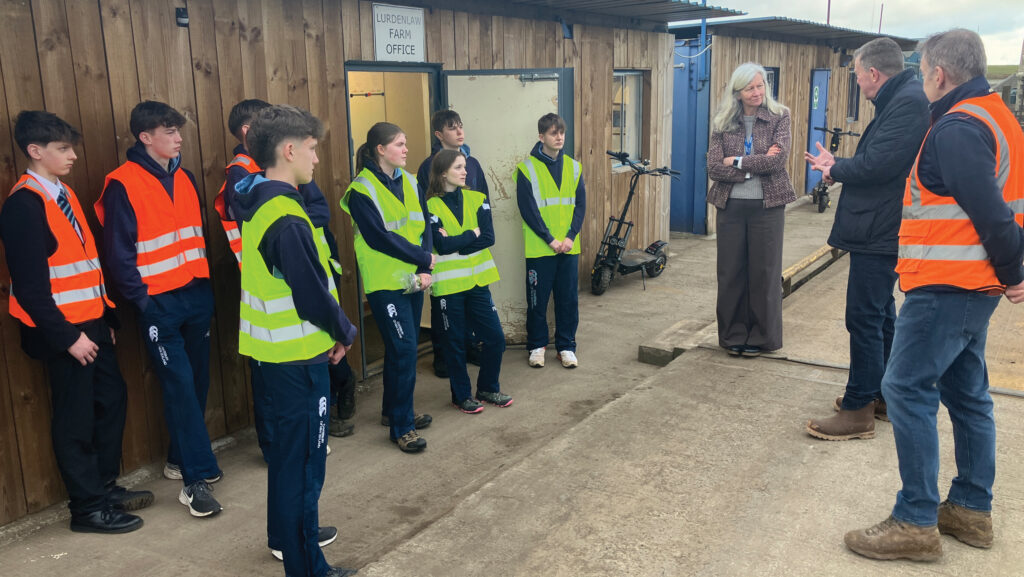 Longridge pupils with (from left) Jenell Arnott, David Armstrong, and David Baird © Longbridge Towers School
 A school on the Scottish-English border is introducing a new agriculture BTEC (Business and Technology Education Council) qualification in a bid to encourage more young people to pursue farming and rural careers.
Independent school Longridge Towers School, near Berwick-upon-Tweed, will launch BTECs in Agriculture and Business this summer as part of its sixth form curriculum.
The move comes as the school looks to build on its long-standing links with the farming sector and provide pupils with more practical, career-focused options alongside traditional qualifications.
See also: Farming clubs help rural pupils build skills and confidence
Longridge Towers has historic ties to agriculture, having originally been established by a farming family, while local farmers helped redevelop the site after it closed as a convent in the early 1980s.
Many pupils, staff and governors also come from farming backgrounds.
The new qualifications, designed for students aged 16 and over, combine classroom learning with practical, work-related experience.
BTECs are already widely used in sectors such as engineering, IT and health, and can provide routes into employment, apprenticeships and university study.
Outdoor education focus

© Longridge Towers School
The school already places a strong emphasis on outdoor education, including forest school sessions and environmental classes throughout pupils’ education.
Deputy head Jenell Arnott says the new qualification reflects the school’s aim of offering more personalised and career-focused learning pathways.
“Agriculture is a big part of the world around us here at Longridge and across the UK, and the BTECs are exciting new introductions to our sixth form curriculum that reflect our commitment to providing individualised pathways with that diverse, career-ready education,” she says.
Farmer support
To help launch the agriculture course, prospective students visited Lurdenlaw Farm, near Kelso.
Farm owner David Baird has agreed to support the course through work experience opportunities and industry input.
Agriculture needs to do more to attract the next generation into the industry, he says.
“ We need to encourage more people into our industry, and that starts with the next generation. So having a partnership with a school like Longridge, where lots of children have come through a farming system, I think has to be a positive move.”
Modern farming careers
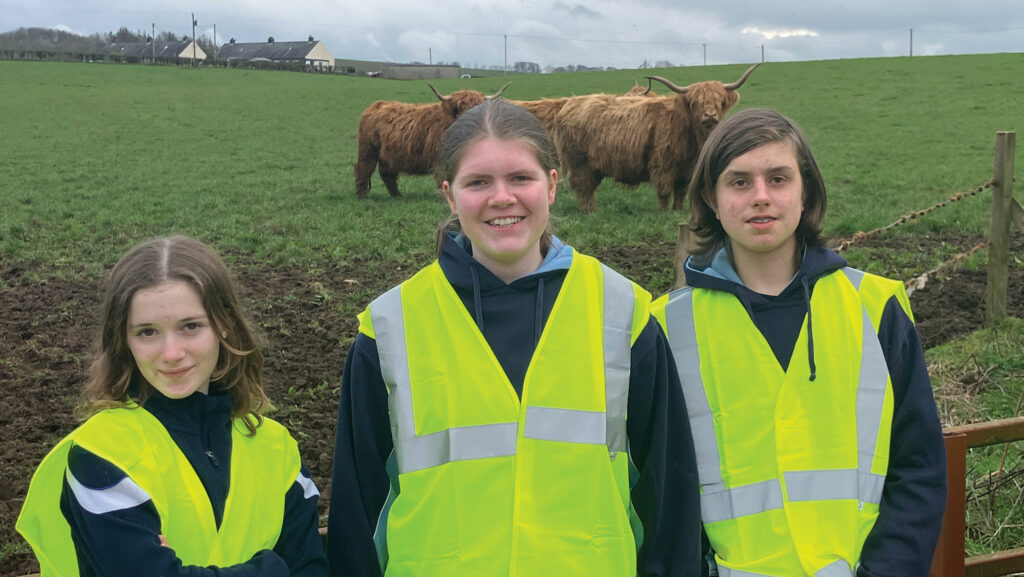
Longridge students Pandra, Emily and Ben meet the Highland cows © Longridge Towers School
The visit was organised by Longridge governor David Armstrong, a farmer from north Northumberland, who says there is a need to improve understanding of modern farming careers.
“I am passionate about how we help to educate our children about the world around them.
“But there is no doubt that we currently need to raise awareness of agriculture and the possibilities that exist for careers in the farming world.”
Farming businesses require a much broader range of skills than in previous generations, he adds.
“Farming is a fast-moving business, and there are a lot of big rural businesses involved around farming.
“As well as knowing livestock, marts, machinery and how the land works, to be successful, a farmer nowadays has to be an agronomist, a researcher or scientist, an accountant, even a bank manager to manage many different accounts across different areas with different suppliers.”
World of opportunities
He adds that while many pupils come from rural or farming families, they do not always recognise the range of opportunities available within the sector.
“Longridge Towers School is right in the middle of a big agricultural region, and a good percentage of the children are from families involved in farming-based industries.
But that doesn’t mean they themselves necessarily have an understanding of how they might be suited to a career in agriculture.”
David at Lurdenlaw Farm says farmers also have a responsibility to improve understanding of how the industry operates today.
“I think there is a responsibility on us as farmers to communicate that it is a world with lots of opportunities.
“We need to educate the youngsters about what farming means in the 21st century and open their eyes that it may not be quite what they think.”