School-farm partnership puts agriculture on the curriculum
 © Mountbatten School
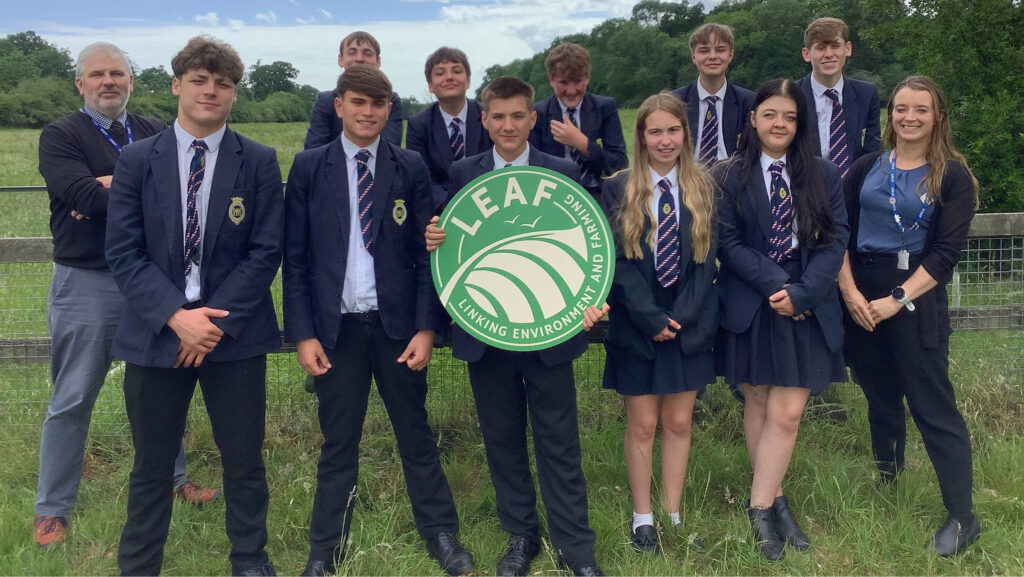
 A Hampshire secondary school is using farm visits to bring classroom learning to life and introduce pupils to careers in agriculture, sustainability and the environment.
This term, 15 students from Mountbatten School in Romsey will visit three farms, including Lockerley Estate near Stockbridge, through the school’s Alternative Curriculum Education (ACE) programme.
Developed with Leaf, the initiative aims to provide more hands-on learning opportunities while helping pupils understand food production and environmental management.
See also: Farm visits open children’s eyes to rural opportunities
Ellie Peacock, deputy director of science academy at Mountbatten School, said the programme was designed for students who thrive in practical settings.
“We’ve been looking at alternative provision for students who gravitate more towards practical, hands-on learning,” she said.
The ACE programme has already introduced pupils to skills such as plumbing and plastering, with farming proving particularly popular.
The school has also signed up as a Leaf demonstration school and is working towards bronze accreditation.
“It’s a really nice way of using the students’ interest in food and farming to get some curriculum across to them and bring the curriculum to life,” said Ms Peacock.
She added that topics such as sustainability and climate change strongly resonate with many pupils.
“The older students, particularly, are more aware of global warming, sustainability, and it’s a really hot topic for them.”
Hands-on experience
One of the host farms is Lockerley Estate, a 6,000-acre regenerative farming business with about 400ha of woodland.
Matt Bloor, woodland and conservation manager at the estate, said educational visits are designed to give children a deeper understanding of farming and the environment.
“We’ve always been clear that we want agriculture to be part of the curriculum, not just to come and have a look at some shiny tractors,” he said.
During their visit, students took part part in woodland management activities and practical work in the estate’s market garden while learning how science, technology, engineering and maths underpin modern farming.
Mr Bloor believes farm visits are particularly valuable for children without a farming background.
“If children don’t have access to farms, then how are they going to know that they might like to work in that environment?” he said.
“We can’t grumble about the consumer not knowing anything about it if we don’t try and spread that word a bit, and it starts with the children.”