Farming belongs to everyone who plays a part
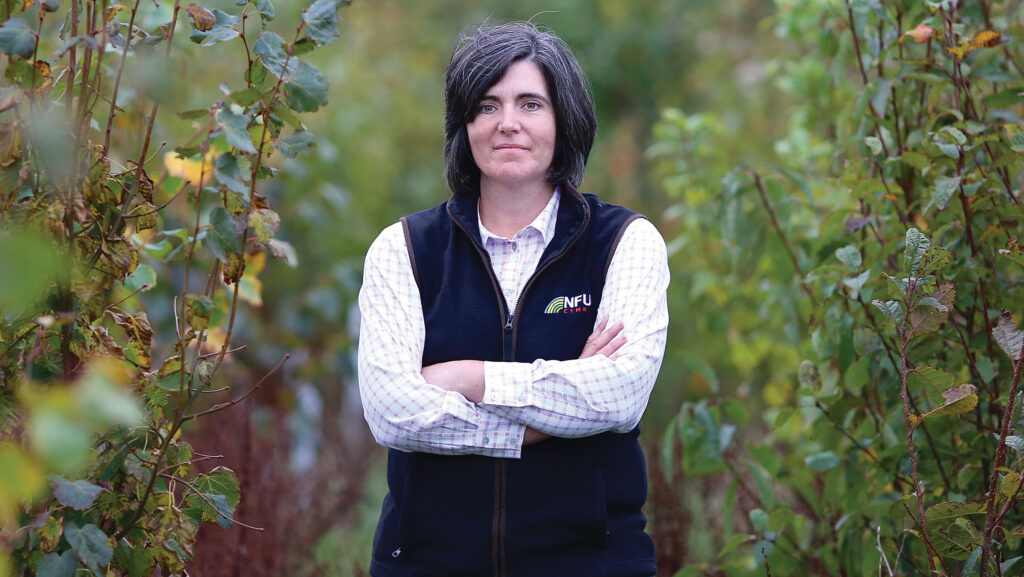 NFU Cymru president Abi Reader © NFU Cymru
 Everyone contributing to a farm business should be recognised as part of the farming team, regardless of gender or role, NFU Cymru president Abi Reader has said.
Speaking during a Farmers Weekly Women in Agriculture Network webinar, Ms Reader said farming had become considerably more diverse during her career, but unconscious and overt bias remained.
See also: Victoria Atkins: Why Westminster needs more farming people
Ms Reader said she regularly attended farm meetings where both partners were involved in the business, but the woman would remain outside the discussion and describe herself as “just the farmer’s wife”.
“Farmer’s wife has got to go. Farmer’s daughter has got to go,” she said.
“If you are in any way, shape, or form helping that farming business, whether it’s on the farmyard or in the house – and that includes the people who make sure there’s a meal at the table when you come in at midnight – you are the person who is keeping that farm business going,” she said.
“Farmer doesn’t mean you milk cows and you drive a tractor.
“Farmer means that you are part of that team that produces the food and cares for the land and the environment.”
Finding her voice
Ms Reader, who runs a 200-cow dairy farm near Cardiff, said confidence had not always come naturally.
She recalled struggling to speak when she chaired her first NFU Cymru county meeting in Glamorgan, in a room where almost everyone was male.
“I opened my mouth to say, ‘Right, let’s start the meeting’, and I couldn’t get a single word out,” she said.
It took three attempts to begin the meeting, an experience she described as “horrendous”, but which made her determined to improve.
Despite progress in addressing gender bias, Ms Reader said assumptions about women in agriculture had not disappeared.
At a grassland event this summer, she approached a machinery stand with a male employee to enquire about slurry separation equipment, only for the salesperson to direct the conversation towards her older male colleague.
She had also encountered more overt misogyny, including a personal remark from another farmer earlier this year.
Recalling the incident, Ms Reader said: “I’m not married. I don’t have children, so therefore I must be a lesbian.”
She said the remark had initially passed her by, but added: “What is it to you who and what I am, other than a farmer, and at the moment your president?
“Had these things happened to the younger me, who was 19 and shy, they would have been mortifying and probably really dragged me down.”
Her advice was to develop techniques for responding calmly and to remember her mother’s words: “Don’t dwell on it because these things will eat you up.”
Changing industry
Ms Reader said one of the biggest changes during her career had been the growing diversity of agriculture, including greater representation of women, young people and LGBTQ people.
“We’ve got people in this community who all fit and they all belong there and they’re welcome there, and I just love that,” she said.
For Ms Reader, progress ultimately meant reaching a point where gender no longer determines how someone’s contribution to agriculture is viewed.
NFU Cymru continues to run its Wales Woman Farmer of the Year award, but Ms Reader said its eventual disappearance would itself be a sign of progress.
“To me, success will be the day that we no longer need that competition.”
Building networks that open doors
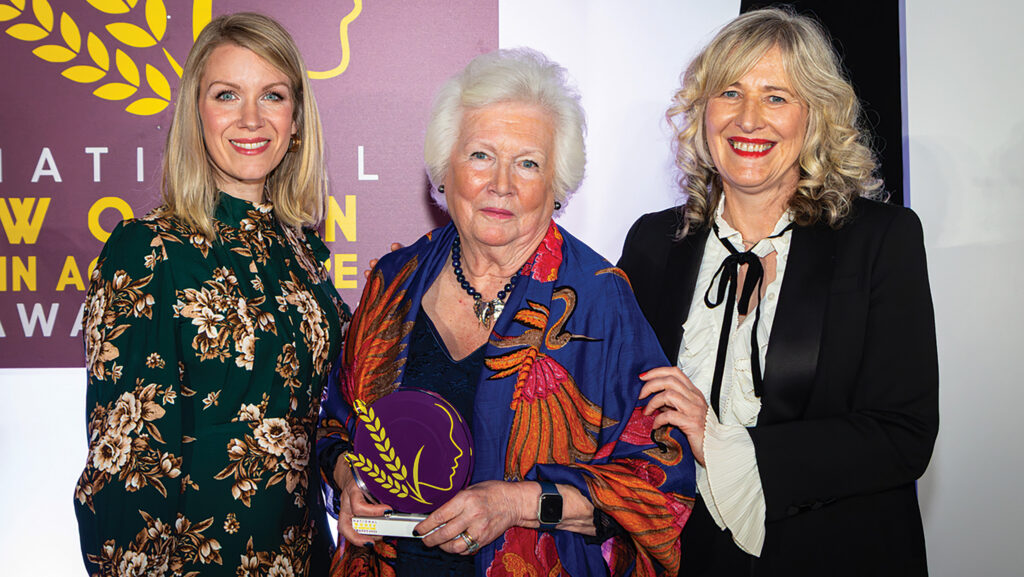
Theresa Wickham (centre) at the Women in Agriculture Network awards 2025 © MAG/Jamie Hodgskin
The UK-wide Women in Agriculture Network, launched in November 2025, has hosted numerous female voices including Teresa Wickham, Victoria Atkins, Milly Fife, Kate Rowell and Emily Norton during its inaugural year.
Through online and in-person events, it aims to help women develop skills, share experiences and build professional networks.
Speaking during one network webinar, industry veteran Teresa Wickham drew on a career spanning farming, campaigning, food retail and consultancy to emphasise the value of mentors and professional relationships.
“You need mentors, you need people, you need people helping you. You can’t do it all on your own,” she said.
Mentors did not need to guide every decision, but could create opportunities and provide encouragement.
“They’re not going to hold your hand. But they’re going to open doors for you, and I think that’s what’s really important.”
Networking had been equally important throughout her career. While at supermarket Safeway, Mrs Wickham established an annual event bringing senior women together with people from banking, government, suppliers and other sectors, while also giving younger colleagues opportunities to make connections.
For those unsure how to find a mentor, she advised approaching someone they respected.
“I might not use the word ‘mentor’, but just say, can I bounce some ideas off you to start with?”
Her wider advice was simple: “Make sure you keep up with your network.”
Chloe Ryan, editor of Farmers Weekly sister magazine Poultry Business and project lead for the network, said: “Our ambition is for the Women in Agriculture Network to keep growing as an open, supportive community where women can connect, learn and build their careers.
“We’ll continue bringing inspiring voices and practical opportunities to members, while creating more chances for people to meet and build lasting networks.”
- To catch up on webinars hosted by the Women in Agriculture Network, log in to Staypost and visit the On Demand section.