From tragedy to hope: 10 years of the DPJ Foundation
When Emma O’Sullivan lost her husband Daniel to suicide in 2016, she was determined no other farming family should face the same ordeal without support.
Ten years later, the charity she founded has become one of Wales’ best-known agricultural support organisations, helping thousands of people while transforming attitudes towards mental health across the industry.
See also: Welsh farming optimism depends on wellbeing support
The DPJ Foundation was born not from a long-term plan, but from the raw aftermath of personal tragedy.
Emma vividly recalls waking the morning after Daniel’s death and realising something had to change.
“I just remember thinking this can’t happen,” she says. “There is no woman, man or child who should have to go through what we went through.”
What began as a deeply personal mission soon exposed a much wider problem.
“I knew it wasn’t just me and my family,” she explains. “But what became really clear was that this was far bigger than I ever imagined. There are people out there who need significant support.”
Today, that support reaches farming communities across the whole of Wales through counselling services, mental health training, physical health initiatives and a growing network of volunteers.
© Emma O’Sullivan
Breaking the stigma
Charity manager Kate Miles believes one of the charity’s biggest achievements has been changing how farmers talk about mental health.
“When the DPJ Foundation was established, the primary aim was to challenge the stigma surrounding poor mental health,” she says.
“We still have stigma, but we really have seen a change. People are having open conversations about mental health and are far more willing to come and talk to us.”
That shift has coincided with a significant expansion in available support. When DPJ was founded, there was no dedicated counselling service for farmers in Wales.
Today, alongside similar services elsewhere in Britain, the charity provides specialist support tailored specifically to agriculture.
Its bespoke mental health awareness training has also evolved, with more than 3,000 people completing courses designed around the realities of farming life.
The charity is increasingly becoming the first port of call for farmers seeking advice after traumatic events or when supporting family members and neighbours.
“It makes me extremely proud when people feel that we can be the place they turn to,” says Kate. “It’s a privilege that people trust us with their stories.”
Growing demand
Demand for support has continued to rise. Since the counselling service launched in 2018, the number of new people receiving counselling each month has roughly doubled, increasing from the low teens to about 20 or more new referrals every month.
Greater awareness has undoubtedly played a role, but Kate believes ongoing pressures within agriculture continue to take their toll. Some challenges have remained remarkably consistent over the past decade.
Bereavement and relationship breakdown remain among the most common reasons people seek help.
In Wales, bovine TB continues to generate significant stress, while more recent issues such as inheritance tax changes have placed additional strain on farming families by forcing difficult conversations about succession.
“The farming issues change,” says Kate. “But generally, the things we see are real human issues, and they’ve remained the same.”
She also believes official suicide figures fail to capture the true picture because many older farmers or those with off-farm employment are not recorded as working primarily in agriculture.
Regardless of the statistics, the impact on families and communities remains devastating. “When somebody takes their own life, the repercussions ripple out a long way,” she says.
That experience has shaped one of the charity’s proudest achievements – its postvention service, providing proactive support to families following a suicide.
“It’s about standing alongside someone when they’re navigating those really difficult times.”
Built for farming
Emma believes the charity’s close connection with agriculture has been central to its success.
“I’m not media trained. I’m not a charity director,” she says. “I’m Emma from Pembrokeshire who lost her husband and ended up in a really awful situation and needed to do something about it.”
That authenticity resonates across the farming community. “We are farmers. We know the industry and every single person involved has that passion to want to do something better.”
Despite dealing daily with serious issues, the charity has become known for its fundraising adventures, community events and ability to bring humour into difficult conversations.
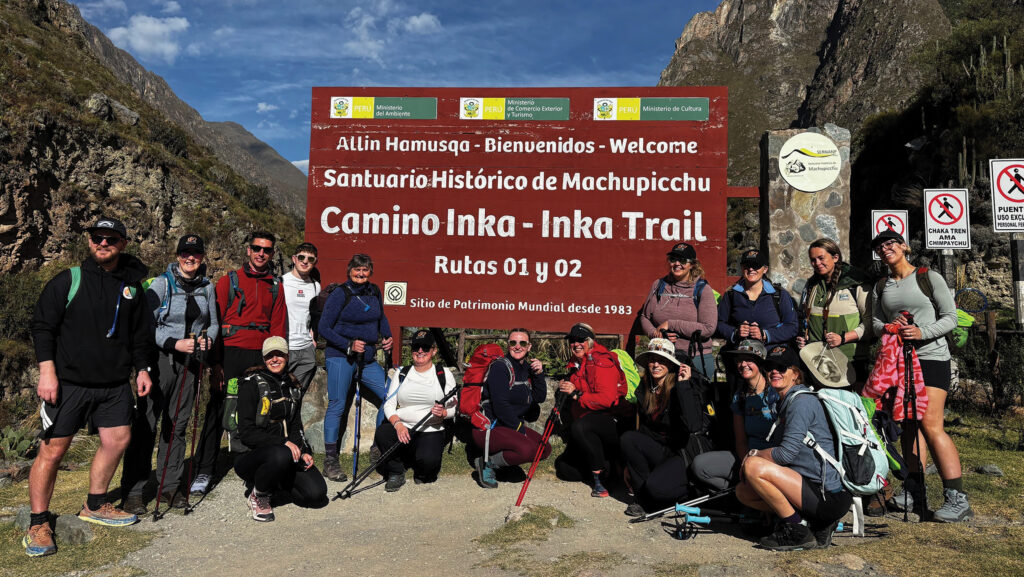
From charity balls to mountain expeditions in Peru, Emma believes creating moments of fun helps make mental health more approachable.
Following a recent fundraising trek to Machu Picchu, participants have already raised almost £24,000, well above the original £10,000 target, helping fund counselling services that remain the charity’s biggest ongoing cost.
Looking ahead
As the charity enters its second decade, both Emma and Kate are focused less on rapid expansion and more on sustainable growth.
Future priorities include strengthening existing services, expanding resources for parents, rolling out new menopause awareness training, and ensuring support reaches every corner of Wales without duplicating services already provided by others.
Emma hopes the charity will continue adapting to meet the changing needs of future generations.
“My goal in 10 years’ time is simply that we’re still here,” she says. “Still at the centre of the agricultural sector in Wales, providing the help that’s needed.”
DPJ support in numbers
© Corinna Parry
- 1,400 farmers who have benefited from the The Share the Load service over eight years
- 3,500 people who have been trained to be more aware of poor mental health
- 13,150 individuals who have received health checks on DPJ health lorries