How to design farm work to protect your body for longer
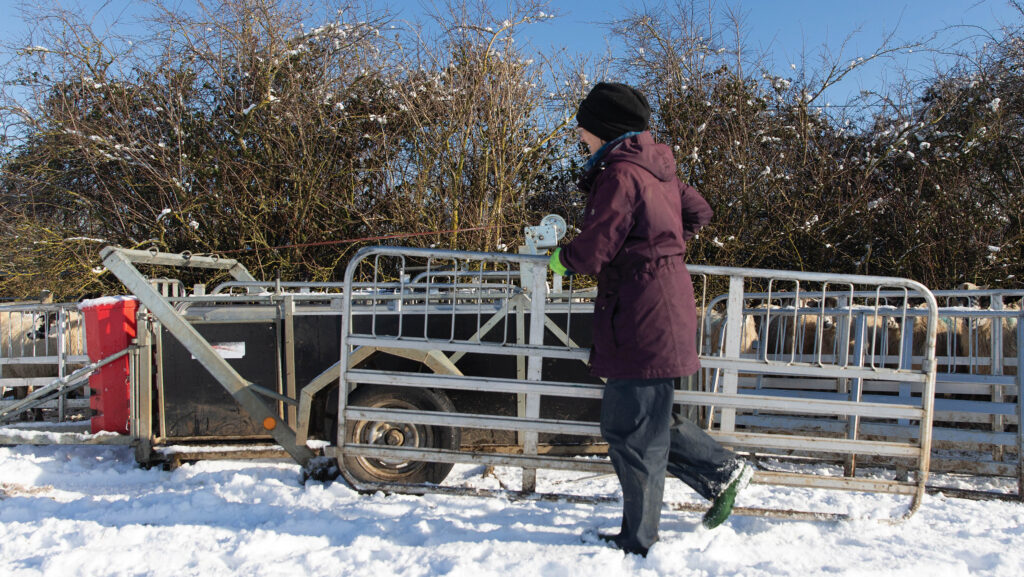 © Tim Scrivener
From chronic pain to life-changing injuries, the physical demands of farming can have lasting consequences.
But changing working practices, using technology and recognising physical limitations could help farmers stay in the industry for longer.
According to the Health and Safety Executive (HSE), an estimated 6,000 people working in agriculture, forestry and fishing suffer from work-related musculoskeletal disorders (MSDs), accounting for 67% of work-related ill health in the sector.
These conditions can affect the back, shoulders, knees and other joints, often developing gradually through everyday activities.
See also: Poor physical health: The hidden farm safety risk
At 46, North Wales beef and sheep farmer Geraint Davies is already considering reducing his sheep flock because of the physical toll farming has taken on his body.
Farming with his wife Rachael near Bala, Mr Davies suffers from osteoarthritis in his lower back, diagnosed three years ago, with pain increasingly affecting his hips, shoulders and neck.
“After doing a day with sheep mainly, my lower back, hips, through my groin and what have you, are absolute agony,” he says, adding that standing on concrete in marts also aggravates the pain.
This can last for days, disrupting his sleep and leaving him struggling to participate in family life.
“I’ve got a young family that expects you to be able to do things with them, but I’m just in pain.”
Farmers Weekly Level the Field survey findings
Musculoskeletal problems are taking a significant toll on farmers’ ability to work, according to Farmers Weekly’s 2026 Level the Field survey.
More than 1,700 people responded to the survey, which highlighted the prevalence of chronic pain, mobility difficulties and the pressure to continue working despite physical limitations.
- 50% reported living with a physical health condition, injury or disability affecting their ability to farm or carry out certain tasks.
- 79% said they have musculoskeletal problems such as arthritis, joint damage and chronic back pain.
- 75% said their mobility was affected, and many described daily pain as routine rather than exceptional.
- 60% had stopped or reduced certain tasks because of physical health problems.
- 80% said they regularly or sometimes felt pressure to keep working, despite being in physical pain or unwell.
The survey was self-selecting and findings are not necessarily representative of the wider farming population.
Working smarter
Wayne Owen, who specialises in agriculture within HSE’s engagement and policy division, says reducing physical strain starts with questioning how routine jobs are organised.
Tasks including carrying feed bags, handling livestock, opening heavy gates and cleaning buildings can all place repeated strain on the body.
Mr Owen recalls seeing seasonal workers carrying crates of swedes uphill to load onto a tractor.
“Why not take the tractor to the work area, or if this isn’t possible what about positioning the tractor at the bottom of the hill?” he asks.
“Just little things like that can make a big difference. Planning the task a bit better can result in safer, healthier and easier ways of working.”
Mechanisation can also help, from using telehandlers to move bulk materials to installing feed delivery systems that eliminate repeated carrying.
“You’re going to last longer as a farmer if you’re making things as easy for yourself as possible,” says Mr Owen.
Livestock handling facilities, adjustable workstations, job rotation and regular breaks can also further reduce physical strain.
“Use the technology and make things easier for yourself as much as possible,” he adds.
Adapting the business
For Mr Davies, adapting working practices has become essential.
He has invested in livestock handling facilities, including a cattle race that allows him to work alongside the animals rather than pushing them towards the crush, while a Combi Clamp has reduced the physical effort involved in sheep handling.
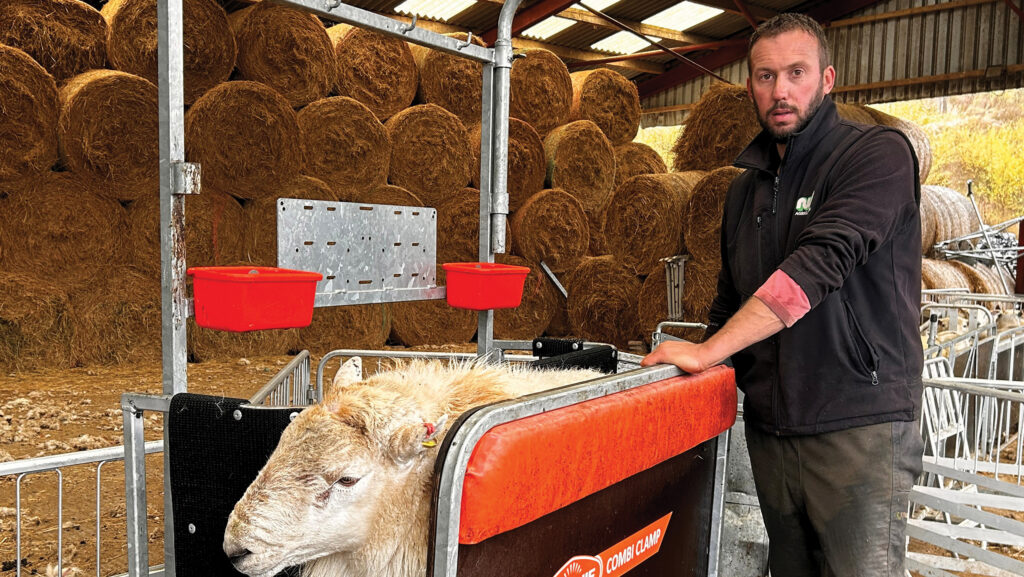
Geraint Davies has found ways to reduce the burden handling sheep © Rachael Maedley Davies
He now also relies more on his sheepdog to position animals rather than chasing them himself.
To manage his symptoms, Mr Davies uses prescription painkillers and has started attending a gym to strengthen his lower back.
He also finds wearing a long shearing vest helps keep his back warm and relaxed. Despite these changes, sheep work remains painful.
The farm currently runs between 600 and 800 sheep and around 170 cattle, but Mr Davies is considering halving sheep numbers while potentially increasing cattle numbers.
“It’s striking the right balance that still works for us to be a viable business, but obviously getting my health to be benefiting from it and not suffering more,” he says.
Looking back, he regrets years of heavy lifting and urges farmers to seek medical advice rather than ignoring persistent pain.
“As an industry, I think we think we are invincible,” he says.
Protecting your body at work
- Plan before lifting Consider the weight, shape and distance a load needs to be moved.
- Reduce manual handling Use telehandlers, trolleys, feed systems and livestock handling equipment to minimise lifting, pushing and pulling.
- Rethink everyday routines Position deliveries closer to where materials are needed and maintain heavy gates and doors to reduce unnecessary effort.
- Adapt working environments Use adjustable workstations, rotate repetitive tasks and take regular breaks where possible.
- Recognise warning signs Don’t ignore persistent aches, stiffness or pain. Seek medical advice before problems become more serious.
- Review working practices Consider an independent safety assessment to identify risks that may be overlooked during busy periods.
- Plan for the long term Invest in equipment and working methods that protect physical health, rather than relying on strength and endurance alone.
Continuing a career
For regenerative agriculture specialist Tim Parton, adapting has meant finding a different way to remain in the industry.
In March 2024, a tree-felling accident left him paralysed from the waist down and resulted in the amputation of his left leg through the knee.
Following seven months in hospital, Mr Parton, who previously managed a 300ha enterprise in Staffordshire, now works as an agronomist and consultant.
He continues visiting farms and giving talks on regenerative agriculture, soil health and crop nutrition, including engagements in France, Sweden and the Isles of Scilly.
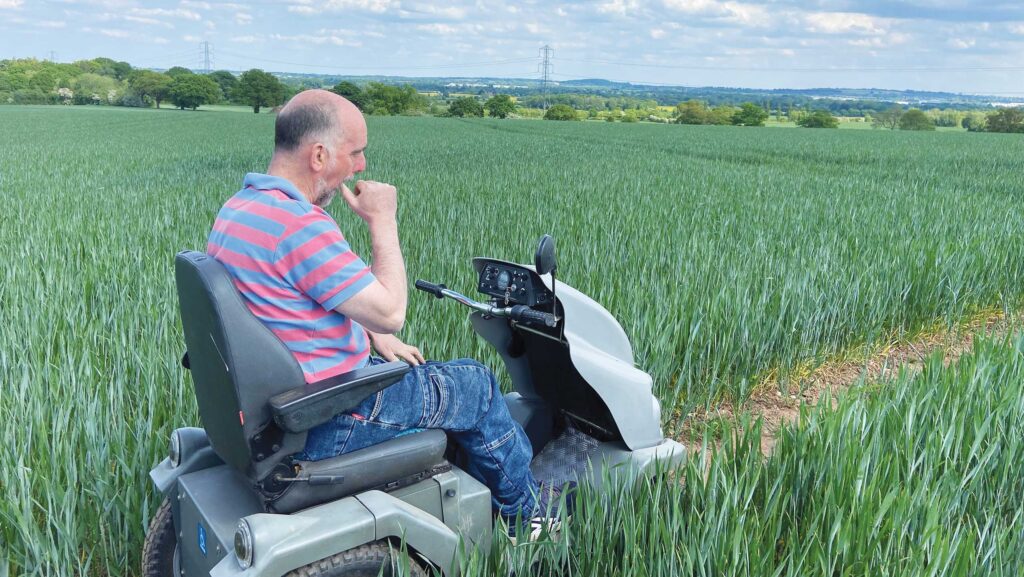
A buggy helps Tim Parton continue working in agriculture © Tim Parton
A friend modified a lightweight beach buggy to help him travel across fields, while farm pickups and utility vehicles provide alternative transport.
“It’s amazing how you adapt. You’re only as disabled as you let yourself be,” he says.
Although farms can present challenges for wheelchair users, Tim points out that towns and public spaces are not necessarily any more accessible, explaining that missing dropped kerbs and inaccessible buildings can make everyday journeys difficult.
However, he believes most farming environments can be adapted when needed, with practical solutions often available. “There’s always a way around it,” he says.
“Once you start to think about it, you soon make it accessible.”
Although adjusting to reduced independence has been difficult, continuing to work has been vital. “We’ve all got to have a purpose, and to not have purpose, I would find very difficult.”
Mr Parton believes farmers who can no longer undertake physical work can still positively contribute to the industry.
“If you’ve got that ability to plan and organise everybody else, you’ve still got an awful lot to offer.”
His advice to anyone facing a life-changing injury or condition is to seek support from others who have adapted.
“Your life is not over. You just have to think a little bit different to make it work for you.”
Changing attitudes
Jill Hewitt, chief executive of the National Association of Agricultural Contractors, believes physical health deserves greater attention across the industry.
She draws comparisons with changing attitudes towards mental health, which has become a more accepted topic of conversation.
“I’ve been in contracting 25 years, and we would never have talked about that [mental health] 25 years ago,” she says.
“Whereas now it’s just part of conversation, and you know, everybody talks about that.”
Mrs Hewitt believes farmers and contractors should become more aware of the physical demands of their work and recognise potential problems early.
“There’s often small tweaks you can do to avoid long-term problems,” she says.
However, long hours remain a challenge, particularly for contractors working through harvest when weather pressures and labour shortages make rotating machinery operators difficult.
Level the Field
Our campaign, Level the Field, aims to make agriculture fairer, more equitable and more inviting for everyone.
By engaging people and organisations across our industry, Level the Field will champion inclusivity for the benefit of farm businesses and all who work in them.
This year, the campaign puts the spotlight on physical health in agriculture. Previous years have focused on women in farming, and neurodiversity.
See more on our Level the Field campaign hub.