How to make farm education part of your business
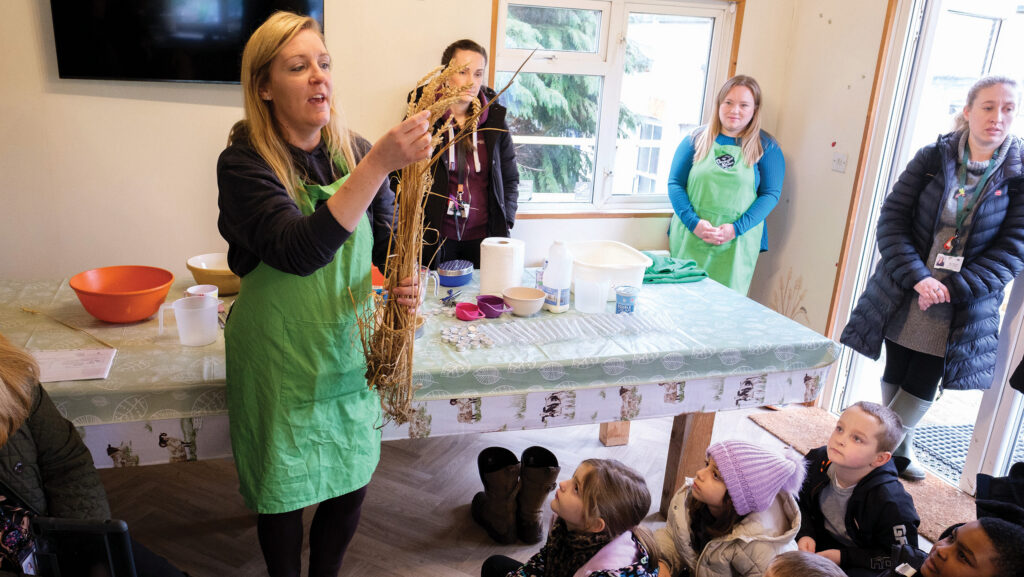 Milly Fyfe with schoolchildren © The Countryside Kitchen
Milly Fyfe, founding director of No Fuss Meals for Busy Parents CIC and The Countryside Kitchen, has turned what began as social media videos about farming and cooking during the Covid pandemic into a community education project.
Initially working with local food larders to help families make better use of fresh ingredients, Milly increasingly received requests to welcome visitors onto Orchard Farm, in Yelvertoft, Northamptonshire.
See also: School pupils get hands-on taste of farming careers
Though initially not sure about having visitors on a working farm, after welcoming her eldest child’s reception class, she began considering how visits could offer something more meaningful than simply meeting the animals.
“I wanted to see what I could do,” she recalls. “What messages did I want those visitors to have a better understanding of?”
Today, her workshops connect farming, food production and cooking with the school curriculum, operating from a converted static caravan in the farm orchard.
Getting started
For farmers considering a similar venture, Milly recommends Countryside Educational Visits Accreditation Scheme (Cevas) training, which she completed through AHDB in January 2025.
“The Cevas course is a complete game changer because not only do you get connected to lots of other farmers around the country that are interested in wanting to do farm visits, but it gives you the framework that is needed,” she says.
The course covers risk assessments, safeguarding and educational planning, with further support available through LEAF Education.
© The Countryside Kitchen
Milly initially hoped to convert an existing farm building, but her grant application was rejected. A proposed log cabin also proved unsuitable because of planning requirements. Instead, she purchased a second-hand static caravan from another farmer.
“That was a real learning opportunity because, in hindsight, now what we have is 100% bigger, more accessible, and separate from the farm completely in terms of operations.”
Crowdfunding, matched donations and a 50% capital grant helped finance the classroom, with local businesses donating equipment.
For others starting out, she says toilets and handwashing facilities are essential, though existing staff welfare facilities may offer a practical solution.
Making it work
Building relationships with schools takes time, she warns, but word-of-mouth recommendations have generated a waiting list.
Despite considerable demand, Milly limits visits to two mornings weekly, generally between 10am and noon, to minimise disruption to the livestock enterprise.
“We could do loads more. The demand is absolutely huge,” she says.
But when a coach arrives, farm vehicle movements stop, while TB testing, deliveries and other activities must be planned around visiting groups.
© The Countryside Kitchen
Farmers should also consider coach access, parking, safe walking routes and the time needed for preparation, alongside public liability insurance, safeguarding procedures and risk assessments.
Pre-visit meetings with teachers are essential for identifying potential risks and individual needs.
“Having that dialogue with the group leader in advance – that’s been absolutely key.”
Rather than simply showing visitors the animals, Milly’s workshops follow the journey from soil to food.
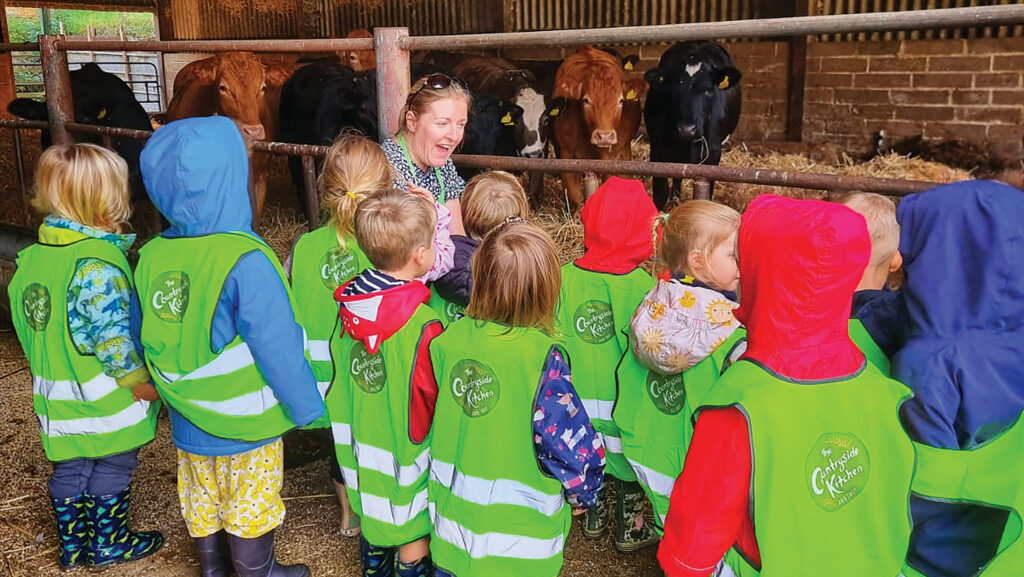
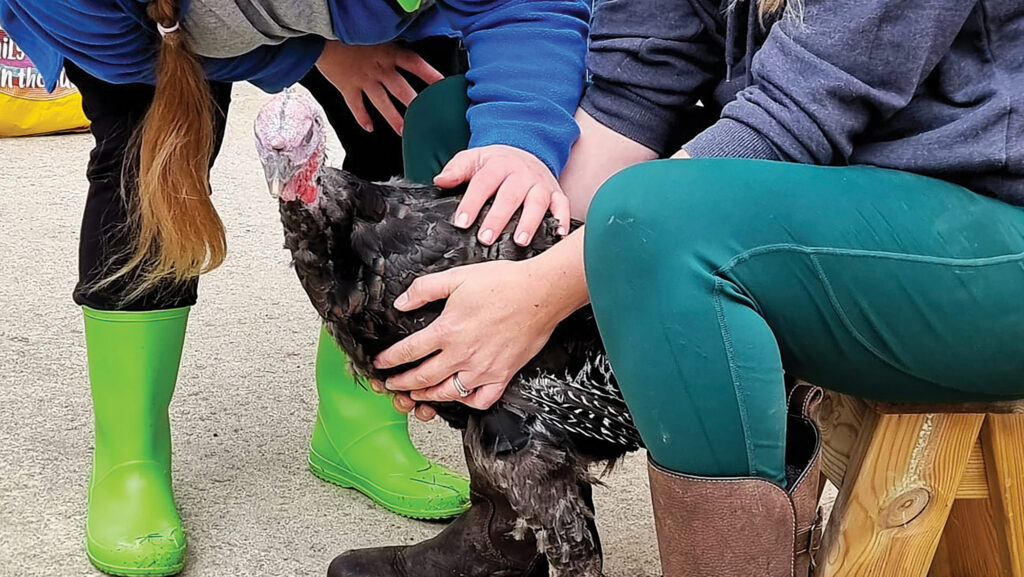
Children charm worms to explore soil health, meet livestock, plant seeds and even churn cream into butter. “They are so mesmerised with that!”
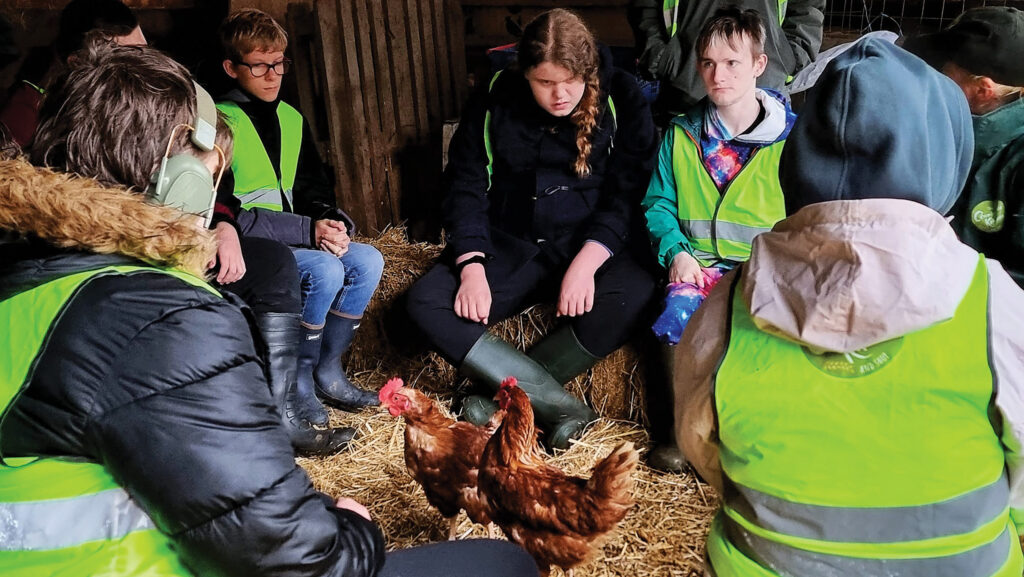
Visits accommodate up to 30 schoolchildren, with activities adapted for those with additional learning needs or physical disabilities.
Donated wellington boots also ensure children are not excluded because they lack suitable footwear.
Making it pay
As a not-for-profit Community Interest Company (CIC), No Fuss Meals for Busy Parents has accessed project funding through supermarket coin-drop schemes and local funds linked to wind and solar farms.
It has also received support through the National Lottery’s Awards for All and the Royal Society of Chemistry, including funding for food-science workshops.
Milly also highlights Defra-funded educational visits, worth £363 per visit for eligible farmers, although her initiative has not accessed this funding.
© The Countryside Kitchen
Operating as a CIC has helped unlock grants unavailable to some conventional farm businesses she says. However, restricted funding makes other income streams important.
An honesty shop within the caravan sells farm produce, goods from neighbouring farmers and surplus supermarket food, helping cover running costs.
Milly also offers paid first-aid training, although she does not currently draw a wage from the initiative.
For Milly, the rewards extend beyond education and income.
“The kind of mental health and well-being that comes from being on the farm, I never really appreciated how huge that was.”
And her advice to farmers considering a similar venture? “Do it!”