Why farming in pain needs a culture shift
 © Tim Scrivener
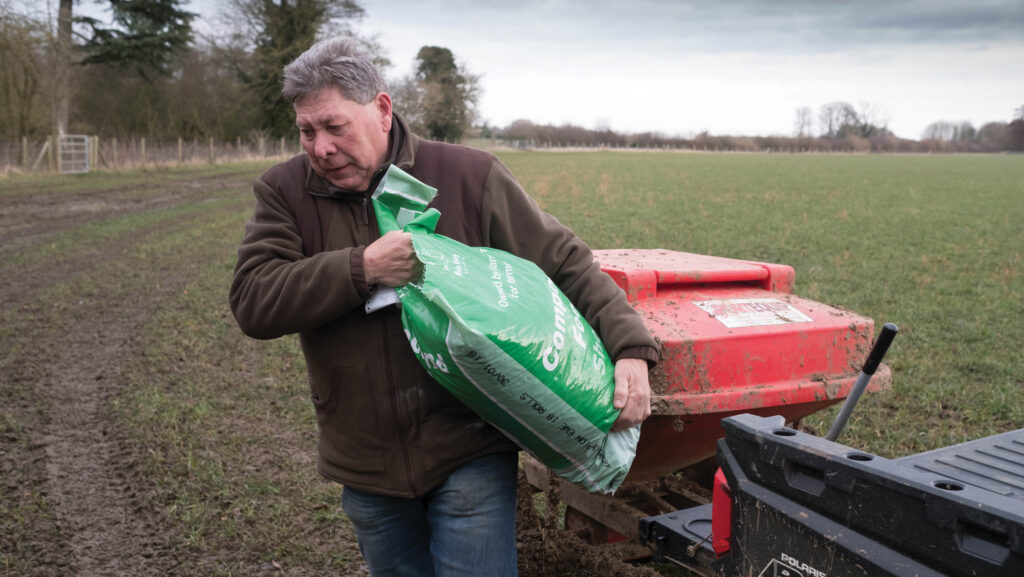
 Physical pain and discomfort are often treated in farming as something to push through rather than something to address, according to the latest Farmers Weekly Level the Field survey.
Responses suggest farmers are more likely to adapt routines or rely on painkillers than seek treatment when physical problems arise.
Conversations about injuries or related limitations remain rare, but the scale of the issue is significant.
See also: Level the Field survey reveals widespread physical challenges
Half of survey respondents said they lived with a physical health condition that affects their ability to farm or carry out certain tasks.
More than half reported regularly working through pain or discomfort, and one in four said they experience mobility problems.
Among those with a condition, four in five cited musculoskeletal issues such as arthritis, joint damage or chronic back pain. For many, these problems had been present for years.
Research from the Royal Agricultural Benevolent Institution (Rabi) tells a similar story.
“Musculoskeletal problems are common, but what’s striking is how often pain is minimised or simply accepted as part of the job,” says Caron Whaley, director of services at the charity.
“Farmers tell us they feel they have no other option but to carry on.”
That phrase – “part of the job” – crops up frequently when farmers talk about their physical health.
Long-hours culture
Farming work is physically demanding, hours are long and the boundary between work and home is often blurred. For many, stepping back simply does not feel possible.
Sally Shortall, professor of rural economy at Newcastle University, says the structure of the industry helps explain why.
“Farmers are self-employed, so they are responsible for their own safety,” she explains.
“For any occupation where you’re responsible for your own safety, safety measures tend to be quite lax.
“We have regulation around employed migrant workers, but we’re not looking at the work demands on self-employed farmers. They’re working such long hours and it’s not sustainable.”
Isolation also plays a role. Many farmers spend long periods working alone, with little opportunity to compare experiences or admit they are struggling.
“Farmers I’ve interviewed say two things,” says Prof Shortall. “First, they just want to get the job done when they’re in the zone. And they’ve also said that sometimes they have undertaken something risky because they would not ask an employee to do it, but they want to get it done.”
Practical tips to protect your body
- Do not wait until movement is severely restricted before seeking treatment
- Build in a short daily routine of stretching or mobility exercises
- Include 15-20 minutes each day of resistance or strength work
- Vary tasks to avoid repeating the same movement all day
- Carry loads evenly across both sides of the body
- When driving machinery, look over both shoulders rather than always twisting one way
- Invest in supportive footwear to reduce strain and prevent falls
- Pay attention to sleep, nutrition and hydration
- Address stiffness or recurring pain early
Source: Victoria Wadlow, physiotherapist
Practicality, not pride
In other words, pushing through pain is not only about pride – it is often about practicality.
Part of the difficulty in acknowledging pain lies in farming culture itself. Physical capability is often closely tied to identity and authority within farm businesses.
Researchers have long written about the idea of the “good farmer”, where competence is judged through visible signals such as tidy fields, productive livestock and well-maintained machinery.
Endurance, physical strength and the ability to work long hours can also become markers of commitment.
Prof David Rose, director of the Centre for Social Science at Harper Adams University, says these expectations can reinforce the idea that struggling physically is something to hide from others.
“It’s probably rooted in patriarchal systems both within farming and outside of farming that have historically rewarded toughness and stoicism,” he says. “I think some people will think that’s what being a good farmer is.”
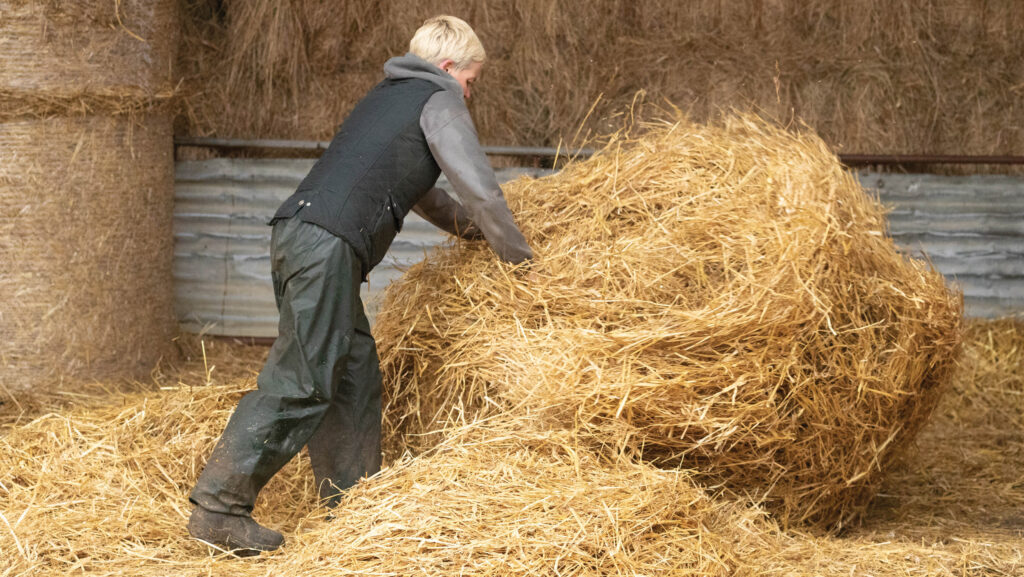
Young farmers entering the industry can pick up those signals quickly. Prof Rose says some early-career workers still describe environments where toughness is treated as part of proving yourself.
“Some employers have this sense of ‘you’ve got to get on with it, you’ve got to toughen up’,” he adds.
“And some female young farmers we spoke to said they felt they were even less able to show they were struggling, because employers were looking out for ‘girls that couldn’t do it’.”
© Tim Scrivener
Attitudes changing, slowly
Recruitment specialists say attitudes may slowly be changing, however, particularly among younger workers.
Hannah Cuthbert, a consultant at agricultural recruitment firm MorePeople, says many candidates now question whether working patterns are sustainable.
“I do think the culture is changing. A lot of the younger people I speak to are more willing to question whether something is actually sustainable long term,” she says.
However, career concerns can still discourage workers from raising health problems early.
Sarah Want, associate director at MorePeople, says: “People can be concerned that speaking up about pain or ill health might impact how they’re viewed when applying for other roles.”
The family farm model can intensify these pressures. When people live and work in the same place, when succession is in the background, or older farmers are trying to retain control of the business, acknowledging a physical limitation can feel like admitting weakness.
In recent post-Brexit years, where farm support is in decline, the language of “resilience” has also become more common in discussions about farm businesses.
Academics warn this can sometimes be internalised by farmers themselves.
“Personal resilience is not about simply enduring more,” says Ms Whaley.
“It is about having the capacity to manage stress, recover from setbacks and maintain balance over time. That includes emotional regulation, strong support networks and good physical health.
“Strengthening these foundations is essential if farming people are to stay well through the ups and downs of farming life.”
For a sector built on resilience, that shift may simply mean applying the same logic farmers already use elsewhere.
Machinery is serviced before it breaks down, livestock health is monitored closely and crops are managed throughout the season.
Looking after the person running the farm, experts say, should be no different.
‘How long have you had this?’ ‘About 50 years’
Victoria Wadlow © Irina Bassett
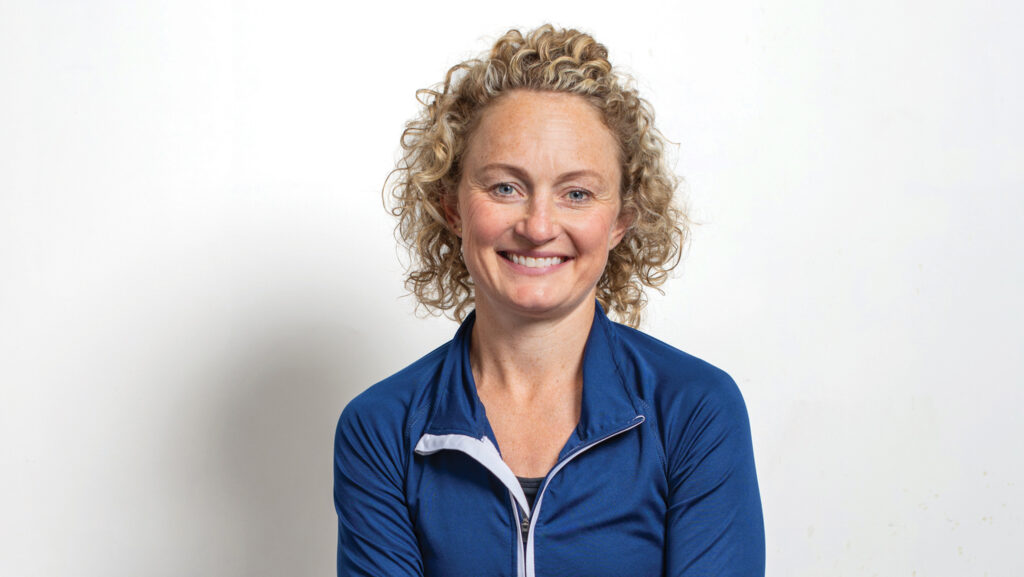
Victoria Wadlow is a physiotherapist based in Shrewsbury, Shropshire, who works with many agricultural clients.
She says the most common problems she sees are back, neck and pelvic injuries linked to years of repetitive strain.
“Most often, I see neck pain and upper back pain, generally from a young age,” she adds. “They have often had it on and off most of their lives.”
Injuries are frequently linked to farm accidents – a slip, a bale falling, or lifting loads that are too heavy.
What often surprises medical professionals outside farming is how long farmers endure these problems – often relying on ibuprofen or other painkillers before seeking help.
“There’s not very many of my clients that come and have had a trauma and pain within the last two weeks,” says Ms Wadlow.
“It’s normally, ‘How long have you had this for?’ ‘About 50 years’.”
Often the tipping point is not pain itself but loss of movement. Some farmers arrive at her clinic because they can no longer turn their head properly when pulling out of a junction in a tractor.
Others reach a point where stiffness makes getting in and out of machinery difficult.
Growing up on a dairy farm herself, she recognises the mindset. “The thought was always ‘I’m fine’. There was never any time to spend on yourself,” she says.
The effects of chronic pain often extend beyond the working day. “Sleep is affected and family chat is fraught. Families are suffering as they are a man down.”
For Ms Wadlow, some of the most effective changes may begin with small shifts in everyday habits. “Treat your body like you do the cows, crops and machinery,” she says.
Level the Field
Our campaign, Level the Field, aims to make agriculture fairer, more equitable and more inviting for everyone.
By engaging people and organisations across our industry, Level the Field will champion inclusivity for the benefit of farm businesses and all who work in them.
This year, the campaign puts the spotlight on physical health in agriculture. Previous years have focused on neurodiversity and women in farming.
See more on our Level the Field campaign hub.