Thousands explore ag careers at science festival
 © AlistairVeryard.com
Thousands of visitors explored the science, technology and career opportunities behind food production at New Scientist Live this year, as Farmers Weekly and partners brought the industry to life for a non-farming audience.
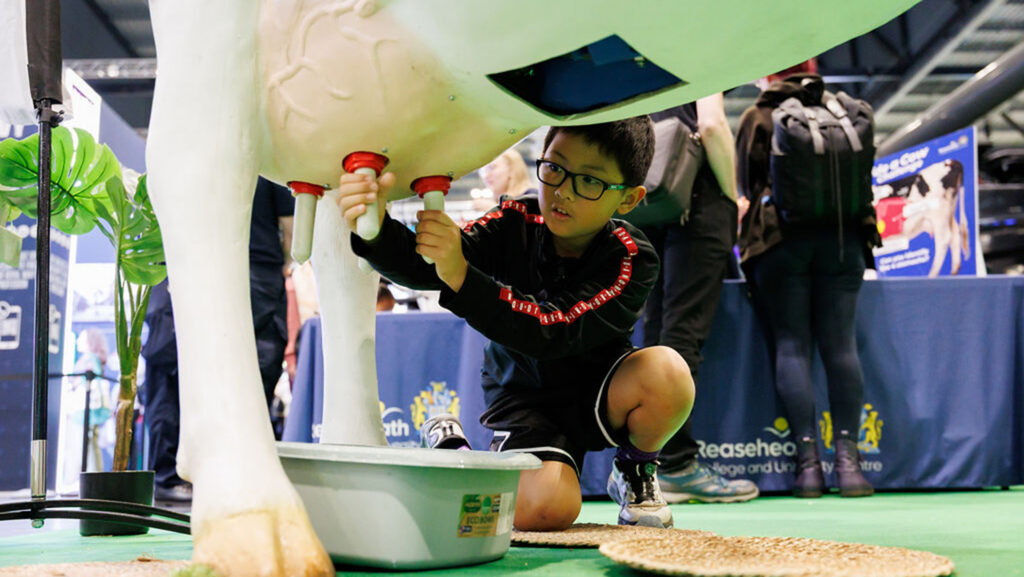
Exhibitors used familiar foods, interactive displays and emerging technologies – among them a humanoid robot, a DNA extraction demo and a model dairy cow – to help show goers understand how skills and interests in other fields could translate into careers in food production.
See also: Spray or stay in SFI? Aphids force tough choice
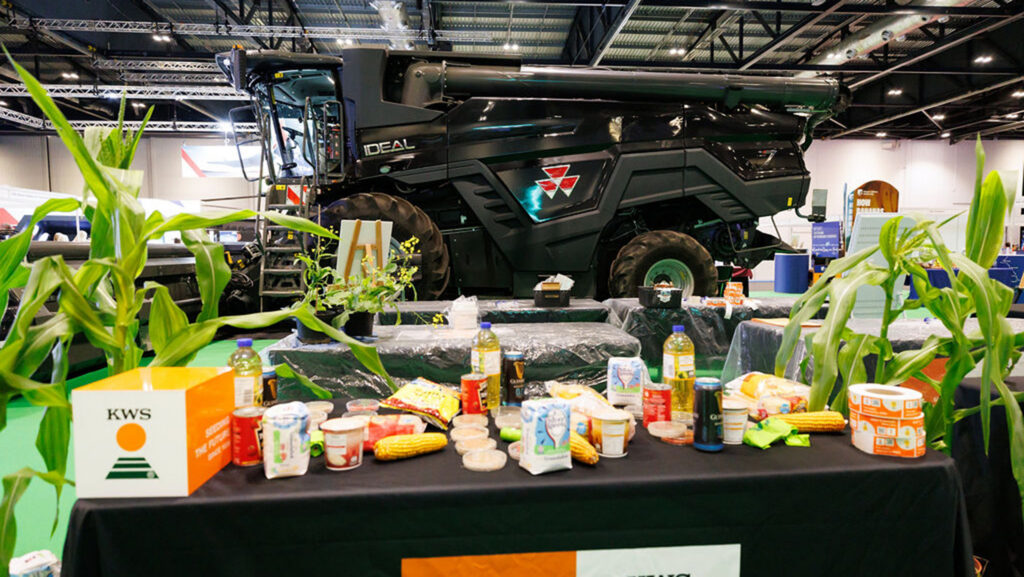
Like many visitors, 12-year-old Luliyad was amazed to climb on board a huge Massey Ferguson combine harvester in the show hall.
He admitted he was fascinated by crops and what happens beneath the soil: “How it works underground, how the roots develop intrigues me,” he said.
The exhibit was supported by IAgrE members, who helped shepherd the visitors onto and around the state-of-the-art Ideal 7 combine.
The organisation’s president, Kit Franklin, said of the event: “The shop front this has given agriculture, including agricultural engineering, to a largely urban attendance has been incredible and the engagement has been immense.”
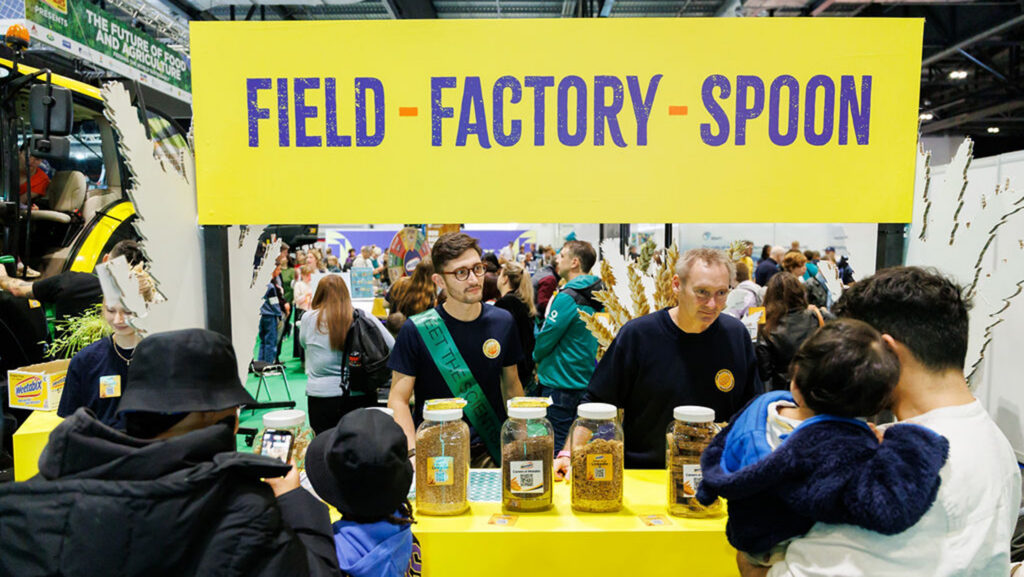
Show-goers were also able to sit in the cab of a Weetabix tractor. Technical manager James Croskell recalled one of them saying: “Oh I didn’t even realise that something that grows in the field ends up in my breakfast bowl.”
© AlistairVeryard.com
Myth-busting
As the agricultural sector becomes more tech-driven, there’s a growing skills gap that needs to be filled.
However, negative perceptions of farming as old-fashioned and slow-moving mean the sector is often not the first choice for job-seekers – and it’s these myths that the Future of Food & Agriculture zone at New Scientist Live set out to challenge.
Helping to spread the message was a cohort of young farmers who had recently completed the Tesco Future Farmer Programme, delivered by the School of Sustainable Food & Farming.
Attracting, recruiting and retaining workers from outside the sector with cutting-edge skills is essential to the future of agriculture, believes KWS’ head of marketing Andy McGrath.
“When kids come along to these things and get involved in the likes of combines and stuff, it’ll stick to their memory and when the time comes for them to look at jobs, they might consider agriculture as a career,” he said.
Tom Guy, an agricultural researcher at Reaseheath College, added: “We’ve got some young budding scientists here with low visibility of what the agrifood system’s all about.”
© AlistairVeryard.com
By exploring different stages of the food system, he hoped visitors would recognise just how rich the industry is, and that there are really good opportunities for people to develop scientific careers.
For specialist agricultural training organisation MDS, sparking conversations was key to getting people thinking about the sheer volume of food that needs to be produced to feed the nation.
A quiz had children and parents debating the number of eggs consumed in the UK each year (14.5bn) and how many McVitie’s chocolate digestives (1.7b) are sold.
Arla, meanwhile, used a job-matching game to help connect familiar professions – explaining how a dietitian, a doctor and a truck driver could correspond to roles in animal nutrition, veterinary medicine and milk transport.
“These young people are our next employees, basically, and we want to encourage them into our industry,” said dairy farmer Andrew Metcalfe.
The sector can seem like a “closed shop” to someone not born into it, creating another significant barrier to entry.
“It was a fantastic opportunity to engage with people of all ages and backgrounds, demonstrating just how much science, innovation and technology go into modern farming,” said Adas consultant Hannah Davey.
“The experience reinforced just how important it is for agriculture to have a much stronger presence in the school curriculum.”
Dr Joe Collins, senior research associate for the Earth Rover Program at Harper Adams agreed. “A lot of young kids are interested in getting into agriculture but don’t really know how you go about that if you’re not from a farming background,” he said.
Visitors to the Harper stand could strike a metal plate with a hammer and watch seismic waves appear on a screen, demonstrating the principles behind the university’s Earth Rover work, which uses sensors and AI to optimise yields, reduce chemical and fertiliser use, improve water retention, and store more carbon without a high economic or environmental downside.
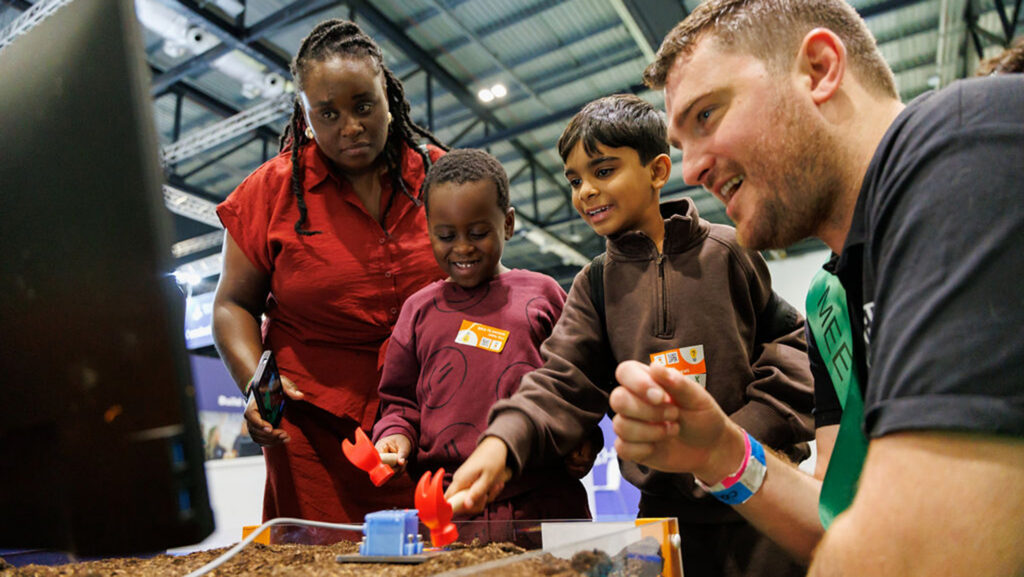
© AlistairVeryard.com
Meet Nigel the robot
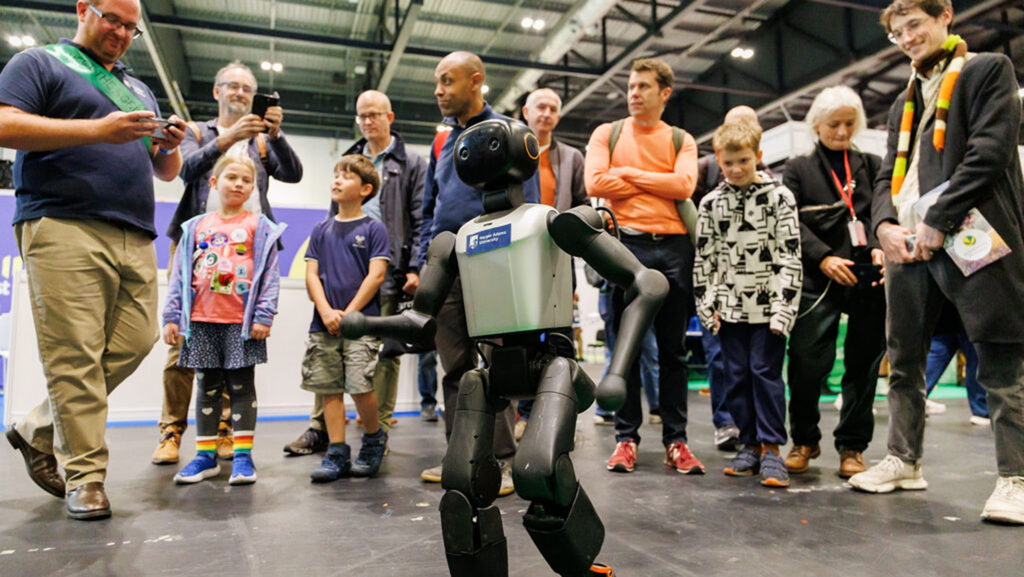
A toddler-sized robot throwing a roundhouse kick and dancing like Michael Jackson proved hard for families to resist on Harper Adams University’s stand.
Crowds gathered around Nigel as he danced, dabbed, ran, cheered and shook hands with visitors. Although Nigel is not designed for farm work, robots with similar capabilities could help with fruit picking.
The challenge is developing hands dexterous enough to grip fruit without dropping or damaging it.
© AlistairVeryard.com
Eco hearts and minds
Climate change and sustainability are key topics of interest for the next generation, who could find out more about how agriculture is addressing these issues – and why the sector holds many of the answers to the planet’s challenges.
Oliver O’Brien, a final-year rural land management student at the Royal Agricultural University, said the stand drew many young visitors concerned about the environment.
“I want them to have more questions about sustainable farming than they came in with and to realise that there’s no single answer to what the best sustainable method is,” he said.
Environmental change was also explored by the UK Centre for Ecology & Hydrology (UKCEH) through a virtual reality experience showing possible UK landscapes in 2080.
Projections illustrated how hotter, drier summers and warmer, wetter winters could make crops such as chickpeas and sunflowers more viable.
UKCEH’s communications and engagement executive Alice Hope said: “One of our goals was to inspire the next generation of environmental scientists.
“It’s not just about going out with a butterfly net and catching things,” she said, highlighting opportunities in data science, technology and engineering.