Two Devon farmers put food and nature on big screen
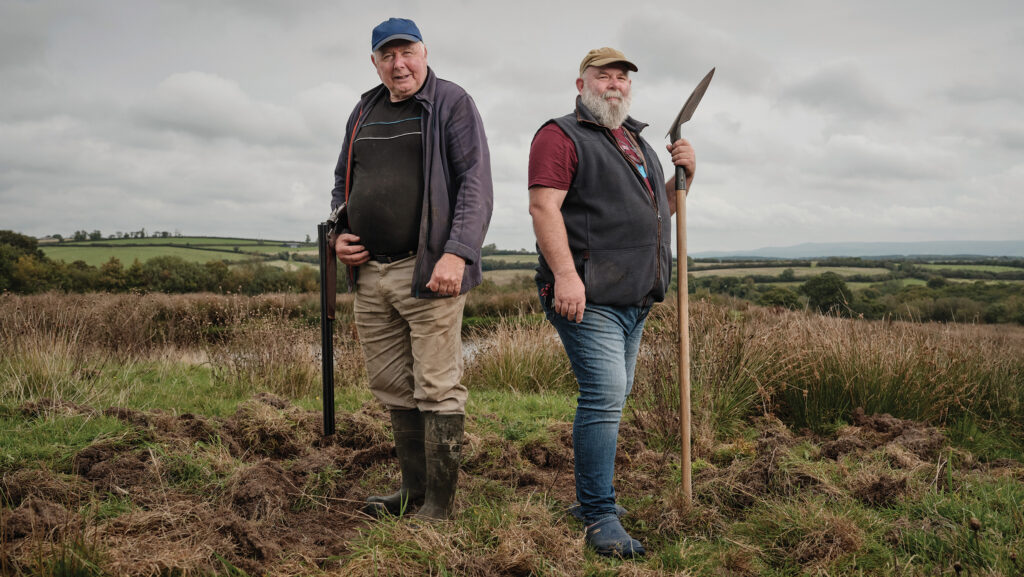 Derek Banbury and Derek Gow © jossbarrattphoto
 Two neighbouring Devon farmers with opposing views on land management are at the centre of a new film examining farming’s role in nature recovery.
Derek vs Derek, filmed over four years, follows dairy farmer Derek Banbury and former sheep farmer turned conservationist Derek Gow as they pursue markedly different approaches on adjoining farms.
See also: Short films reveal harsh realities of farming in Wales
Mr Banbury runs Lower Frankaborough Farm, a 375-acre dairy, beef and arable enterprise farmed by his family for three generations.
He believes in intensive farming and food production, saying he is on a mission to “feed the nation”.
Next door, productive farming has ceased across 400 acres at Mr Gow’s Rewilding Coombeshead, where the focus has shifted to habitat restoration and species reintroduction.
“We’re going to completely change this farm into a haven for wildlife,” Mr Gow says.
Ponds have been created and Exmoor ponies, shorthorn cattle, buffalo and Iron Age pigs used to help restore habitats.
Beavers, water voles and barn owls are among the wildlife now found there.
The pair’s often turbulent, sometimes funny relationship is tested to the full as tempers fray and wild animals escape.
Mr Banbury remains sceptical about his neighbour’s approach.
“I don’t know what he’s doing. It’s not farming, it’s just a mess,” he says at the start of the film. “He is destroying a perfectly good farm.”
In turn, Mr Gow describes Mr Banbury as “a psychopath when it comes to hedges”.
Farming pressures
The documentary also explores the economic and climatic pressures influencing how farmers manage their land, as well as the underlying threat of biodiversity loss.
That indeed is one of the key motivations behind the film.
Director James Dawson says the purpose was to explore whether restoring biodiversity could be reconciled with producing food while keeping farm businesses viable.
Having worked on farms during his youth, Mr Dawson recollects that back then “the fields were humming with insects”.
“When I’m in the countryside nowadays, I’m shocked by the absence of natural sounds: barely any insects, birds or wildlife.”
Story telling
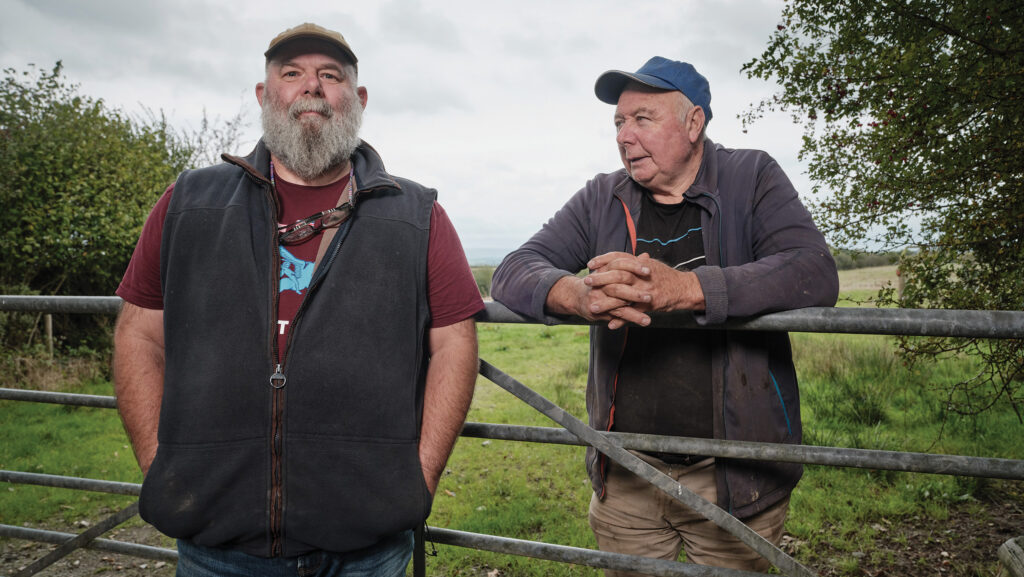
Derek Gow and Derek Banbury © jossbarrattphoto
Mr Dawson said that having met the two Dereks, he realised their conflict offered a way of telling the story of biodiversity loss.
“Their relationship is not aggressive or angry, but shaped by mutual misunderstanding,” he says.
“They peer over the high hedge that separates their farms with horror and bewilderment, each neighbour driven by their very different visions of how the land should be used.”
But rather than presenting food production and nature recovery as opposing choices, the film follows both men as they reassess their positions.
Now in his 70s, Mr Banbury reflects on what has disappeared from the countryside during his lifetime, and the part played by farmers and government policy in unwittingly damaging nature in the pursuit of food production.
He also grapples with the impact climate change is having as he struggles through one of the wettest winters on record.
For his part, Mr Gow concedes that farmers could make a significant contribution to nature recovery if public funding allowed them to devote just 10% of their least productive land to nature, without abandoning food production.
Slowly, but surely, the two men develop a deeper understanding of their relative positions.
“It gives me hope that if we’re open to change it’s still possible we can together take the steps necessary to bring back nature before it’s too late,” says Mr Dawson.
Film review, by FW editor Andrew Meredith
Like neighbouring bulls, Derek Gow and Derek Banbury have butted heads across the boundary fence of their adjoining Devon landholdings for two decades.
Neither are particularly likeable at the outset of Derek vs Derek, coming across as rude, short-tempered and bristling with hostility for the other’s worldview.
Mr Gow, infamous even among some of his fellow environmentalists for being perpetually in the vicinity of unauthorised beaver releases, is shown in the film’s opening scenes rewilding his farmland using wild boar – which he also struggles to contain within his boundary fence.
Mr Banbury, whose 375-acre dairy farm the boar visit, is not just (justifiably) indignant about the incursion of the four-legged rotavators, but about Mr Gow’s interest in using his land for anything except productive farming.
At one point, he even remarks “I don’t want to broaden my mind,” when prodded to contemplate how modern farming practices have made life more difficult for the insects, birds and other plants and animals that share his farm.
Pleasingly, that is not the end of the story, and the film builds on the work that Clarkson’s Farm has done, to educate the public about how even modest on-farm changes can allow nature and food production to flourish cheek-by-jowl.
Verdict: Well worth a watch.
Derek vs Derek was premiered in London on Thursday 10 September and will be released in cinemas across the UK from 2 October