Will’s World: Every year I raise a glass to Percy Public House
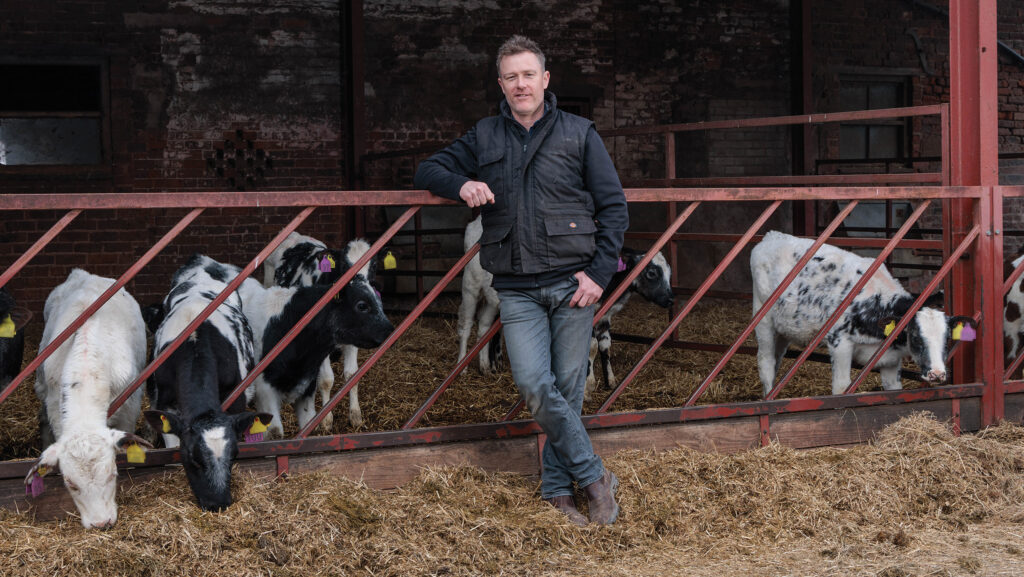 Will Evans © Lee Boswell Photography
Every November on Remembrance Day, I take a poppy cross and a hipflask with me to Wrexham Cemetery, where I visit the final resting place of my great grandfather, Percy Owens.
Or, in the grand tradition of Welsh nicknames, where everyone’s called after either their farm name or profession, Percy Public House.
See also: How bicropping helps with weed control in pulses
It’s a modest headstone in a lonely spot, and I spend a few minutes tidying it up before replacing last year’s faded poppy with the new one and pouring a wee dram onto the grave.
He died 40 years before I was born, at an age not much older than I am now, his health never recovering from the time he spent on the Western Front in 1917.
I stand for a while contemplating this, and thinking about the stories my grandmother told me.
She adored her dad and kept a photo of him looking handsome in his Army uniform on her mantelpiece for the rest of her life.
I have it now, along with his medals and uniform badges, and I keep them well polished for her.
Family man
In 1912, he and my great grandmother had emigrated to Canada in search of a better life and settled in Montreal. The Great War began soon afterwards, and by now they had a new baby to care for.
Worried he’d be called up to the Canadian Expeditionary Force and have to leave his young family alone in a strange country, they came back to Wales, and took on a pub called the Golden Lion in Coedpoeth – hence the nickname.
They soon had two more babies – twins called Harold and Betty. Tragically, Harold died when he was a few weeks old, and Betty lived for just 10 months, when she died of a convulsion.
Percy, by now called up to the Army, had marched off to war with little Betty waving goodbye from her mother’s arms.
By the time he arrived at Portsmouth, there was a telegram awaiting him with the fatal news.
He was a gunner in the Royal Garrison Artillery and once, while running an errand for his crew commander, a German shell scored a direct hit on the emplacement, killing every one of his comrades.
He was part of the detail tasked with recovering what was left of them and giving them the best burial they could.
He spent a year in hospital at Stourbridge, and I have a photo of him magnificently moustached, ciggie in mouth, grinning at the camera with his fellow patients and a formidable looking nurse.
I expect they considered themselves the lucky ones, surviving when so many young men of their generation didn’t.
Home front
After he came home, they rebuilt their lives as best they could. As well as running the pub, he bought a Ford Model-T and took passengers back and forth to town.
During the great strike of 1926, faithful to his customers, he lent many of them money with no hope of getting it back.
He went out at night in his car to pick up coal that his friends had picked “off the banks”, which was strictly illegal, and my grandmother remembered being terrified he’d be arrested. I always feel particularly proud of him for that.
Later, they moved to a small farm near Oswestry. I have the sale card from 1937, when his poor health forced his retirement.
Twenty-four dairy cattle, two working horses, 10 strong pigs, 70 young hens, six Aylesbury ducks, a bay of meadow hay, and assorted implements and tools.
I hope that he gained some semblance of peace and happiness from farming.
Lest we forget.