Will’s World: How shank beat schnitzel in the war
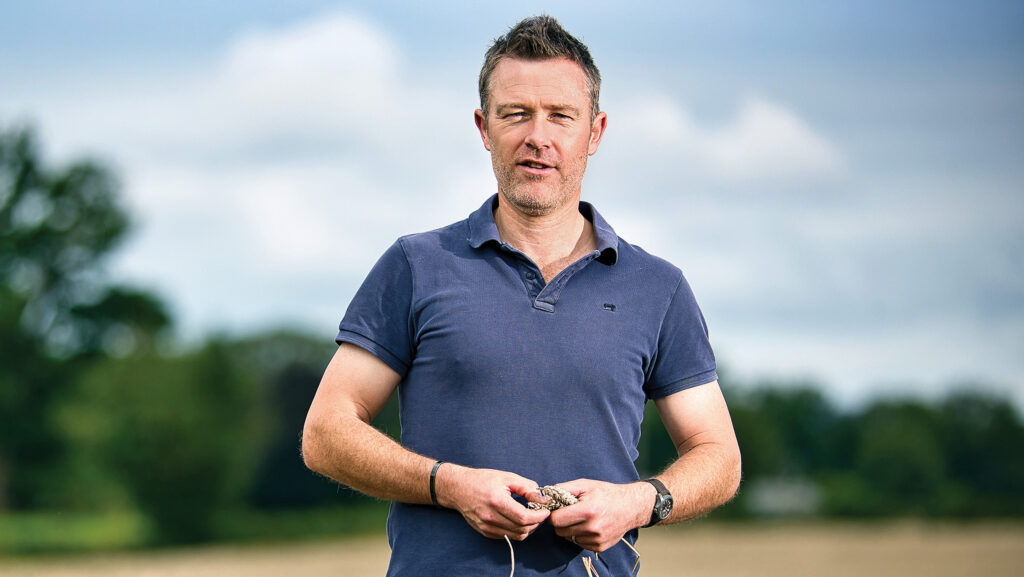 Will Evans © Richard Stanton
 Did everyone get the government emergency alert on their phones last week?
At the time I was coaching a rugby training session with my under-14s girls, who need very little to distract them at the best of times, let alone when sirens suddenly start blaring out of their boot bags.
See also: How to reduce the risk of enterococcus lameness in broilers
About the author

Still, it’s comforting to know that in the event of a nuclear war, us Welsh will get a 10-minute head start on the rest of you in diving for cover – as under the Welsh Language Act alerts must be sent in Welsh first.
In the latest instalment of “How Brown was my Valley”, otherwise known as our farm in summer 2026, I’m thrilled to report that we’ve had a very light shower of rain that just about dampened the dust on the yard, and there’s more forecast for later in the week.
They’ve been promising the rain’s a week away for the past three months, mind you, so I’ll believe it when I see it.
It’s odd to be finished with harvest so early, and I’m feeling a bit lost. It’s been nice to get some jobs done that have been on the to-do list for a while, but it just doesn’t feel right to be so quiet at this time of year.
Folly of farming by calendar
I’d get on with ground preparations for the herbal ley that we have to put in by 15 September to satisfy the Sustainable Farming Scheme’s requirements, but what’s the point yet?
It isn’t going to grow until we get some decent moisture, and the seed’s too expensive to throw away.
Maybe someday policymakers will learn that farming by a calendar never works in practice, but that’s probably a forlorn hope.
Anyway, I’ll be spending the next few days spreading last winter’s FYM onto stubbles, which I always find satisfying given that it’s improving the soils.
I’m not particularly looking forward to bouncing over baked-solid ruts in tramlines and the strain it’ll put on my rapidly wearing out lower back, but it’s hardly a hardship.
Speaking of hardships, I got very excited recently when my favourite podcast – We Have Ways of Making You Talk – did an episode on the myth of Nazi economic success during the war and focused heavily on Germany’s and Britain’s respective farming efforts during that time.
I’ve listened to it twice already and, as always, I wish that my grandparents were still around so I could discuss it with them. But as they’re not, I’ll have to bore you with it instead.
In praise of grass
For a start, old Fritz was at a disadvantage because culturally their number-one meat was pork, which competed with the human populace for feedstuffs.
Us good old British Tommies, on the other hand, preferred lamb and mutton, which wasn’t such an issue as the sheep were happy on their traditional mountain pastures.
There was also the added bonus of wool for Army uniforms.
In Germany in 1939, there were 24.5m pigs, and just 4m sheep, while fascinatingly in Britain it was almost exactly the other way round (I’m pretty sure I said “well, isn’t that interesting!” aloud to myself at this point).
Mechanisation was an issue, too, with only one tractor per 1,000 acres in Germany, compared to one for every 300 in Britain at the start of the war, rising to one for every 20 by 1945.
Perhaps the most incredible stat, though, was that in 1939, Britain was producing less than 30% of its own food, but by 1944, thanks to a Herculean effort by the nation’s farmers, that figure was up to 90%.
There’s got to be a book in all this somewhere. Well, I did say I have time on my hands…