Alasdair Boden: Looking after land can mean ‘intervening’
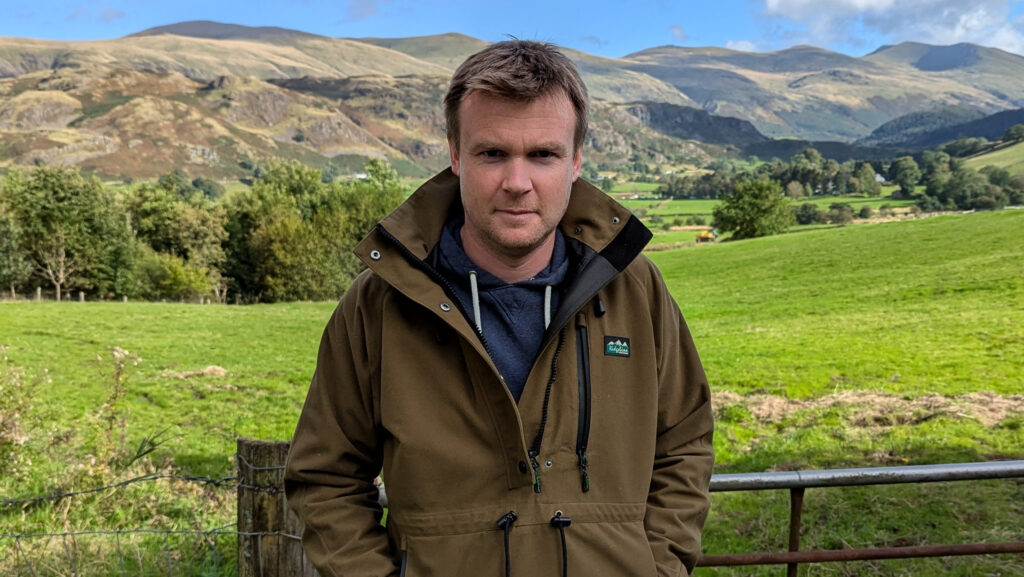 Alasdair Boden © Heather Boden
 It started with good intentions. When we took on the management of Low Nest Farm, we made a conscious decision to leave the rushes alone.
We’d read what at the time we thought were the right things, heard the similar right arguments – rushes as habitat, rushes as carbon store, rushes as a sign that you’re not farming the life out of the land.
See also: Alasdair Boden – there’s no shame in being a part-time farmer
About the author

We wanted to farm with the landscape, not against it. We live in the Lake District at nearly 1,000ft. It felt important to work with nature and preserve this spectacular environment.
Five years on, I can report that the rushes have not read the same literature. What began as a principled position has become a practical crisis.
Fields that carried decent upland grass swards are now dominated by Juncus effusus (“rushes” to most, “seaves” to us) from hedge to hedge.
The cattle that were supposed to graze them are pushing through rush growth rather than grazing it. Poaching is worse because the sward underneath is thinner.
The biodiversity argument is harder to make when you’re looking at a monoculture of rush and not much else.
I don’t entirely regret the decision. There are corners of the farm – wetter flushes, field margins, the ground running down toward the beck – where this feels genuinely right.
Skylarks don’t seem to mind. The snipe certainly don’t. But those corners are not the problem.
The problem is that rush doesn’t know where its corner ends.
The conventional answer is topping followed by herbicide applied at the right growth stage, with a correct grazing plan to give the grass a fighting chance.
We know the method. We’ve resisted it. But at some point, resistance becomes self-defeat, and I think we’ve reached that point.
We haven’t sprayed yet. However, I’m making my peace with the fact that looking after this land sometimes means intervening in it. It all resonates with the philosophy of balance.
Sometimes you have to do something that doesn’t feel quite right, but is for the greater good.
The rushes had five years of goodwill. They used them well.