Ben Blacker: It’s a ‘no’ for now to diversification
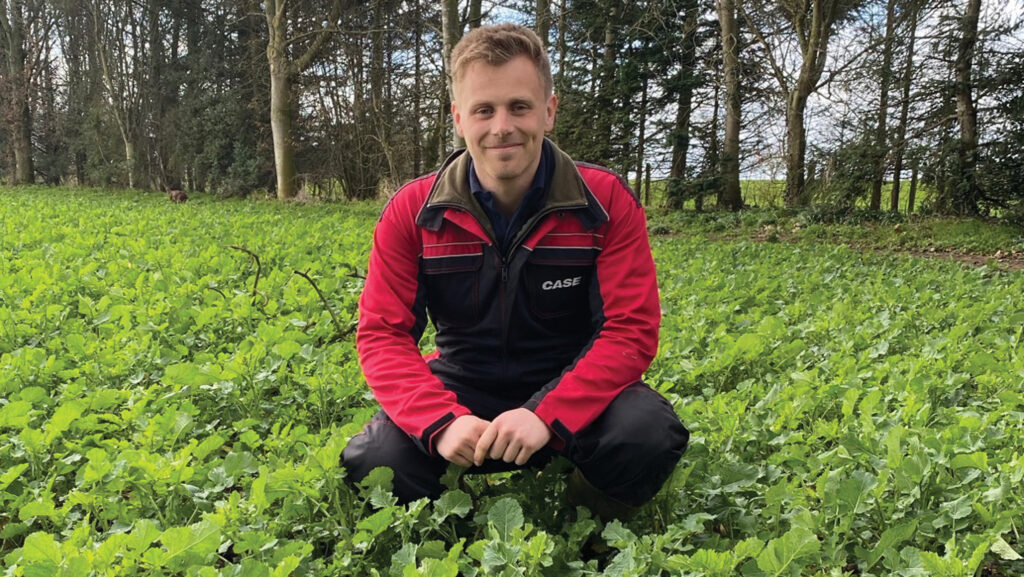 Ben Blacker © Ben Blacker
 June is the month when I start questioning whether arable farming on its own is still enough.
Most of my days are spent roguing crops for weeds. It’s hard, repetitive work and, after a few hours of it, it’s difficult not to wonder whether there might be an easier way to make money.
See also: Ben Blacker – more families are addressing succession questions
About the author

According to many, diversification is where the money is. When I talk to others about it, they often say one word: people. It’s all about attracting visitors, generating footfall and creating experiences.
Just in our local area, there are glamping pods, campsites, padel courts, wedding venues, dog-walking parks and farm shops doing just that.
Many of these projects require high upfront investment, have uncertain returns, and a level of public access that doesn’t suit every farm or every farmer.
It also calls for a specific skillset – confidence, customer service, and a willingness to open the yard to scrutiny. I’m not sure if I’ve got that in me.
Then there is energy. Solar and wind developers are active locally, and the numbers are hard to ignore. It offers long-term, index-linked income compared with increasingly volatile arable margins.
But I still struggle with the idea of taking productive land out of food production. Roofs, marginal ground and offshore sites feel like the right place for it.
That brings me to livestock. On paper, it fits best. Beef, pigs or poultry could integrate well into our arable system, providing an additional income stream while producing valuable organic manure to improve soil health and reduce reliance on expensive inorganic fertilisers.
But livestock is not a bolt-on. It needs capital, infrastructure, and a genuine interest in stockmanship that I don’t currently have. And our land, machinery, and my experience are all geared towards arable farming.
So, when I ask myself whether we should diversify, the answer, for now, is probably no. Which leaves me wondering: why do so many farms feel compelled to diversify in the first place?
If food production doesn’t stand on its own anymore, what does that say about how much we value it?