Scholarships target innovation in Welsh red meat sector
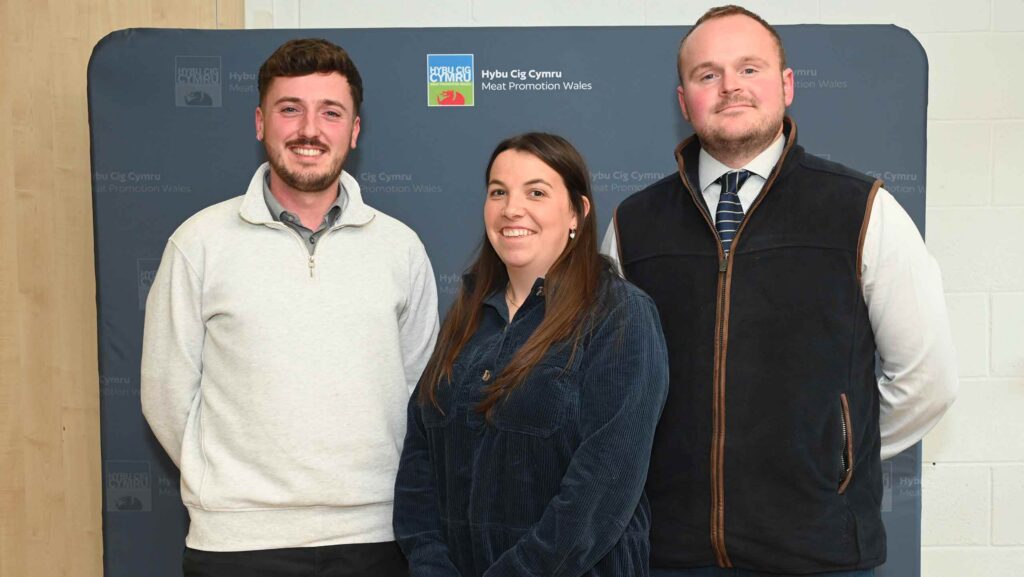 The 2026 HCC scholars (from left): Ilan Jones, Beca Glyn Jones and Charlie Bowyer © HCC
Three Welsh farming scholarship recipients will investigate upland grazing, climate-resilient forage and emerging livestock technology, with the aim of bringing practical knowledge and innovation back to the red meat industry.
Hybu Cig Cymru (HCC) has announced the three recipients of its 2026 scholarship programme, with projects focusing on improving the productivity, resilience and profitability of Welsh beef and sheep farming.
The successful applicants were revealed at HCC’s annual conference in Llanelwedd on 12 November and will undertake research and study tours over the coming year before sharing their findings with the wider industry.
See also: Young farmers offered funded drone pilot training
Beef and sheep farmer Beca Glyn Jones, from Padog, Betws-y-Coed, will visit upland farming regions in Switzerland, Austria and France to examine how suckler herds are managed in mountainous environments.
Her research will investigate grazing management, herd health and soil quality, with a particular focus on improving the use of Welsh uplands and reducing the time cattle spend housed.
Ms Jones said: “I’m passionate about the agricultural industry and have a strong interest in traditional farming practices in other countries. Through this study tour, I hope to gain practical knowledge about how Alpine farmers maintain herd health, manage pasture quality and add value to their products.”
Climate resilience
Charlie Bowyer, who farms 81ha near Usk, Monmouthshire, will investigate climate-resilient forage and feed systems across the UK, Ireland, Canada and New Zealand.
His research will examine conventional and alternative forage options, including cover crops, millet and sorghum mixes, alongside opportunities to improve the use of maize.
“A rapidly changing climate is now one of the biggest sources of risk and uncertainty in Welsh farming systems, and adapting quickly is a necessity,” he said.
The third recipient, Ilan Jones, from Llanuwchllyn, Bala, works for Bannau Brycheiniog National Park Authority and is involved in his family’s farm.
He will investigate how artificial intelligence, livestock-mounted sensors and virtual fencing could improve animal health, labour efficiency and farm profitability.
Mr Jones said he was looking forward to learning from agricultural technology leaders overseas and in the UK before sharing his findings with the Welsh beef and sheep industry.
Increased funding
HCC strategy and future policy manager John Richards said the scholarship programme had been expanded this year, with increased funding and a broader focus.
“The quality of applications was extremely high, demonstrating the ambition that exists within our industry,” he said.
“Each has chosen subjects that address key opportunities for the future of Welsh livestock farming, from upland grazing and forage innovation to the application of new technologies.
“We look forward to benefiting from the knowledge and insights they will bring back, helping to support the continued development of the sector,” he added.