Starter farm scheme opens door for new entrants in Cumbria
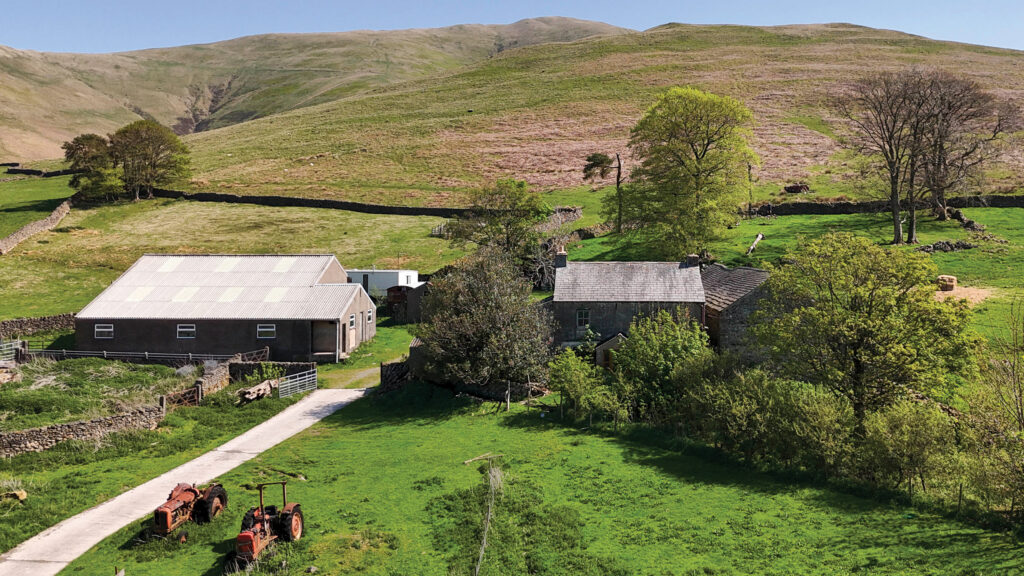 Whins Farm © Addington Fund
 Applications will open this spring for a new farm tenancy in Cumbria as part of a wider push to help young people into agriculture.
Whins Farm, near Kendal, is being redeveloped by the Addington Fund as a flagship starter farm.
The project forms the centrepiece of the charity’s New Entrant Scheme, launched last autumn at the Westmorland County Show.
See also: Addington Fund offers £3,000 grants to new farm entrants
The tenancy includes a fully renovated farmhouse with targeted financial support and marks a significant investment by the charity in the next generation of UK livestock farmers.
Lasting legacy
The opportunity stems from a bequest by the late Mary Blades, who owned Whins Farm with her brother, Joe.
In her will, she specified the farm should be sold as a single lot to a “keen and enthusiastic young farmer”.
Finding a suitable buyer proved difficult. While the farm is well-located on the edge of the fell, the farmhouse required substantial renovation.
That placed it beyond the reach of most new entrants.
The Addington Fund – which supported Mary and Joe during the 2001 foot-and-mouth outbreak – stepped in to acquire the holding.
The purchase required agreement from five other charitable beneficiaries of the estate.
Whins Farm extends to about 28ha, with additional grazing rights on Howgill Fells.
Key works – including reroofing the barn – are in their final stages, and plans include ground-source heating and solar panels on the barn roof.
Mentoring and support
Once in place, the successful tenant – an individual or couple – will take on the farm, integrating into the local community, using local services and contributing to village life.
The scheme aims to go beyond a standard tenancy and includes structured mentoring and support with business planning.
“This is more than a standard landlord-tenant relationship,” says Addington chairman of trustees Simon Mountjoy.
Applicants will need to submit detailed plans covering stock management, infrastructure and capital needs.
The tenancy is designed as a stepping stone, with new entrants expected to move on after about seven years to allow others to benefit.
This will ensure “somebody else has the chance to take their first step on the farming ladder,” explains Simon. Applicants may come from outside agriculture as well as from within the industry, he adds.
New entrants
The Whins Farm project is intended as a model for future schemes. The charity is already exploring further opportunities which could see other farm tenancies offered on a similar basis.
“We have several pledges of farms to be bequeathed to the charity in the future to manage as new entrant starter farms,” says Simon.
The programme could be an attractive option for landowners who want to make a cottage and land available, but are “stuck” on how to manage the succession process or the tenancy arrangements.
Addington has also launched a New Entrant Grant Scheme with an initial £100,000 fund. Grants of up to £3,000 are available to individuals aged 18 to 40 in England and Wales.
Further details can be found on the Addington Fund website at www.addingtonfund.org.uk/about-us
25th anniversary for farming charity
The Addington Fund is marking its 25th anniversary this year.
The fund was originally started in 2000 following a phone call between two members of the clergy – Richard Addington and Sally Fogden – during a swine fever outbreak in Suffolk that saw £100,000 raised and paid to about 100 farmers.
But a year later, foot-and-mouth disease struck and the Arthur Rank Centre in Warwickshire volunteered to take over the Addington Fund and scale it up.
Some £10.3m was distributed to more than 22,000 applicants between March 2001 and July 2002.
Many recipients were isolated, depressed, frightened and even suicidal after seeing their herds and flocks slaughtered.
Today, when disaster strikes, the Addington Fund steps in to provide grants and support to help cover business costs and keep farms viable.
This includes during times of extreme weather and animal disease – as well as other hardships.