

8 tips to optimise brooding of free-range turkey poults
 © Debbie James
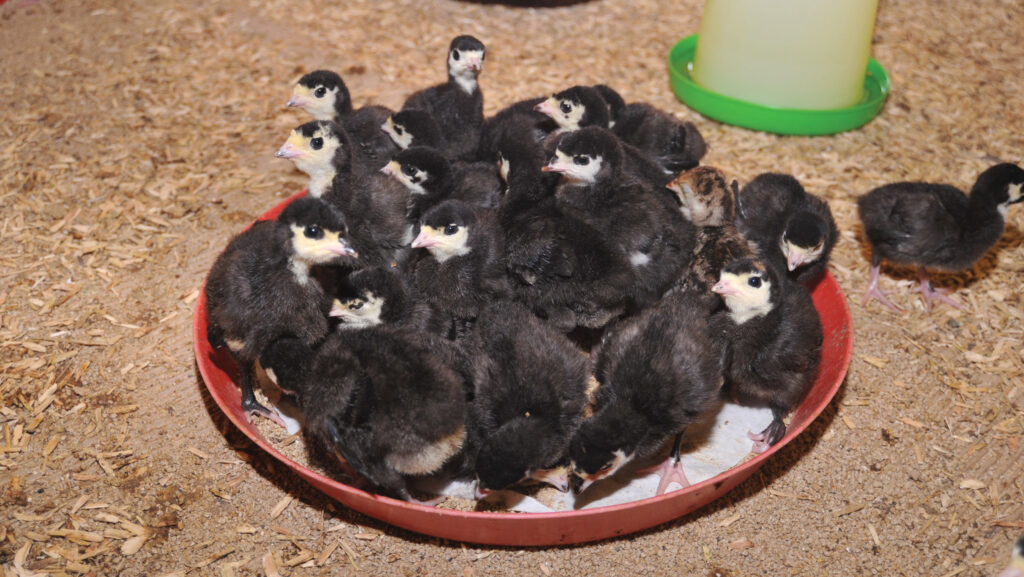
 The arrival of free-range turkey poults and goslings on rearing farms marks a critical stage in the production cycle for the Christmas market. This is when the foundations for the performance of these birds in the coming months are set.
See also: 7 tips for making a profit from farm-scale Christmas turkeys
Yet they are susceptible to multiple external factors, from incorrect shed temperature, humidity and ventilation levels to a poor housing environment causing gut health issues.
Recent weather extremes, with excessively high temperatures coinciding with bird placement, have added to those challenges.
Some of the more common health problems associated with poults in the first week are unhealed navels and yolk sac infection; other issues come from avoidable poor brooding management.
Growers can protect their investment by applying simple measures to mitigate risks to health and growth, from the basics of sourcing the healthiest poults possible to how shed litter is managed.
1. Source and transport poults carefully
Poults produced by a breeder flock that is in good condition will get a head start and are far more likely to survive that precarious first week of brooding.
Turkey poults and goslings should ideally be placed on the day they come off hatch, says Viran Abeysena, head of agriculture at Capestone Organic Poultry, which outsources some of its seasonal bird production to farmers across Wales.
When the birds are being transferred from the hatchery to the farm, a high level of attention to detail should be applied to transport conditions. This includes the hygiene and temperature of the containers and even ensuring that the journey itself is smooth.
If the poults have travelled for many hours to get to the farm, they could be very thirsty on arrival.
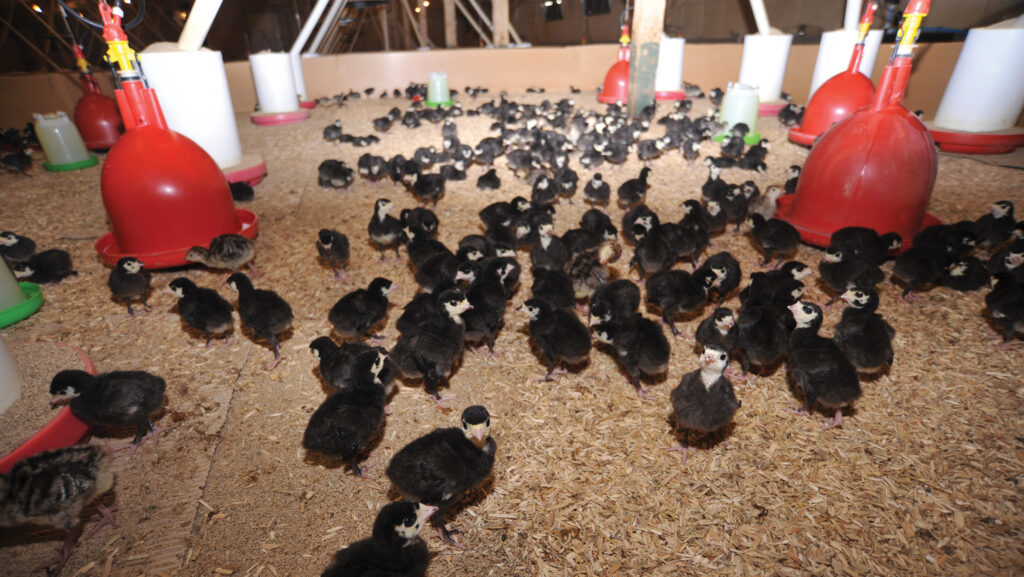
Water sources should be easily and immediately accessible with nipple or bell drinkers. Additional supplementary drinkers will also help stimulate water intake and avoid risk of dehydration.
© Debbie James
2. Invest time in planning and preparation
Correct temperature, ventilation and hygiene in the housed environment must be in place before the young birds arrive, to encourage growth and mitigate health risks from day one.
This means washing and disinfecting sheds, drinkers and feeders beforehand, cleaning drinker lines to remove biofilm, and placing freshly filled disinfectant foot dips at the entrances.
Viran says preheating the floor up to 29C before placing the bedding is essential to achieve a successful brood.
During the first week, poults like their environment to be a bit warmer than the required temperature in the weeks thereafter, he adds. He advises a shed temperature of 33C for day-old turkey poults.
Once placed, bird behaviour should be checked at least every three to four hours, and any adjustments made promptly. In this first week, the last check on the birds should be at about 10pm.
“Once they settle, gradually reduce the temperature by 0.4C every other day until it reaches the external environmental temperature,” he says.
Very young poults do not respond well to draughts, so it is vital these are minimised. If possible, measure the humidity and carbon dioxide levels in the shed and maintain these within the recommended range: a relative humidity of 50-60% and a carbon dioxide level of less than 3,000 parts/million.
3. Take extra measures during heatwaves
During periods of extremely high temperatures, such as the UK has experienced in recent weeks, it is important that measures are in place to prevent the shed getting overheated, says Viran.
If overheating does occur, artificial heat sources should be switched off and only turned back on when the external temperature cools down.
“It is important to constantly monitor poult behaviour and shed temperature during this period,” he stresses.
In normal weather conditions, the external environmental temperature drops rapidly late evening. If the shed temperature is too low, there is a risk that poults will huddle rather than exploring their environment to find feeders and drinkers.
4. Monitor bird behaviour to guide management decisions
Viran advises rearing hens and stags separately to better manage bodyweight targets. Black turkey poults generally absorb more radiant heat than the lighter-coloured breeds but, as he points out, poult behaviour will indicate the management required.
If birds are tightly huddled, they are cold; if they migrate away from a heat source and pant, they are too warm. A shift of numbers to one side will indicate a desire to seek shelter from draughts.
“If they are evenly spread and active, the temperature is about right,” says Viran. He advises monitoring behaviour and adjusting the brooder accordingly.
Advice should also be sought on the correct feeding regime for the growth rate of the specific breed.
5. Run essential checks and measurements
Fresh bedding should be provided regularly and daily water and feed intakes monitored.
Poults should be weighed weekly – Viran advocates weighing a representative sample of 60 birds in each shed, selecting poults from the front, centre and end of the building. Their weights should then be compared against the breed’s potential.
“If the healthy flock is underweight for two or more weeks continuously, work out the reasons why,” he says. This could be down to lack of feeding and drinking space, insufficient light, a poor-quality ration, or substandard water quality.
“If birds are healthy but underweight for the stage of production, providing a vitamin supplement to stimulate their feed intake will help,” he advises.
6. Mitigate the risk of potential health problems
If conditions in the first week are not optimum, poults can succumb to an infection of the yolk sac, which acts as a good breeding ground for bacteria. Respiratory tract diseases are also a significant risk at this stage, often triggered by poor ventilation.
If there is a spike in mortality, Viran says it is always prudent to ask a vet to carry out post-mortems. From week three to week six, poults could suffer from gut health issues such as enteritis and coccidiosis, especially if they are housed in old sheds, he says. Wet litter is the most common symptom and is often followed by death.
“Good management of feeders and drinkers are essential to prevent these diseases,” he advises, adding that litter must be kept dry and friable.
7. Prepare the ranging environment
Provision of shade, water, foraging, biosecurity and site security all need to be considered for the range. Harrowing the ground before placing turkeys is good practice, says Viran: this exposes the soil to UV light, which is a natural method of disinfection.
It also reduces parasite exposure while improving manure distribution, promoting pasture regrowth, reducing muddy areas and levelling any ruts.
If the outdoor sheds have earth floors, it is a good option to apply lime – the same product that would be applied in dairy cubicle housing to control mastitis.
8. Use growth milestones to determine turnout from sheds
Every breed will have its own bodyweight target according to age. Whether these targets have been achieved is a gauge for how prepared the bird will be for ranging. Birds should also be healthy and have good feather cover for turnout.