

Advice on pasteurisation of colostrum to improve calf health
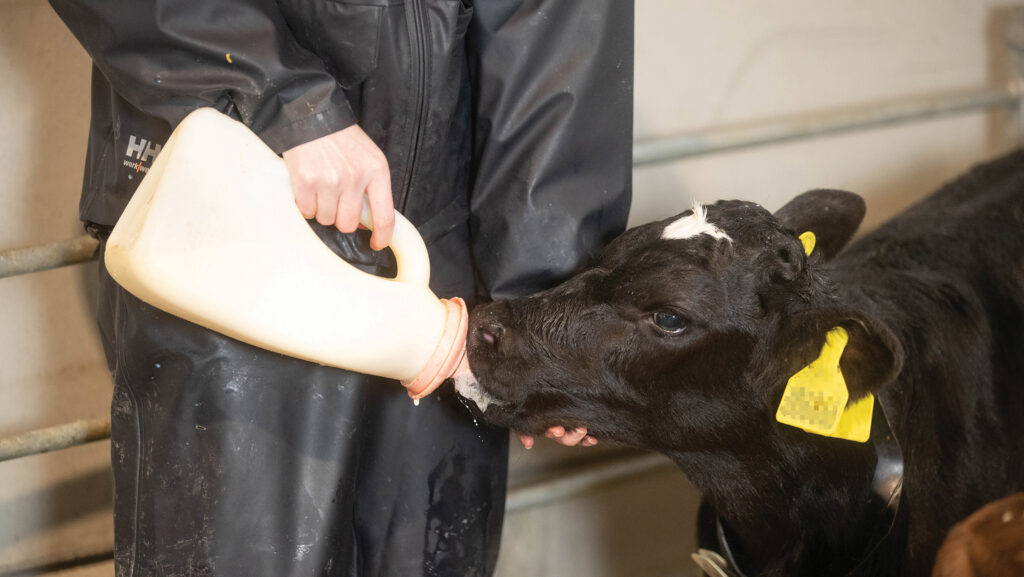 A calf fed pasteurised colostrum will absorb more antibodies © Tim Scrivener
 Antibody-rich colostrum strengthens a neonatal calf’s immune system, reducing the animal’s future risk of contracting a microbial infection.
But when that feed is contaminated with bacteria, absorption of those immunoglobulins will be lower, exposing the calf to pathogenic micro-organisms.
See also: Tips on using and cleaning a milk pasteuriser correctly
Pasteurisation of whole milk is becoming more commonplace on UK dairy farms but heat-treating colostrum less so. In part this is because it takes time and labour when resources are already stretched.
The process is also trickier than for milk, as the high fat content of colostrum can give it a butter-like consistency when heated.
Separate pasteuriser for colostrum
A dedicated pasteuriser is usually required, separate from a vat for treating whole milk, says vet Sophie Prichard.
Most farms pasteurising colostrum have two systems – one bulk vat for transition milk and a smaller one for colostrum, she explains.
This is because colostrum needs to be treated in a quantity that is easy to feed in a reasonable timeframe.
Sophie, of Pembrokeshire-based Fenton Vets, sees great value in pasteurisation to support general calf health but acknowledges that it requires “real commitment”.
“Pasteurisation is a useful tool in optimising calf health when used as part of a holistic approach to nutrition, feeding and housing hygiene, and appropriate vaccination. But farmers have to see the value in it, to engage with it to make it work,” she says.
It is not a “magic bullet”, though, and cannot “save” poor-quality colostrum, she adds.
No replacement for good hygiene
The focus should be on good hygiene throughout harvesting, storage and feeding. Pasteurisation will reduce bacterial load, but correct storage and feeding are key in preserving colostrum quality.
Preventing contamination during harvesting and storage should be a priority regardless of whether heat treatment is used.
While pasteurisation has been shown to eliminate mycoplasma bovis, listeria monocytogenes, E coli, and salmonella enteritidis, it doesn’t kill all the infectious agents responsible for Johne’s disease, says Sophie.
Neither will it eliminate mycobacterium bovis, the cause of bovine TB.
“In terms of reducing TB and Johne’s risk, pasteurisation will only take you so far. It is likely to reduce infectious load, but it will certainly not eliminate it.”
Pasteurisation should increase the length of time colostrum can be stored, she adds. While unpasteurised colostrum can be kept in a clean, lidded bucket and stored in a fridge for 24 hours, if it has been pasteurised and refrigerated correctly, that timeframe should be longer.
Value depends on staff buy-in
Protocols are fundamental for successful calf rearing but, as Sophie advises, they are only as good as the people carrying them out.
Educating, engaging and motivating staff are essential.
“Getting the engagement of your staff so they understand what they are doing, why they are doing it, and can see the benefits, is critical.
“You can spend thousands of pounds on a pasteuriser, an automatic milk feeder, all the shiny kit in the world, but if the people at the coalface don’t buy into it, don’t have attention to detail, you are wasting your money,” she cautions.
Pasteurisation must be part of a whole-farm, one-health approach to calf feeding and calf health and won’t prop up anything in isolation, she adds.
The experiences of her clients who pasteurise colostrum suggest that the health of their calves has improved significantly. However, this can often be down to the individuals practising it, she says.
“The kind of people who are willing to invest the time, the energy and the money in pasteurisation equipment are also the kind of people who apply attention to detail across the board.
“Pasteurisation does make colostrum a cleaner product though: you won’t be feeding a contaminated foodstuff, which means you won’t be challenging the calf’s immune system as much in that neonatal period.”
Although any heat treatment will denature some of the antibodies, the calf will absorb more functional antibodies than it would if fed the colostrum unpasteurised.
Top tips for getting the best from colostrum
- Don’t store colostrum in buckets at room temperature, as bacteria rapidly multiply
- Colostrum stored in the fridge should be used within 24 hours
- Label colostrum earmarked for storage with the identity of the dam and the date the colostrum was collected
- Freezing is a cheap and effective option for longer storage: bags or bespoke containers provide a wide surface area for rapid thawing
- Thaw at less than 60C to prevent damaging antibodies
Source: Sophie Prichard, Fenton Vets
Case study: Pearson Farm, St Brides, Pembrokeshire
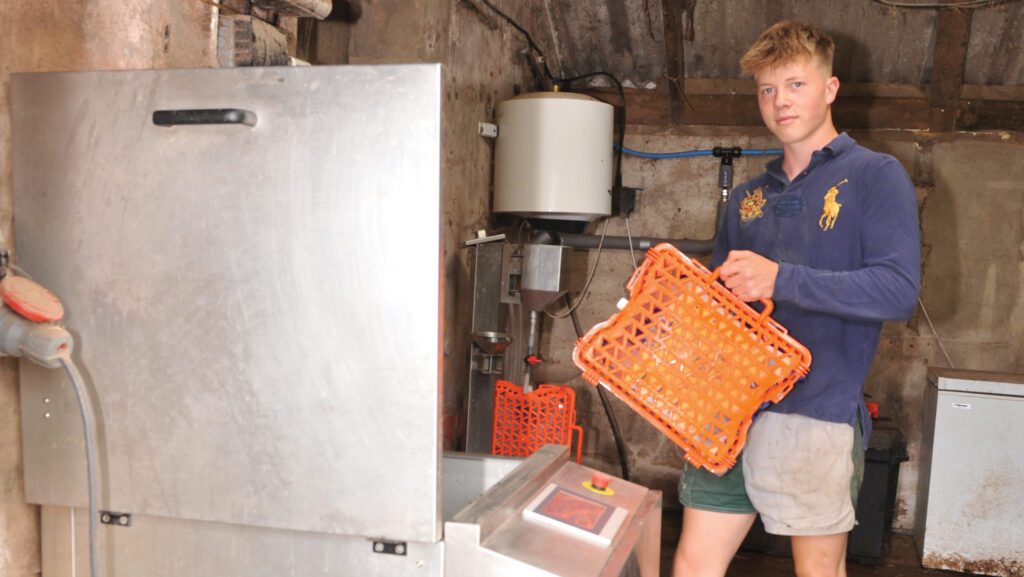
Dylan Lewis with harvested colostrum ready to pasteurise © Debbie James
An unprecedented spike in calf mortality, with one animal testing positive for mycoplasma bovis, prompted a Pembrokeshire dairy farm to invest in pasteurisation equipment.
Geoff and Lucy Lewis farm with their son, Dylan, at Pearson Farm, St Brides, running a robotic milking system for their fully housed herd of 300 pedigree Holsteins.
In August 2025, post-mortems on six calves revealed the presence of M. bovis in the lungs of one, with the animal likely to have contracted it from its dam’s colostrum.
Pasteurisation offered the opportunity to kill that bacteria in colostrum and whole milk.
Consequently, the business invested about £13,000 in two pasteurisers, part-funded by a Welsh government efficiency grant. Since then, all colostrum and whole milk for the first two-and-a-half weeks of life have been pasteurised.
Far fewer sick calves
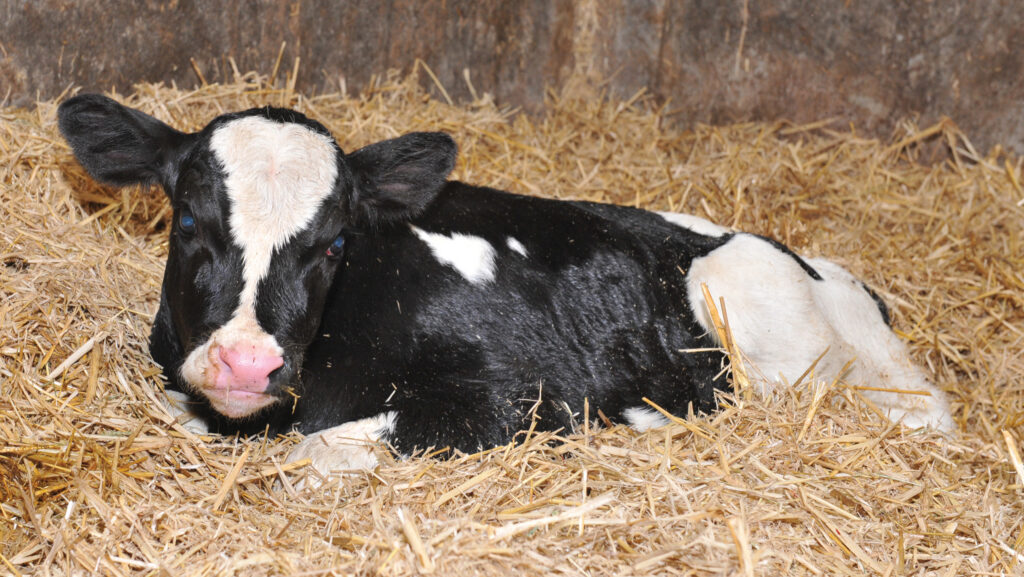
Calves are fed 4 litres of pasteurised colostrum within an hour of birth © Debbie James
Calf health has significantly improved, says Geoff. “We have never had much of an issue with scours – pneumonia and other respiratory problems are our challenge. But we get less of those now and are treating far fewer sick calves.”
Colostrum is harvested into a dump bucket and tested with a refractometer. Any falling short of the target 24-25% is mixed with powdered colostrum to raise the level of immunoglobulins.
It is pasteurised in four-litre packets at the recommended 60C for 60 minutes and transferred to a freezer.
All calves get four litres of thawed colostrum within an hour of birth – the machine has a setting that thaws a packet within 30 minutes – and this is mostly fed through a bottle feeder.
For the next two-and-a-half weeks, the calf gets pasteurised whole milk treated at 65C for 30 minutes, before transferring to an automatic feeder and calf milk replacer.
Hygiene around calving time is paramount, adds Geoff. “We keep the cows clean pre-calving and their calves are born into a clean environment.”
Farm facts
- 344ha owned and rented land
- Crops include 45ha forage maize and 69ha barley for home consumption
- 300 pedigree Holsteins
- 12,500 litres annual average milk yield a cow at 4% butterfat and 3.3% protein
- Milk sold to Totally Welsh
- 200 dairy beef cattle finished or sold as stores