

Advice on reducing the risk of dry-period mastitis
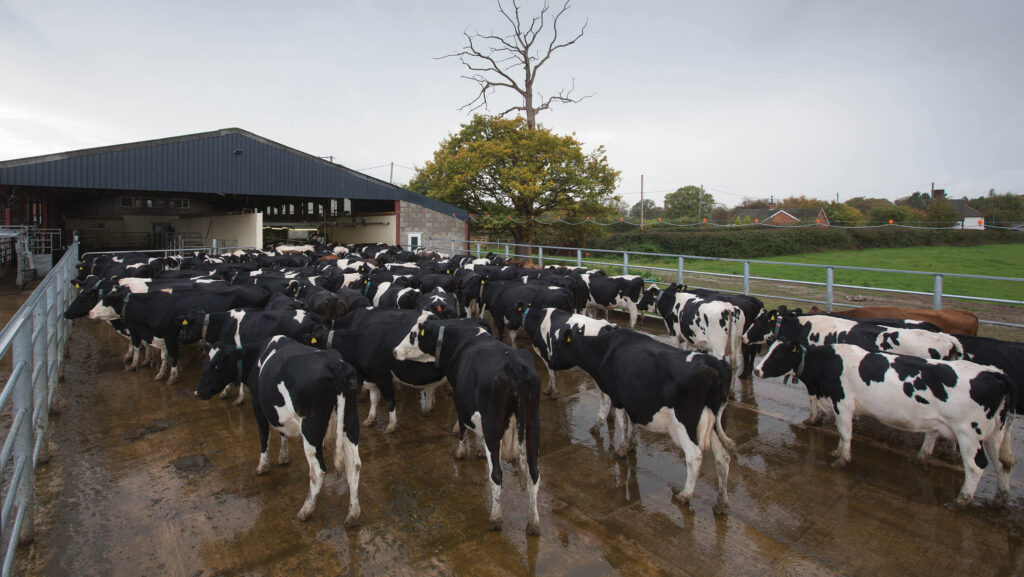 Mastitis in the first 30 days post-calving traces back to dry cow infection © Tim Scrivener
 The first few weeks of lactation are one of the most valuable times to collect mastitis data, yet it’s easy for data recording to slip down the priority list.
Mastitis problems tend to fall into distinct patterns of origin, typically some combination of environmental, contagious, lactational and dry-period factors.
See also: Advice on dry cow shed management for high yielders
Identifying which pattern is most relevant to your farm is important, as it determines where your efforts are best spent.
For example, there would be little benefit in looking at pasture rotation when high cell counts only occur during winter housing.

Martha Twist © Friars Moor Livestock Health
Equally, improving cubicle hygiene won’t solve a problem caused by the milking machine.
Different patterns are more easily identifiable in different seasons, mainly through looking at your own farm’s data.
This is why it is important to consider your dry period while there is still an opportunity to make changes and monitor their impact.
Dry-period mastitis
A dry-period mastitis case is classified as a cow showing either a high cell count or a clinical case of mastitis within the first 30 days of lactation.
A useful measure of dry-period success is comparing a cow’s cell count at the end of lactation with her cell count in the first 30 days of lactation.
If a cow’s cell count rises after 30 days, it can be harder to determine whether this is a persistent dry-period infection or a new lactation problem.
For these reasons, it is important to make your milk recording work for you.
For block-calving herds that don’t already milk record monthly, consider timing your ad-hoc or quarterly recordings to fall when most cows are in their first 30 days of lactation.
Golden rules for grazing and housing
During the drought conditions across the UK this summer, many dry cows were grazing on very little grass. Concentrated grazing areas and dung accumulation can increase environmental contamination around the udder.
When planning for future droughts, remember that dry cows still need a sensible rotation, even when grass isn’t growing.
© Tim Scrivener
Keep to the golden rule for dry cows of grazing one area for a maximum of two weeks followed by four weeks’ rest.
For cows housed early, don’t fall into the trap of running a “summer” housing system.
If they are being housed as they would be in winter, follow your normal winter routine of regular scraping, clean bedding and frequent re-bedding.
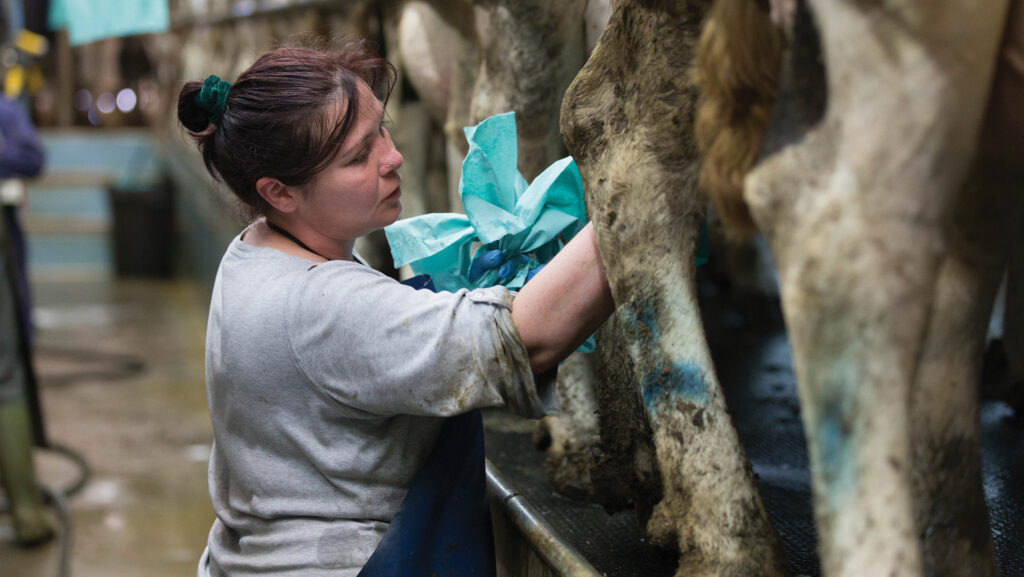
Pre-milking teat preparation
Once cows begin to calve in, focus on good teat preparation.
The gold standard would be to “strip, dip, dry, apply”. Use a pre-milking disinfectant in a dip cup, allowing enough contact time between the teat skin and the chemical for complete disinfection.
Then, thoroughly dry teats with paper towels. Variations on this can also be successful – contact your vet to see what is right for your farm.