

How poor ewe condition hits flock productivity hard
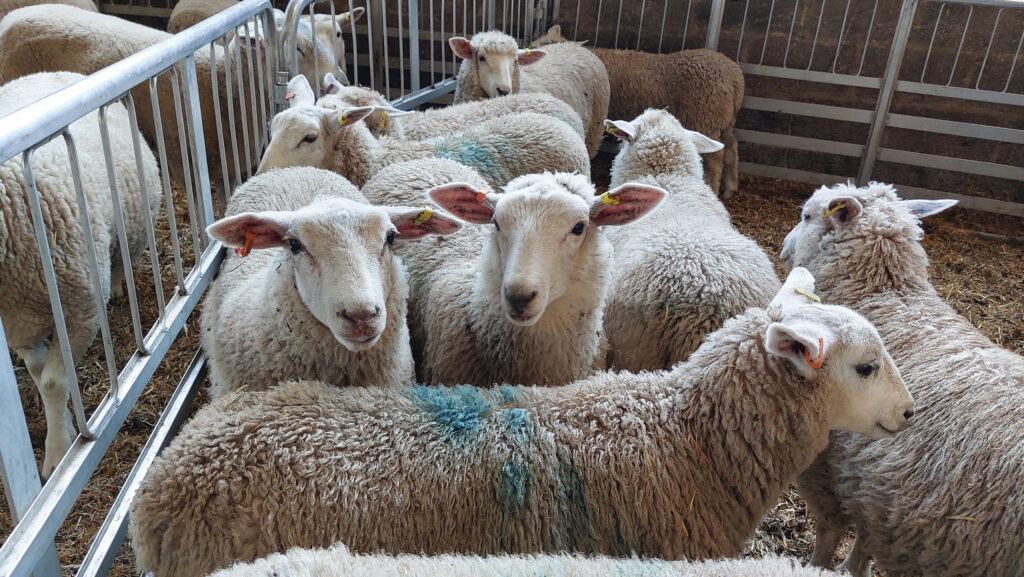 © MAG/Shirley Macmillan
 Keeping ewes in a consistent body condition score of 4 throughout the year is the way to maximise lifetime performance, according to results from AHDB’s Challenge Sheep project.
See also: How regularly condition scoring ewes reduces losses
Tracking close to 6,000 young ewes over seven years revealed that breeding ewe lambs can increase flock productivity, but only when they are well managed.
More effective for most farms was to avoid the swings of extremes in ewe condition during the production year, says researcher Dr Liz Genever. “Fit ewes perform better and, basically, heavier sheep produce heavier lambs,” she says.
Weighing and body condition scoring (BCS) at targeted intervention points through the season, then using the data to make management changes, were shown to optimise ewe health and production – in every flock.
As flock BCS increases from 2.5 to 4, there are fewer ewe deaths and culling rate falls by 50%, which, in turn, reduces replacement rate and cost.

Dr Liz Genever © MAG/Shirley Macmillan
Ewe losses tumble as body condition improves
Results also revealed that a ewe’s risk of dying on farm was reduced by 80% if BCS increased from 2.5 to 3.5.
Liz says she was surprised at how high the condition score was to achieve better performance, having expected scores of 3-3.5 to be sufficient.
One BCS point is equivalent to 10% in weight change (depending on the time of year) and it takes at least six weeks for a ewe to gain 1 BCS.
Because a ewe’s condition naturally fluctuates according to the stage of her production cycle, it’s not possible to maintain an exact score 4 all year round, says Liz.
Similarly, a flock average score of 2 -2.5 can’t quickly jump to 4. “Upping condition is a good thing, but change isn’t going to be instant – it will be incremental change over one to two years,” she says.
Nonetheless, the project has shown the benefits of keeping ewes at a higher score. The aim should be to avoid swings to extremes and ensure ewe condition doesn’t drop significantly at any time.
Regular BCS, and recording the results, can be used to identify fat or thin ewes to pull them out for separate management, or culling. It’s important, however, to have the same person doing the scoring for consistency.
A score of 2.5 at weaning “might be OK” as, with good feeding, there is time to gain 1 score in the following six to eight weeks. But any ewe scoring below 2.5 at tupping should be culled, says Liz.
In the short term, there will be a cost to raising ewe body condition. Ideally, thin ewes can be grouped with shearlings and run as a separate management group.
Where lean stock have to run with the main flock, she says it will require more regular monitoring.
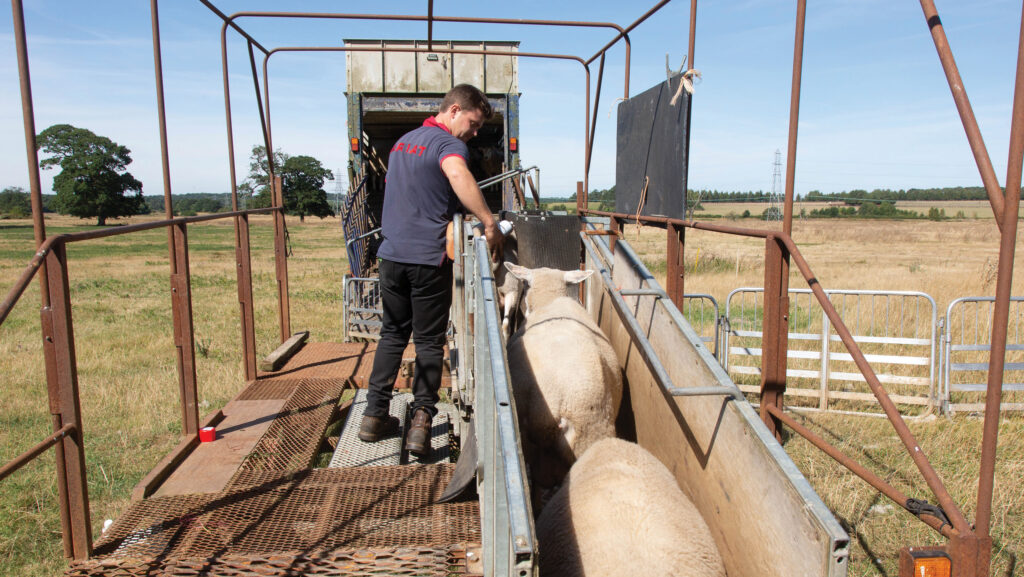
© Tim Scrivener
AHDB Challenge Sheep project
Timeframe 2017-24
- Scope 6,000 ewes bred for the first time as a lamb (30%) or shearling/two-tooth ewe (70%) on 11 farms in England
- Systems Lowland, hill and marshland
- Data collected Bodyweight and body condition score
- When Tupping, scanning, lambing, eight-weeks after lambing and weaning
- Additional data Ewe fate (alive, sold, culled or died)
- Lamb data Litter size, birth status (alive/dead), sex and weight at eight weeks and at weaning
Project findings
Lamb growth rate Lambs grew an extra 45g/day from birth to eight weeks if their dam’s body condition score (BCS) was 3.5 or more versus a BCS of 2.5 or less.
(For a 100-ewe twin flock, this made a 9kg/day difference across the whole flock.)
Lambs grew an extra 30g/day from birth to weaning if their dam was BCS 3.5 or more versus s a BCS 2.5 or less.
(For a 100-ewe twin flock this was a difference of 6kg/day across the flock.)
|
Ewe body condition Litter size and income rose with an increase in ewe body condition score |
||
|
Body condition score |
Average litter size |
Lamb income a ewe (£) |
|
2.5 |
1.3 |
129 |
|
3.5 |
1.4 |
139 |
|
4 |
1.6 |
159 |
Culling Mastitis was the highest reason for culling (at 29%), followed by empty (23%), poor condition (11%) and teeth (10%).
|
Flock replacements Replacement cost was less in flocks with higher ewe BCS |
|
|
Body condition score (across whole flock) |
Replacement cost a ewe (£) |
|
2.5 |
32 |
|
3.5 |
20 |
|
4 |
15 |
First-year lamb crop Shearlings produced larger litters (1.3 lambs) than ewe lambs (0.9 lambs) in their first breeding year. Ewe lambs gaining 20% bodyweight between mating and scanning had 0.5 more lambs.
Case study: Throope Farm, Bishopstone, Wiltshire
Managing their replacement ewes separately from the main flock is allowing Nick and Anna Hawke to retain control of growth rates and get shearlings hitting targets for tupping.
They took part in Challenge Sheep’s project, as they were keen to learn how best to manage young sheep to improve lifetime productivity, having bred their own replacements since 2010.
“We wanted to up our weaning weights,” confirms Anna.
In year one, the Hawkes had just set up a separate shearling (two-tooth ewes) lambing group on advice from their vet, Emily Gascoigne of Synergy Farm Health.
But Anna says managing ewe lambs and shearlings in a different group to mature ewes turned out to be their biggest lesson from taking part.
Farm facts
- Lambed 930 ewes and shearlings this year
- Rears 470 ewe lambs and 345 shearlings
- Romney ewes and Highlander crossbreds
- Lambs from 6 April; 85% lambed within 14 days
- Outside lambing apart from triplets
- Graziers on 162-202ha unimproved permanent pasture
- Fodder beet and turnips for wintering
- Sell deadweight
Shearlings had been losing condition when strip-grazing fodder beet in the main flock.
They were still learning how to eat it and were also being bullied by mature ewes, says Nick. As a result, intakes were insufficient and protein intake dropped.
To get them up to ideal tupping weight, they were formed into a separate management group.
Target shearling weight met
Working with Emily, the Hawkes also set growth rates based on weighing their mature ewes aged four-plus years.
A defining “line in the sand” turned out to be 14 February. Emily explains that lambing shearlings at 80-85% of mature ewe weight equated to 58kg in their flock.
To establish how much daily growth was needed to achieve this, they worked back from tupping on 5 November.
The group was handled and weighed on Valentine’s Day and 5 October selected as the deadline for the ideal weight.
This gave 190 days to get sheep to the right size via a “conservative growth rate” of 100g/day, says Emily.
Weighing again on 5 October determined whether ewes would be retained for breeding, require more feed, or sold to maximise market value.
“By then, you can identify if the whole group needs help, or most are on target,” she adds.
This year, 2025-born females weighed 63.6kg on 8 May – well above target.
The 2024-born females, bred to maternal sires, scanned at 199% and 71% twinning; their lambs weaned in mid-July averaged 26kg. Shearlings will join the main ewe flock at their second tupping.