

7 tips beef farmers can learn from dairy farmers
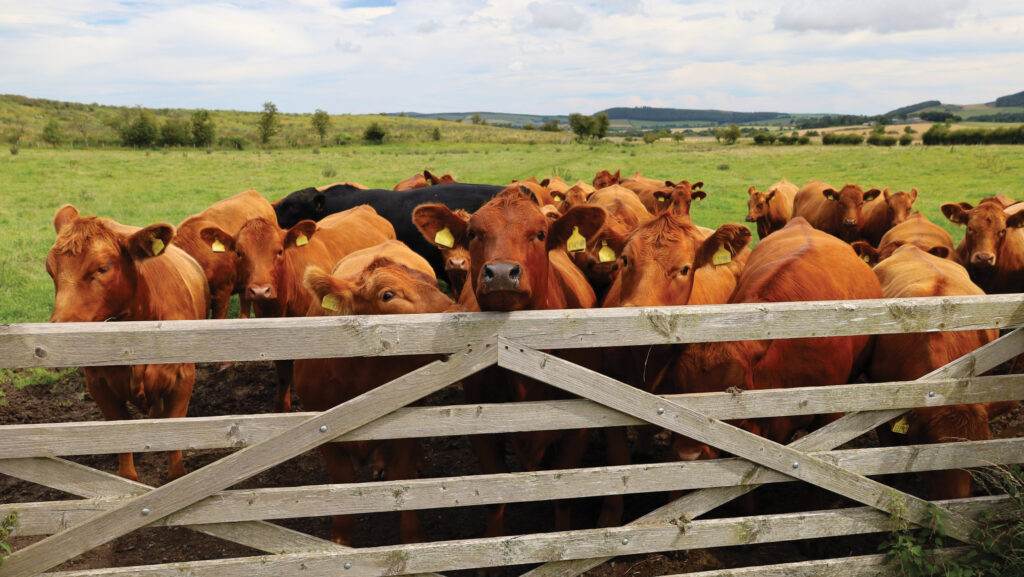 Shutting the field gate improves grazing efficiency © Adobe Stock
 Beef producers who step up their game by adopting the skill sets dairy farmers learned to ensure profitability in fluctuating milk markets can grow sustainable businesses.
The aim, says Adas consultant Gillian Preece, is to make changes and pay attention to detail to generate small incremental wins: think Team GB cyclists in the 2012 London Olympics.
Their focus on improving 100 things by 1% secured them eight gold medals of a possible 18.
See also: How efficiencies are driving down beef unit’s carbon footprint
For beef farmers, the results will improve business efficiency and profitability, she says. But first, they must understand their numbers and use their own data to make decisions.
“The critical point is to start thinking about it: what can I do differently and how do I change if I’m not making money from this. Adding 10 more cows just won’t do it.”
Fellow Adas consultant James Dunn adds that the next generation seems determined to be data driven and have a good work-life balance. “They want a business that operates efficiently and profitably,” he says.
Both agree that change is possible from an open mindset, by attending meetings, taking any opportunity to visit other farms, and learning from other farmers.
Discussion groups offer a chance to meet like-minded people (and share ideas) regularly.
Here, Gillian and James set out what steps to take.
1. Use data to drive decision-making
One of the biggest advantages in dairy systems is the constant flow of data, which supports rapid and informed decisions.
Accurate farm figures are essential to be able to decide whether to change something – or stay the same.
Beef systems can increase the frequency and use of performance data, such as regularly monitoring daily liveweight gains and feed efficiency.
Everything comes back to analysing data, so be more businesslike – spend more time in the office.
Phone apps make data collection and analysis more accessible to everyone on farm: owners, family, staff and professionals alike.
However, too many people still judge by eye, then struggle to forecast production accurately. Instead, weigh cattle and use technology to record, store and analyse data.
Dairy farmers rely on milk data (yield, fat and protein content) with somatic cell count and Bactoscan records for health and hygiene standards.
Beef farmers can build similar value through growth, fertility and efficiency metrics. Track calving percentages, gestation length, dam and calf weights and fertility rates.
Make individual animal decisions, rather than whole herd ones. Use data to identify high- and low-performing cows for targeted management.
A dam’s output over her lifetime can be calculated from her calves’ weights, growth rates and veterinary treatments.
Be more ruthless in culling cows failing to get back in-calf.
And block calve to benefit from lifestyle and labour efficiencies, as well as simpler feeding and management for stock at the same stage of production.
Keep records (paper or computer) to be able to identify what really happened, rather than relying on memory or gut feel.
Use AHDB’s KPIs for benchmarking progress.
2. Take advantage of better breeding and genetics
Every dairy farmer has been able to use the best sires since artificial insemination (AI) was introduced after the Second World War.
While AI may be more suited to pedigree beef herds breeding stock to sell, buying a stock bull from these herds based on performance recording will access better genetics.
Be more selective on breeding for specific system goals such as growth rate, carcass quality and maternal traits.
Select for health, longevity, fertility and efficiency – not just carcass weights – particularly when breeding heifer replacements.
3. Focus on precision nutrition management
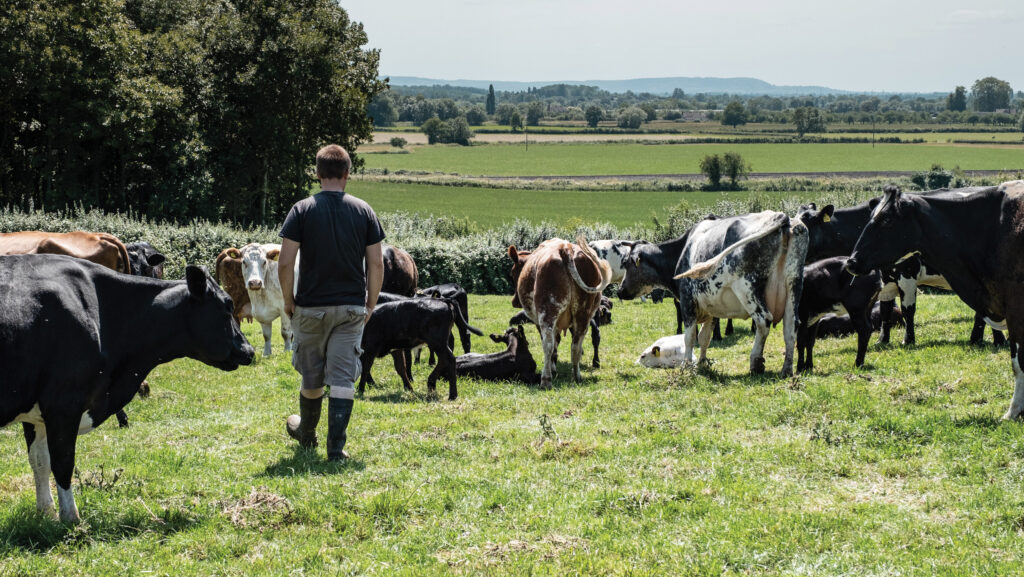
Getting off farm regularly brings useful ideas home © Adobe Stock
Dairy farmers fine-tune nutrition; beef farms can benefit from applying similar precision, even in less intensive systems.
Start with regular forage analysis to match feed to animal requirements directing the right silage cut to the right cattle.
Dry suckler cows, for instance, only need bulk, not high-quality nutrients, whereas youngstock and growing and finishing cattle need top-quality forages.
Aim to make young silage of top nutritional quality, or fibrous dry cow forage.
Use an independent nutritionist or consultant to help work out what the analysis means for your rationing, then buy the most cost-effective supplements.
Monitor and improve feed efficiency by adjusting diets based on growth stage or production phase. Look at last year’s results as a starting point: finishing weights and total feed consumed.
4. Get more from grassland
Dairy systems treat forage as a high-value, lower-cost input. The cheapest feed is grazed grass, harvested by the bovine. However, many beef farms are relying on old swards of permanent pasture for grazing.
Reseeding raises grass yield and quality from new leys resulting in better cattle growth rates.
A simple “shut the gate” policy, rotating and resting fields for grazing, can push grass output up by 10-30%.
Rotational grazing and resting swards reduces wastage and speeds up plant recovery and regrowth. Join a grazing group to learn more, or get specialist advice.
Make better use of muck and slurry: it provides readily available nutrients (particularly nitrogen) making it effective for improving short-term grass growth and yield, while supporting long-term soil health.
Beef farmers could benefit from importing slurry where possible to boost forage production and reduce fertiliser costs.
5. Use technology to raise efficiency
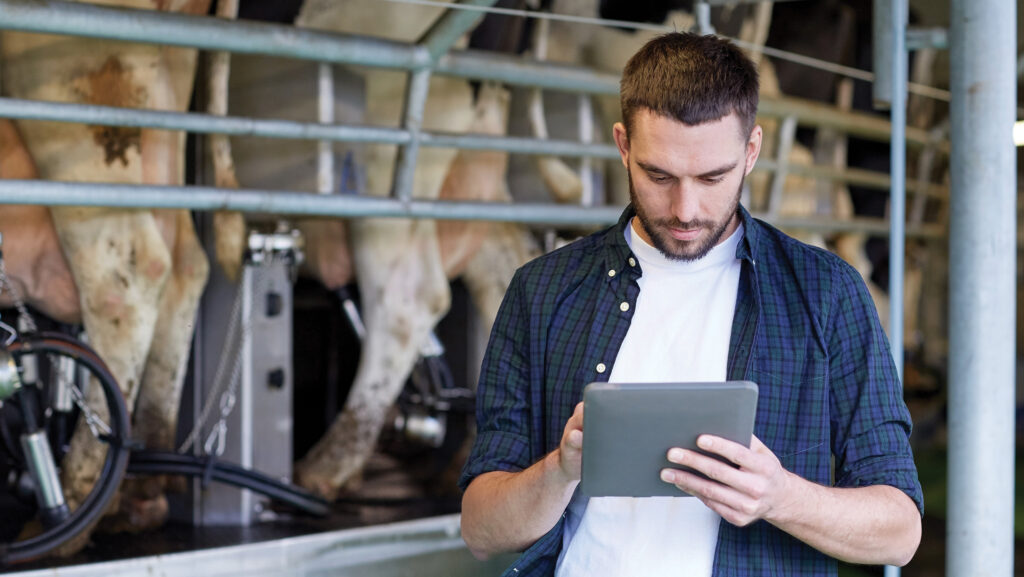
Using data to make better decisions gets businesses onto a firmer financial footing © Adobe Stock
The dairy industry is adopting technology that improves efficiency and reduces labour demands.
Electronic identification in a modern handling system makes everything easier. Because it is set up correctly, routine jobs such as weighing and treatments are more likely to be done at the appropriate times.
Dairy farms monitor cows daily to detect heat stages. This improves conception rates and helps keep calving intervals and gestation periods as tight as possible.
Consider cow collars for tracking individual cow health and welfare such as rumination, or oestrus.
Look at the cost versus return on investment and payback period for infrastructure improvements and automation.
6. Prioritise calf nutrition and health
Dairy farms place a strong emphasis on early-life nutrition and health, ensuring calves have sufficient, timely, good-quality colostrum.
Dairy-beef producers may not be in control of early life management of their purchased calves, but they can buy from farms that have strict hygiene, colostrum and health protocols.
Blood test calves to check for passive transfer from their colostrum feeds.
Do not mix young calves in air space with adult cattle, or mix batches of calves on intake.
Clean and disinfect between batches of calves, as young animals are more susceptible to disease pathogens.
7. Improve financial monitoring and business planning
Join a buying group to save money. Understand how much money is made from each suckler cow on the farm and how much it costs to maintain her.
Set up monthly costings and profit analysis – allocate costs accurately and in detail, including everything from water and feed, to labour.
Calculate each batch’s profitability by comparing feed supplied in the trough with deadweight when sold.
Use data to support forward planning and risk management, forecasting production and output.
If the beef enterprise is not making money, think of ways to change the system or breed.