

Why farm data matters in breeding robust cows
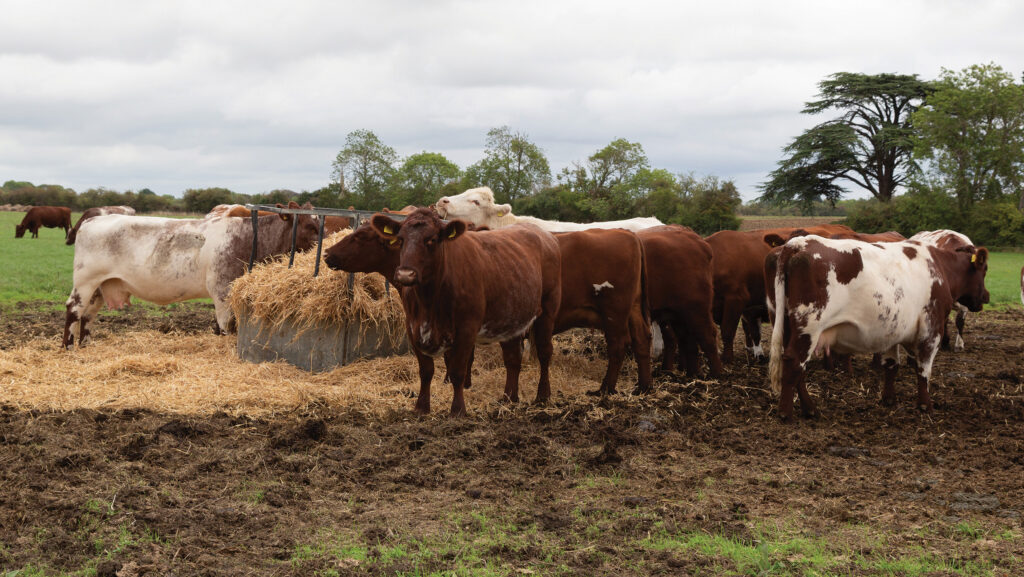 Croxton Park's Shorthorn herd © MAG/Judith Tooth
 Greater use of genetic data to support breeding decisions is key to improving suckler herd productivity and efficiency. Recording figures does two jobs, says AHDB’s lead animal genetics expert for beef, Harriet Bunning: it helps sell breeding bulls and heifers (whatever the setup) and helps breed better ones.
See also: How to share confidence 40% of beef farmers have for future
“We complain when the weather forecast is wrong, but we still use it. The more data is used, the more accurate the evaluation,” she points out.
“In the pedigree world, there was a time when breeders were just looking at output. Now they’re looking more and more at efficiency – for a cow that can cope on ‘not much’.
“That means balancing cow weight and carcass weight – in human language, not having a big cow rearing a small calf. The magic is where a smaller cow can still rear a slightly bigger calf [carcass weight, not birthweight]. Genetics is all about finding the outliers, the curve benders.”
Croxton Park Partnership, near St Neots, Cambridgeshire
- Farms 300ha, equal parts permanent pasture, arable and woodland
- Organic certification
- Arable rotation of oats, milling wheat, and fertility-building herbal leys and lucerne for forage
- Higher Tier Stewardship and Sustainable Farming Incentive
- 65 pedigree Shorthorn suckler cows
- Calves sold as stores at 12 months at Thame market; some heifers retained/sold for breeding
- 70 breeding ewes
Breeding strategy
Estimated breeding values (EBVs) provide an accessible way to access that genetic potential, combining “all the figures” in a single value for a given trait, says Harriet.
“You can see, for example, a big bull, and know there’s a fair chance it will sire a big calf. But [EBVs] can show you the things you can’t see, like long-lived daughters,” she explains.
Farm manager Omer Hassouneh’s breeding strategy is to produce “a functional cow that can survive on poor-quality grazing and look after her calf”.
He has bred out the heavier animals of 900-1,000kg in the pedigree Shorthorn suckler herd at Croxton Park Partnership, near St Neots, Cambridgeshire, to achieve an average cow weight of 750kg. Calves are weaned at eight months, weighing 350-400kg.
Omar says he follows a “pretty brutal” culling policy to maintain good fertility. “If it’s not in-calf, we cull to have an efficient herd.” Heifers calve at 30 months, in November/December, then join the main spring-calving block in March at their second calving.
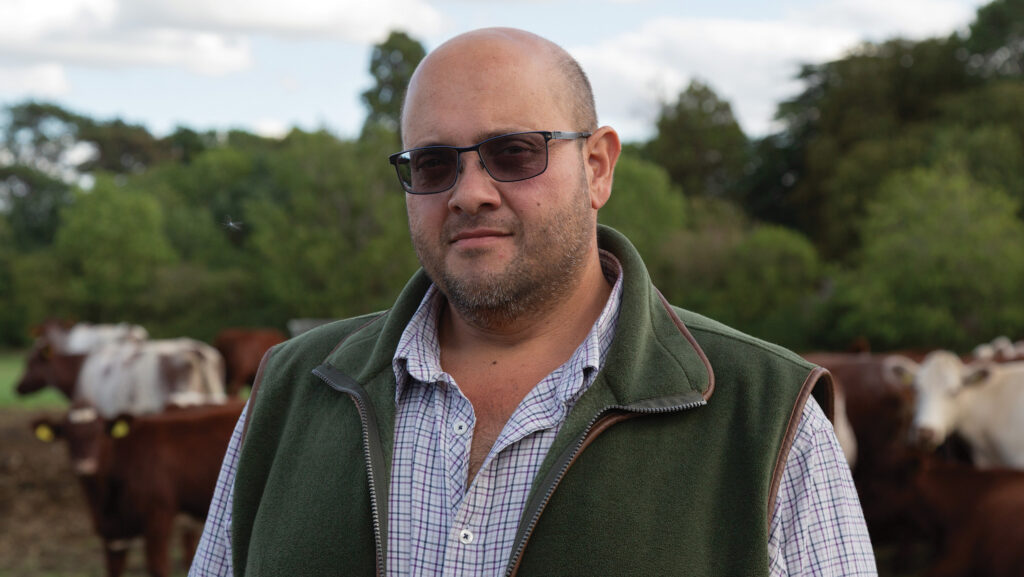
Omer Hassouneh © MAG/Judith Tooth
AHDB resources
Beef housing
- Improve beef housing for Better Returns (downloads PDF)
- Better cattle housing design (downloads PDF)
Breeding tools
Key targets
Harriet points out that age at first calving is “really about the ability to get in-calf first time”.
“If you’re keeping a cow that’s slipped in the [calving] block, that’s costing you in the long term. And then you’re rearing for the wrong type of cow,” she says, adding that the industry is getting “way better at that – the number of empty cows is going down”.
She recommends monitoring performance by measuring weaning efficiency (calf weight as a percentage of cow weight). “This involves weighing cows [as well as calves], and more are doing this now.”
Harriet Bunning, Jamie Robertson and Omer Hassouneh were speaking as part of AHDB’s Stronger herds for stronger returns campaign. Upcoming events and more resources are listed online.
Tips on optimum housing for cattle
Farmers often have to rely on building manufacturers for guidance on the design features needed to ensure housed cattle can thrive.
Yet even new buildings may fall short of what is needed, particularly when it comes to roof ventilation. The result is a build-up of moisture and stale air that can’t escape, leading to health issues and poor growth rates.
“It’s a massive problem and a common failure of builders, even now,” says livestock buildings specialist Jamie Robertson. “It’s straightforward to put right but, remember, roof work is dangerous.”
© MAG/Judith Tooth
The aim when considering existing housing is to “squeeze more money out of what you’ve already got”, he says. To do this, five environmental parameters must be considered:
- Fresh air
- Air speed
- Temperature
- Moisture
- Hygiene.
Building spec
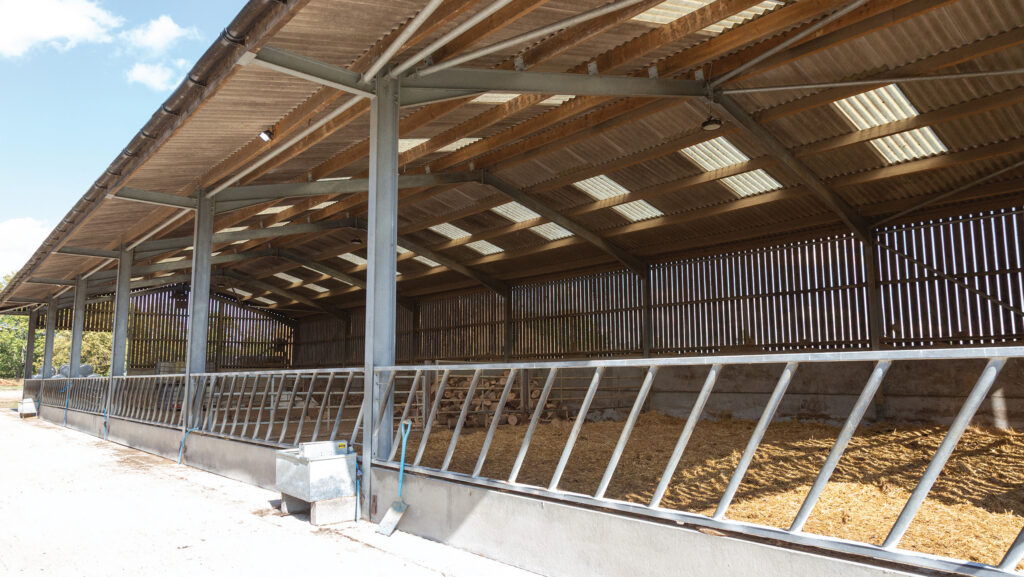
At Croxton Park, a 36m-long shed was put up in 2016 to accommodate growing numbers of cattle. Used to winter-house 45 suckler cows plus calves across three bays, it features an open front with an overhang, and space boarding over solid wall on the other three sides.
The roof is fitted with crown-cranked ridge sheets, rather than an open ridge.
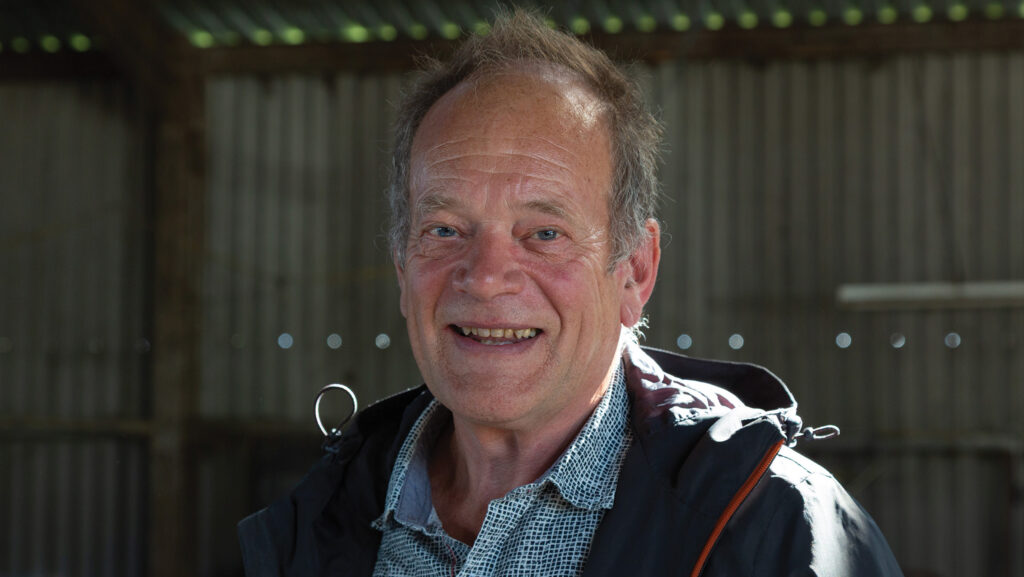
Jamie Robertson © MAG/Judith Tooth
“It would have been a big cost on top to have a raised ridge, and I was told it wouldn’t make much difference,” says farm manager Omer Hassouneh, noting that while he knew the cranked vents “weren’t quite right”, the cattle haven’t had any particular health problems.
However, Jamie says if the shed was being worked harder to finish batches of store cattle through the winter, the shortfall in air outlets would be seen in lower daily liveweight gain.
“Store cattle can be under a lot of pressures physiologically, from weaning stress, new diet and so on. That can lead to respiratory problems, and then you’re losing money,” he adds.
Build-up of moisture
While the shed at Croxton Park is well ventilated “as long as wind is blowing”, the lull in wind speed that usually occurs in mid-October and again early in the year will lead to trapped air.
“Hot air rises, and if it can’t get out, there’ll be an increase in moisture. If you’re short of ventilation – fresh air through the building – it will be damper inside than it needs to be. You will end up with either dirty cows or using more straw than you need to. That costs money.”
Each of the 18 cranked vents along the ridge provides 0.067sq m of air outlet, a total of 1.2sq m. But Omer’s 45 suckler cows need a total of 4.5sq m (plus extra for calves), Jamie explains – 0.1sq m for each cow as a ballpark figure.
“There’s probably one-quarter of what’s needed. You wouldn’t go out and buy a tractor with one wheel, but that’s what’s going on here.”
Solution
The answer, he says, is an open ridge. “People say they don’t want to make a hole in the roof because they don’t want to let moisture [rain] in. But there’s already moisture inside – a cow produces 40 litres/day.” With 45 cows, that’s 1,800 litres/day before any rain.
Jamie adds that correcting the ventilation would result in an extra 3-5% daily liveweight gain in store cattle, and fitting an open ridge in a similar building to this paid for itself in 18 months.
He estimates the cost at £60-£70/m. Provision for airflow into the shed can be calculated from the total outlet area. If 4.5sq m of outlet is needed (as in Omer’s shed), then 4.5sq m of inlet is needed in each side wall.