

Curious cows produce more milk, NZ study reveals
 © MAG/Shirley Macmillan
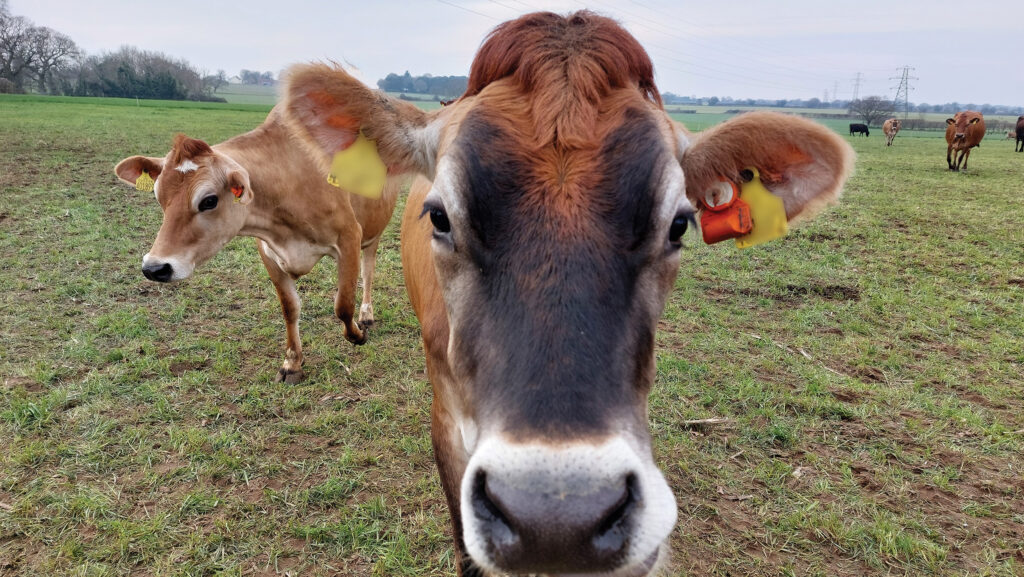
 Personality influences performance: the “curious” cow has been shown in a New Zealand study to produce a higher milk yield and more milk solids. She also spends more time grazing and lying.
See also: Why it is important to optimise dairy cow lying times
Heather Neave, professor of animal science at Purdue University in the US, collaborated with NZ researchers at EthicoNZ, AgResearch and DairyNZ to use precision technology to link cow personality traits with their behaviour and milk yield.
The research team used ear and leg sensors on 30-40 cows in each of 27 commercial dairy farms. For two to three weeks, grazing, ruminating and lying behaviours were monitored.
On each farm, a subset of 10 cows was also fitted with GPS collars to record walking distance during milking times, as well as how long these cows spent away from the paddocks.
In total, Heather says the team scored 788 cows in the herds for “personality traits”. She explains this covers characteristics such as curiosity, sociability and fearfulness. These have been linked to the different ways that bovines respond to stress, how they feed and the consequences on their productivity.
© MAG/Shirley Macmillan
Personality tests
“Characterising cow personality traits could inform individualised management decisions that would enhance welfare and productivity on dairy farms. [We] examined how personality traits, scored using wearable precision technologies, influence milk yield and behaviours of grazing cows,” she says.
There are three standardised tests to measure personality type, Heather explains. Cows that are curious/react to novelty were revealed by their score on their response to a novel object during their return from milking.
Cows with tolerance to humans were shown by a score for their avoidance distance (flight zone) in the paddock. And cows with a trait for milking reactivity were scored for their reaction during cluster attachment.
The scientists also noted cow characteristics such as body condition, lameness, age, breed and days in milk. Farm characteristics (topography, location, herd size) and weather were recorded too, as was farmer management practice.
Productivity boost
After statistically analysing the associations between personality trait, behaviour and output, Heather says curious cows gave 0.67 litres/day more milk. They produced 0.05kg/day more milk solids and 0.02kg/day more protein. In addition, they grazed for 0.26 hours/day more with an extra 0.1 hour/day lying time.
Those cows dubbed as “tolerant” (less fearful of approaching humans) also tended to have a greater milk yield by 0.47 litres/day and greater rumination time (by 0.09 hours/day). However, the “milking reactivity” trait was not associated with behaviour or yield.
Management tweaks
The collars worn by the cohort of 10 cows revealed how lying times fell when cows were off the paddock for longer periods (more time spent standing in the collecting yard, for example). Greater walking distances to and from the parlour were shown as being associated with increased lying time.
Farmers self-reported their changes in management for the study and Heather says that where they consciously made adjustments to reduce walking distances, this tended to increase grazing time.
Farms supplying at least one trough in each paddock showed higher milk yields, while those offering more diverse feedstuffs had cows with greater ruminating and lying times.
“Our results show consistent individual differences in dairy cow behaviour and performance related to their personality. There is potential for wearable technologies to guide tailored management practices that meet the needs of individual cows of different personalities,” says Heather.
Heather Neave was speaking at the 4th International Precision Dairy Conference in Christchurch, New Zealand