

The five non-negotiables of a resilient dairy business
 © Drumgoon Dairy
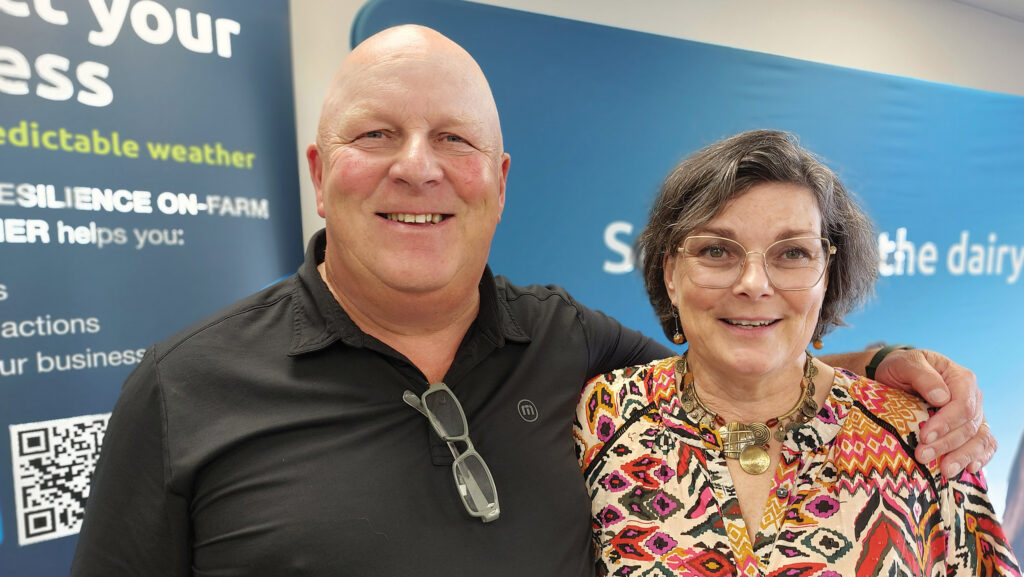
 Farming with one eye on the future – hoping some of their nine grandchildren will want to join their dairy business – Rodney and Dorothy Elliott are also learning from their past.
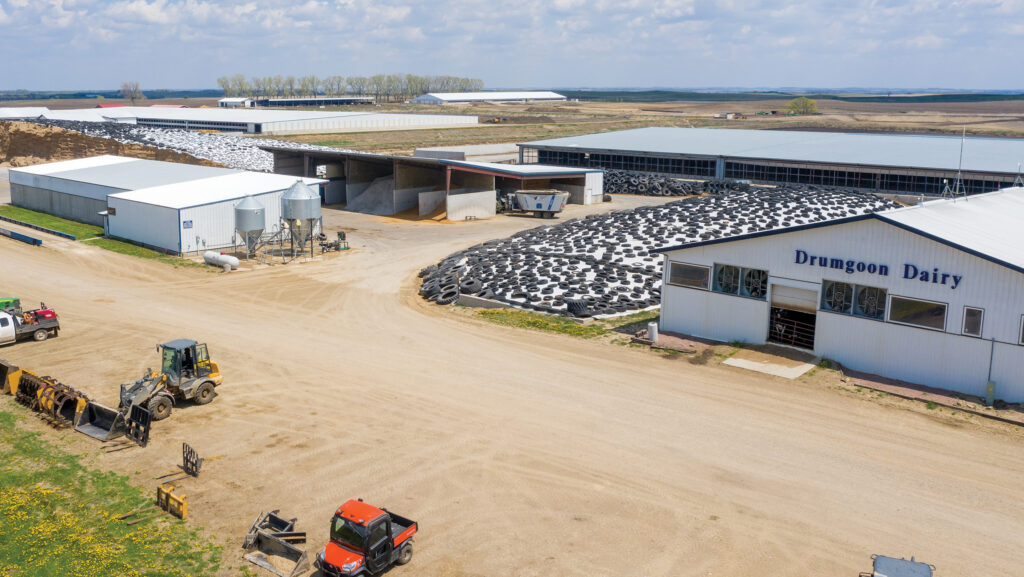
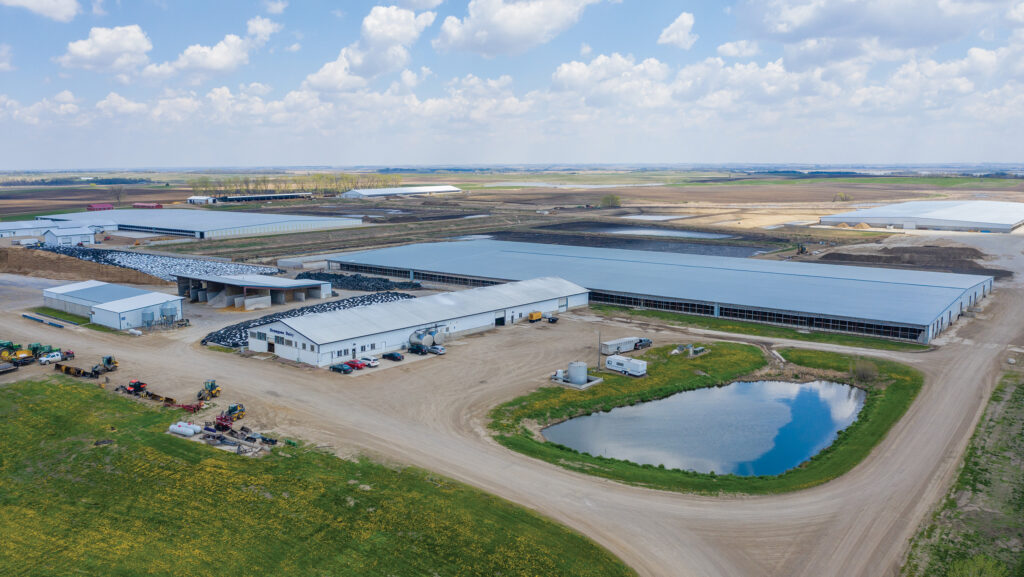
What started in 1982 as a 25-cow dairy farm filling 110,000 litres of quota at Drumgoon Manor in County Fermanagh, Northern Ireland, now covers 11,500 cows across two sites in South Dakota, US. The couple are also partners in a heifer-rearing unit for 120,000 replacements.
See also: How to create a resilient dairy business
Along the way, the Elliotts have discovered how to build a profitable business and what makes a dairy farm resilient. They have found out how partnerships with other farmers can work – or not – and adapted to change. Here are their five non-negotiables for successful dairy farming.
Farm facts
Drumgoon Dairy (owned)
- 6,500 cows
- 45 employees combined
- Production 181,000 litres/day
- 1,052ha; feed contract grown
Countyline Dairy (partners)
- 5,000 cows
- 29 employees
- 157,000 litres/day
- 85m gallon muck store
- 1,214ha
Kansas Dairy Development (partners)
- 40,000 Calf hutches
- 120,000 heifers
- 71 source farms (including Drumgoon’s heifers)
- 300 employees
- 648ha irrigated and double cropped
1. Know your numbers
“Know your numbers: if you can’t measure, you can’t fix it, and if you are losing money, you can do something about it,” says Dorothy. Everything is in one system, and she says they work with a specialist large-dairy accountant recommended by their bank. Communication with both is via email and a joint annual meeting.
An independent consultant advises on plans, budgets and scenarios for expansion.
With large borrowings, the Elliotts have to complete a monthly compliance spreadsheet for the bank, which, they say, has given them financial discipline.
The bank knows their business in detail as it is copied into milk statements and other paperwork. It means that business decisions are instant and not waiting for authorisation.
“We do a lot of sensitivity analysis – I really like it,” says Rodney. “When things do happen, for example, feed costs rise, we know what the effect will be. We are price takers, so the farm has to be flexible and have the resources to react to markets.”
Rodney and Dorothy Elliott © MAG/Shirley Macmillan
2. Design robust, simple systems
The farm runs on standard operating procedures (SOPs), written and available in the appropriate area as posters on the wall.
“The larger we became, the simpler the system had to be – and 20% of our workforce is illiterate, so we have to have pictures and, at times, things written in seven languages,” says Rodney.
“I like to see [these SOPs] well thumbed, ripped and dirty – looking used.”
Given the workforce, it is no surprise that the business operates up to 10 WhatsApp groups. Everyone can send pictures, relay whether something needs fixing, or request sick cover for work.
Their best app is Google Translate, says Dorothy. “It gives us the ability to communicate when we are not fluent in languages, otherwise there is so much confusion.”
Management meetings are held on Mondays at 10am around the boardroom table. “I ask for one thing they want to change on the farm this week.
“We agree, and someone takes action on it. If we were to put 15 things on a list, they won’t get done – one thing will,” says Rodney.
Being prepared for weather extremes has been unavoidable in a climate where they can see temperatures fluctuate from -5C to 35C in a single October day, he says.
Winters drop to -25C, whereas summers hit 40C and there are regular 100mph winds. “Our water lines are buried 6ft [1.8m] deep. We have good clothing, places for staff to warm up, and warm workshops,” he says.
© Drumgoon Dairy
3. Roles and responsibilities
Team structure is laid out in an organisational chart, with Rodney as managing partner and Dorothy in charge of finance and HR.
They have separate managers for each section: purchasing and risk; farm; herd; feed; and repairs and maintenance – and everyone has a job description.
However, employing so many unskilled labour units of varying educational levels and nationalities, Dorothy admits their approach was too flexible.
Letting people work for six days in a row, for instance, with just one day off, produced tired staff.
“We now keep it as four days on and two off [on 12-hour shifts] to avoid burnout,” she says. “We also employ more people, so we can pick up any slack.”
Individual requests for pay rises caused problems among the team, so a set pay scale with five pay bands was introduced; there are only two salaried staff.
Pay is reviewed annually according to the cost of living; skills and knowledge gained are rewarded separately.
4. Sustainability
With scale, the business can afford “total backup”, says Rodney. This means they run three mixer wagons, where they only need two, so in the event of a breakdown, there is no stopping.
They have their own full-time mechanic and one full-time cleaner: “You get one chance of a good first impression and we like everything clean and tidy,” he says.
Drumgoon needs 2,833ha (7,000 acres) to take its muck each year. Rodney says it’s likely they will look at slurry separation and use cleaner water for flushing passages, then transport solid to land.
With all feed grown by other farmers, they are involved in some 5,666ha (14,000 acres), which are under a nutrient management plan.
“The returns are 2:1 on nutrients, it’s free muck and we share the cost of getting it there. Chemical fertiliser is 35% more than in the UK. We match nutrients to the crop and no fertiliser is needed. Our growing season is 100-115 days,” he says.
“We have planted 1,000 trees and shrubs for aesthetics and wind and snow management – it has stopped snow drifting onto yards. It’s not unusual to get a 5in [13cm] rain event and this with wind is the worst for soil erosion.
“So, we try to keep the living root in the ground as much as possible on our light sandy soils. It’s min-till and cover crops.”
5. Long-term planning
The couple use professional advice for succession and estate planning. Although most of their feed is contract-grown, they still own 1,052ha (2,600 acres). “We don’t need land – we can buy feed cheaper than grow it.
But it adds wealth to our portfolio and non-farming children can benefit,” says Rodney, adding: “Our son, David, came home in 2014. It’s a good feeling when there is someone behind you – you think a bit differently.”
A milk price of about 33p/litre is “not great”, so Rodney focuses on what they can control. “Farm maintenance, forage quality, cow fertility, milking protocols, how we manage our money. Concentrate your energy and time on what you can control and forget the others,” he says.
“But be flexible to cope with [life’s] punch in the face from time to time. And when the door of opportunity opens – the timing might not be great – you’ve got to be flexible and ready to take it.”
Dorothy and Rodney Elliot were speaking at a recent AHDB event in Shropshire.