

Tips to minimise fetch cows in a free-access robot system
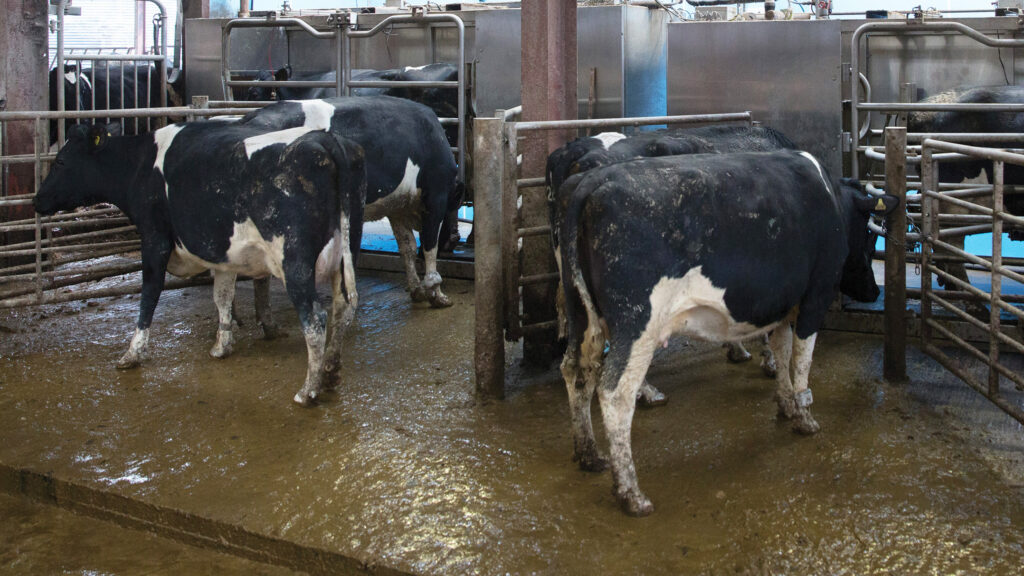 © Tim Scrivener
 Dairy farmers who have settled their cows into free-access automated milking need to regularly monitor their list of fetch cows.
It’s important to take care that being escorted to milking doesn’t become a habit for some unmotivated animals – and being aware of why cows are on the list can reduce the impact on labour, resources and overall robot efficiency.
Healthy cows on the correct diet with appropriate milking permissions should voluntarily visit the robot once they have adapted from conventional milking.
“Some cows take five days to learn and others two to three months, but they never forget the system and remember it next lactation,” says Cheshire-based consultant David Darlington, with The Dairy Group.
See also: 3 focus areas for managing mastitis risk in robotic herds
Which cows need to be fetched?
A fetch cow, therefore, is defined as one that is overdue for milking, usually in a 24-hour period.
David explains that this list can include fresh calvers, cows that have just moved social groups, sick cows or ones that somehow lack motivation to go through the robot.
Penned fetch cows are prioritised for milking and nine times out of 10 will get themselves milked.
But at seven to eight minutes’ milking time a cow, delays can mount up for any waiting voluntary cows when there are too many in the fetch group tying up the robot.
“Fetching cows twice a day is time consuming and also indicates there may be something wrong with a cow that is lying and not eating or milking – there could be an underlying issue,” he says.
In efficiently run free-access systems, David says no more than 4-5% of the herd should be on the fetch list at any one time, making it a useful KPI to monitor.
Although as a target it will never get to zero, he has seen herds get up to 10% of cows having to be fetched when they had a severe problem.
Behavioural tactics
The way that cows are gathered up to the fetch pen to be milked will influence whether a regular fetch cow can become a voluntary cow.
The key is to avoid collecting these cows at the same time every day, says David.
“Cows soon get to know the exact time and will sit there waiting for you – so vary the time.
“Some animals are persistently lazy; depending on herd structure and how much you want to persevere in training, they might be better sold to a conventionally milked herd.”
As the robot’s milking permissions for access adapt to early- or late-lactation milk yields, the number of fresh and stale cows needing to be fetched will fluctuate accordingly.
For instance, a 20-litre cow doesn’t need to visit the robot four times a day; twice is sufficient.
David points out, however, that some robot programs automatically change permissions based on milk yield and can sometimes be too sensitive.
“Check permissions. If you don’t realise that milking permissions need to be tweaked, then you will always have more fetch cows,” he adds.
Impact of dietary imbalance
He finds that diet is one of the most common issues affecting a cow’s willingness to visit the robot.
Feed drives visits in early lactation: setting the diet correctly in the trough ensures the cow will go to the robot for her top-up of energy.
Naturally, as milk yield falls, energy requirements are not so great, and the cow has no inclination to seek additional feed at the milking station.
But when a whole herd starts to get lazy, David advises a full diet recheck.
Cows could be getting too full at the bunk, or feed palatability in the robot might be an issue: sometimes, pellets end up dusty and broken after travelling through augers.
“Oats and barley are more tasty than wheat- or maize-based pellets,” he adds.
“Push up feed regularly to support rumen health and keep cows active.”
Risks of overstocking and heat stress
Allocating too many cows to one robot makes the fetch list longer because only high-ranking cows will get milked; timid ones don’t have time as the robot area is constantly busy.
Group makeup (such as a high proportion of fresh calvers) and cows moving between social groups may also produce fetch cows.
Social hierarchy – whether it’s a first-calved heifer or a subordinate cow – affects their willingness to visit freely.
“A cow bullied near the robot area will refuse to go,” he says.
Heat stress has made a noticeable difference to the number of visits on many dairy farms this year, and David says herds are now seeing an increase in lame cows as an after effect.
Lameness is critical as it automatically leads to a cow being on the fetch list: when in discomfort, she may eat and lie down, but not want to be milked.
In cases when a voluntary cow suddenly becomes a fetch cow, she must be thoroughly checked as soon as possible in case she is ill, he says.
Physical checks and health alerts
Mobility and temperature checks, for instance, should be backed up by investigating the health monitoring system – most robots have them.
A cow has to be milked to determine her milk conductivity, which indicates mastitis, but rumination data from collars will show a sudden drop.
“Act on the data – health alerts are an early warning system, so learn to trust it rather than ignore it [if no physical signs],” he says.
“You can have post-milking segregation gates that divert any cows with two incomplete milkings into a separate area so that you don’t have to go looking for them.”