

Wearable tech for cows: How do farmers rate the options?
 © Tim Scrivener
 Heat detection brings the biggest gains from wearable monitors – but reliability, good backup and ease of use matter just as much as price, an independent survey of dairy farmers has shown.
See also: How smart ear tags are improving calf health and saving time
From health alerts to rumination and activity data, wearable technology promises to make managing dairy herds easier and more efficient.
But with dozens of systems on the market – and plenty of confident sales pitches – many farmers are left asking the same question: which ones actually deliver on farm?
Kingshay’s technical knowledge exchange manager, Sarah Bolt, shared feedback gathered through the dairy consultancy’s Tried and Tested programme from more than 60 farmers using wearable technology on commercial dairy units.
Simplicity
A clear finding from the survey was that most farmers prefer to keep things straightforward.
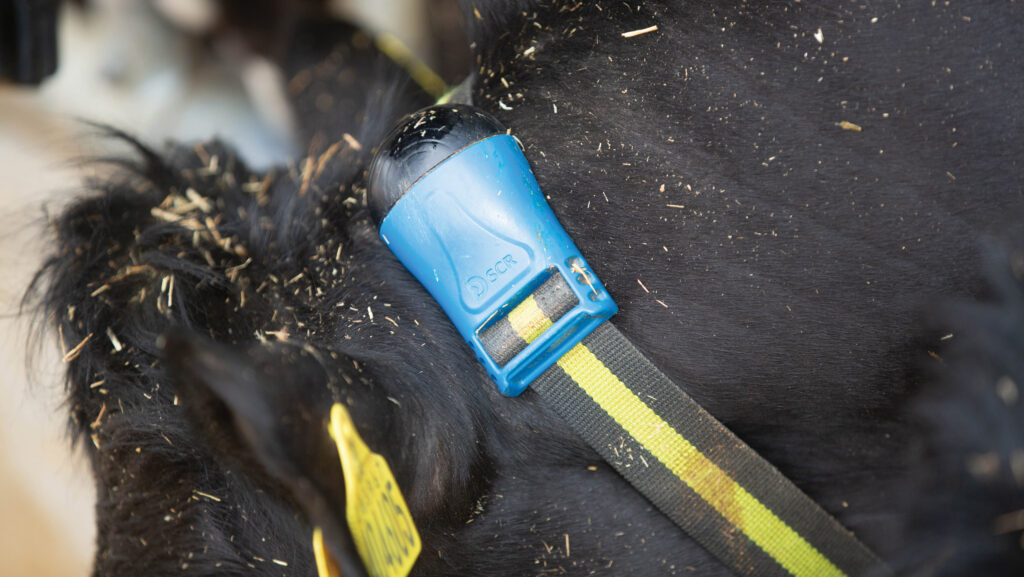
Neck collars emerged as the most popular format, used by 61% of respondents, followed by ear tags at 23%.
Farmers said these systems typically offered a useful combination of heat detection, rumination monitoring, activity tracking and health alerts.
About 90% of farms were running just one monitoring system, with only a small proportion combining multiple technologies.
In total, 17 different systems were referenced in the survey. Each was assessed against practical criteria including ease of fitting, reliability, accuracy, training and support, and value for money.
Where only one or two reviews were available, results were treated cautiously. Systems with larger numbers of users provided a clearer picture of long-term performance.
The top three
When analysed, the top three systems were separated by just 0.3 points out of a possible score of 95:
- SenseHub (Allflex) 68.6 points
- CowManager (World Wide Sires) 68.5 points
- DeLaval DelPro 68.3 points.
Sarah said the closeness of the scores highlighted an important point: there was no single “best” system for every farm. Instead, the right choice depended on individual priorities.
Despite the complexity of choosing a system, the review also showed that most farmers were happy with the decisions they had made.
Across all respondents, 82% rated their system as good or very good value for money, while 89% said they would recommend it to another farmer.
What matters most
When farmers were asked what mattered most when buying a system, effectiveness and reliability topped the list.
Ease of use followed closely, with respondents stressing the importance of systems fitting easily into daily routines.
Supplier relationships also ranked highly. Farmers placed strong value on good after-sales service, technical support and trust in the company.
“Cost, while still important, wasn’t the main driver,” said Sarah. Rather than simply choosing the cheapest option, most prioritised dependable products and reliable backup.
Biggest wins
Heat detection stood out as delivering the clearest return for dairy units.
Farmers reported the most noticeable improvements in fertility, with greater confidence in spotting heats, reducing missed cycles and improving conception rates.
Moderate gains were also seen in labour savings and fertility management.
However, expectations in other areas should be realistic, warned Sarah.
Only small improvements were reported in feed costs and mastitis management, with no significant gains in milk yield, lameness or carbon footprints.
“Wearables are not a silver bullet,” she stressed. “They work best when combined with good stockmanship, nutrition, housing and overall herd management.”
Integration
About 61% of respondents had linked their monitoring system to herd management software. This reduced manual data entry, cut down on errors and saved time.
For many, it meant less time in the office and more time responding to health and fertility alerts in the yard. It also reflected the growing role of data in modern dairy management, Sarah added.
Technical support
How well a system performs in practice often comes down to training and technical support. Support scores ranged from 6.3 to 10, with Smaxtec achieving a perfect score.
Sarah said poor backup could quickly undermine even the best technology. “A good system with weak support soon becomes frustrating and underused.”
What to consider before investing
For farmers reviewing existing systems or considering new investment, the survey highlights several practical lessons:
- Be clear about your objectives – fertility, labour, health or management
- Prioritise reliability and ease of use
- Check compatibility with existing software
- Look closely at training and support
- Do not expect technology to replace good management.
“Choosing the right sensor is not just about picking the system with the flashiest features,” said Sarah.
“It’s about choosing the one that best supports your herd, your current farming system, the workforce and – most importantly – helps you achieve your business goals.”
Sarah Bolt was speaking at Dairy-Tech 2026 at Stoneleigh, Warwickshire